Introduction
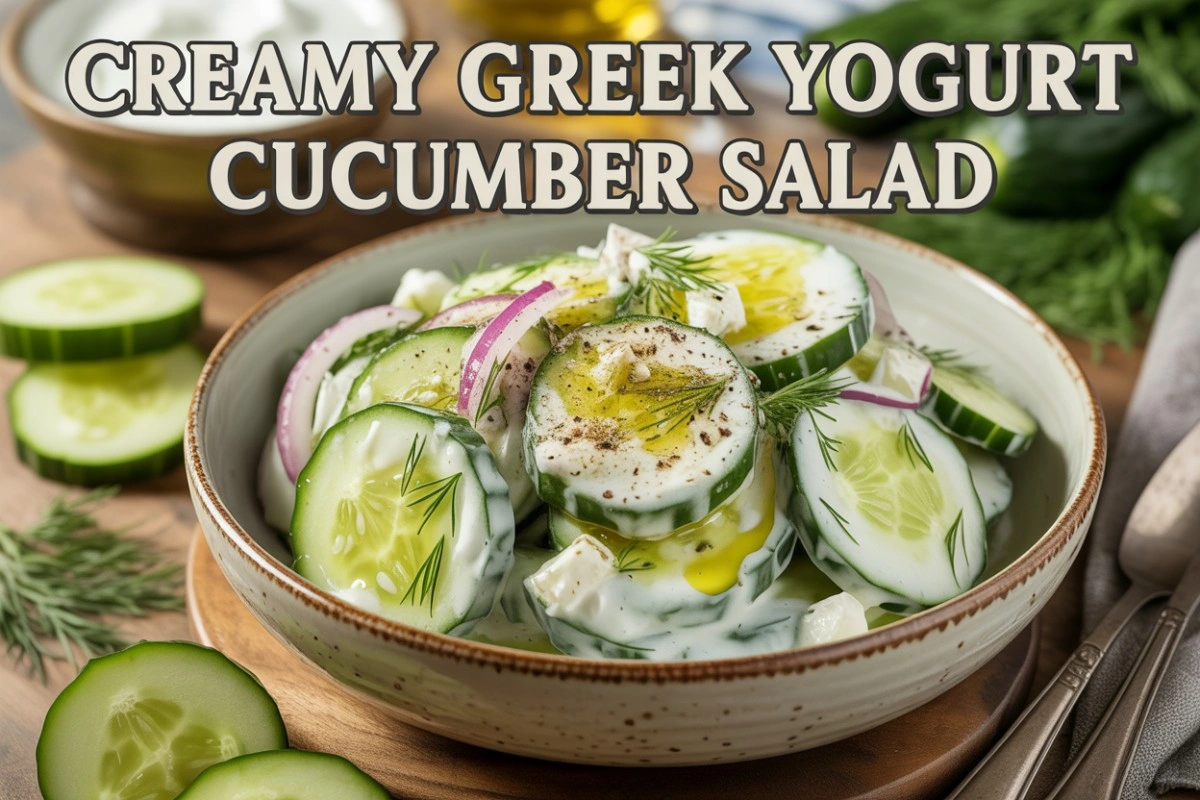
This Creamy Greek Yogurt Cucumber Salad transforms simple ingredients into a refreshing dish that’s perfect for health-conscious home cooks, busy families, and anyone wanting a lighter side that actually tastes amazing.
You’ll discover the secret ingredients that pack maximum flavor into every bite and learn the exact preparation techniques that give this salad its signature creamy texture. We’ll also explore why this simple dish qualifies as a nutritional powerhouse and share smart storage strategies that let you prep ahead for the week.
Get ready to master a versatile recipe that works just as well at summer barbecues as it does for quick weeknight dinners.
Essential Ingredients for Maximum Flavor and Nutrition
Selecting the Perfect Greek Yogurt for Creamy Texture
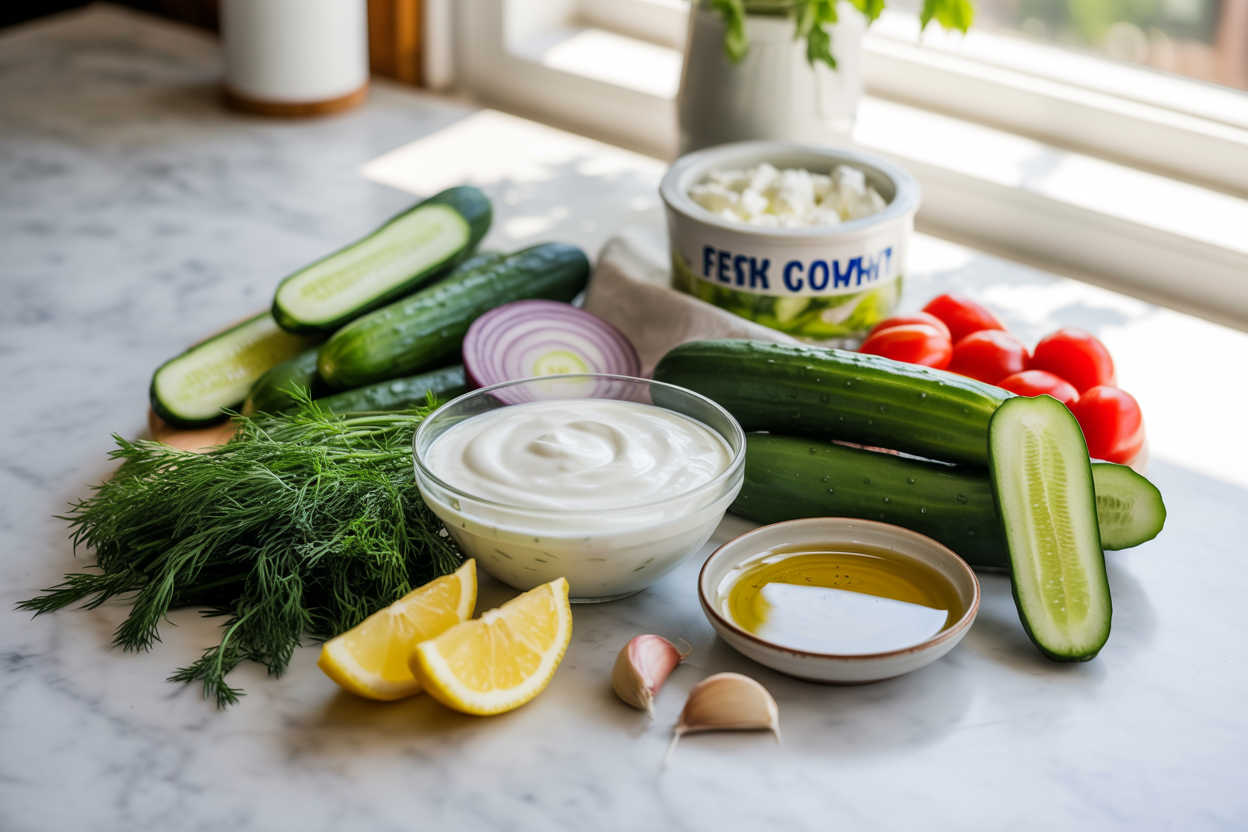
The foundation of any exceptional cucumber salad lies in choosing the right Greek yogurt. Full-fat Greek yogurt delivers the richest, most luxurious texture that coats each cucumber slice beautifully. Look for brands with at least 15-20 grams of protein per serving, which indicates proper straining and concentration. Avoid yogurts with added thickeners like cornstarch or gelatin, as these create an artificial mouthfeel that doesn’t compare to naturally thick, authentic Greek yogurt.
Two-percent fat Greek yogurt works well if you prefer a lighter option, but avoid non-fat varieties entirely. They tend to separate when mixed with salt and cucumber juices, creating an unappetizing watery mess. Brands like Fage, Chobani, or Two Good offer consistent quality, though local dairy producers often provide superior flavor profiles worth exploring.
Check the ingredient list carefully. The best Greek yogurts contain only milk and live active cultures. Skip products with added sugars, artificial flavors, or stabilizers. Fresh yogurt should taste clean and tangy without any bitter aftertaste that might overpower the delicate cucumber flavors.
Choosing Fresh Cucumbers for Optimal Crunch
English cucumbers reign supreme for this salad due to their thin skin, minimal seeds, and crisp texture. Their mild flavor won’t compete with the yogurt’s tanginess, and they maintain their crunch even after sitting in the dressing. Persian cucumbers offer similar benefits with their sweet, delicate taste and firm flesh.
Regular slicing cucumbers work in a pinch, but require extra preparation. Peel them completely and scoop out the seedy center using a spoon to prevent excess moisture from diluting your dressing. Kirby cucumbers bring excellent crunch but can taste slightly bitter, so taste-test before committing to a full batch.
Fresh cucumbers should feel firm and heavy for their size. Avoid any with soft spots, yellowing, or wrinkled skin. The best cucumbers have a bright green color and smooth, unblemished surface. Store them in the refrigerator’s crisper drawer and use within three to five days for peak freshness.
Salting cucumber slices and letting them drain for 15-20 minutes removes excess water that would otherwise thin your dressing. This simple step keeps your salad creamy and prevents that disappointing watery pool at the bottom of the bowl.
Must-Have Herbs and Seasonings That Transform the Dish
Fresh dill stands as the classic herb choice, bringing bright, slightly citrusy notes that pair perfectly with cucumber’s clean taste. Use about two tablespoons of chopped fresh dill per large cucumber. Dried dill works when fresh isn’t available, but use only one teaspoon as the dried version concentrates the flavor significantly.
Fresh mint creates a refreshing twist that’s particularly welcome during hot summer months. Tear the leaves rather than chopping to prevent bruising and bitter flavors. Parsley adds color and a clean, grassy note that complements both cucumber and yogurt beautifully.
Garlic powder provides depth without the harsh bite of fresh garlic, which can overpower the salad’s delicate balance. Start with half a teaspoon and adjust to taste. Sea salt or kosher salt enhances all the flavors, but add it gradually since Greek yogurt already contains sodium.
Fresh lemon juice brightens the entire dish and prevents the yogurt from tasting flat. Use about one tablespoon per cup of yogurt, adjusting based on your preference for acidity. White wine vinegar offers a more subtle tang if lemon seems too assertive.
Optional Add-ins to Boost Nutritional Value
Toasted pine nuts or chopped walnuts contribute healthy fats and satisfying crunch that elevates this salad from side dish to substantial meal. Pine nuts offer a buttery richness, while walnuts provide omega-3 fatty acids and earthy flavor depth.
Cherry tomatoes cut in half add vibrant color, vitamin C, and lycopene. Choose firm, ripe tomatoes and add them just before serving to prevent them from releasing juice that waters down the dressing. Grape tomatoes work equally well and tend to hold their shape better.
Crumbled feta cheese transforms this salad into a protein-rich meal while adding salty, tangy complexity. Use about quarter cup per large cucumber, and choose high-quality feta packed in brine rather than pre-crumbled varieties that taste chalky and dry.
Red onion provides sharp flavor contrast and beneficial compounds like quercetin. Use it sparingly – about one tablespoon of finely minced onion per cucumber – and rinse the chopped pieces under cold water to mellow their bite. Scallions offer a milder onion flavor that won’t overpower sensitive palates.
Fresh chickpeas or white beans boost protein and fiber content while adding substance that makes this salad meal-worthy. Rinse canned beans thoroughly to remove excess sodium and that slightly metallic taste that comes from the can.
Step-by-Step Preparation Techniques for Professional Results
Proper Cucumber Preparation to Prevent Watery Salad
The secret to a restaurant-quality Greek yogurt cucumber salad lies in removing excess moisture before mixing. Start by washing your cucumbers thoroughly and deciding whether to peel them. Leaving the skin on adds extra nutrition and a pleasant crunch, but peeling creates a more uniform texture.
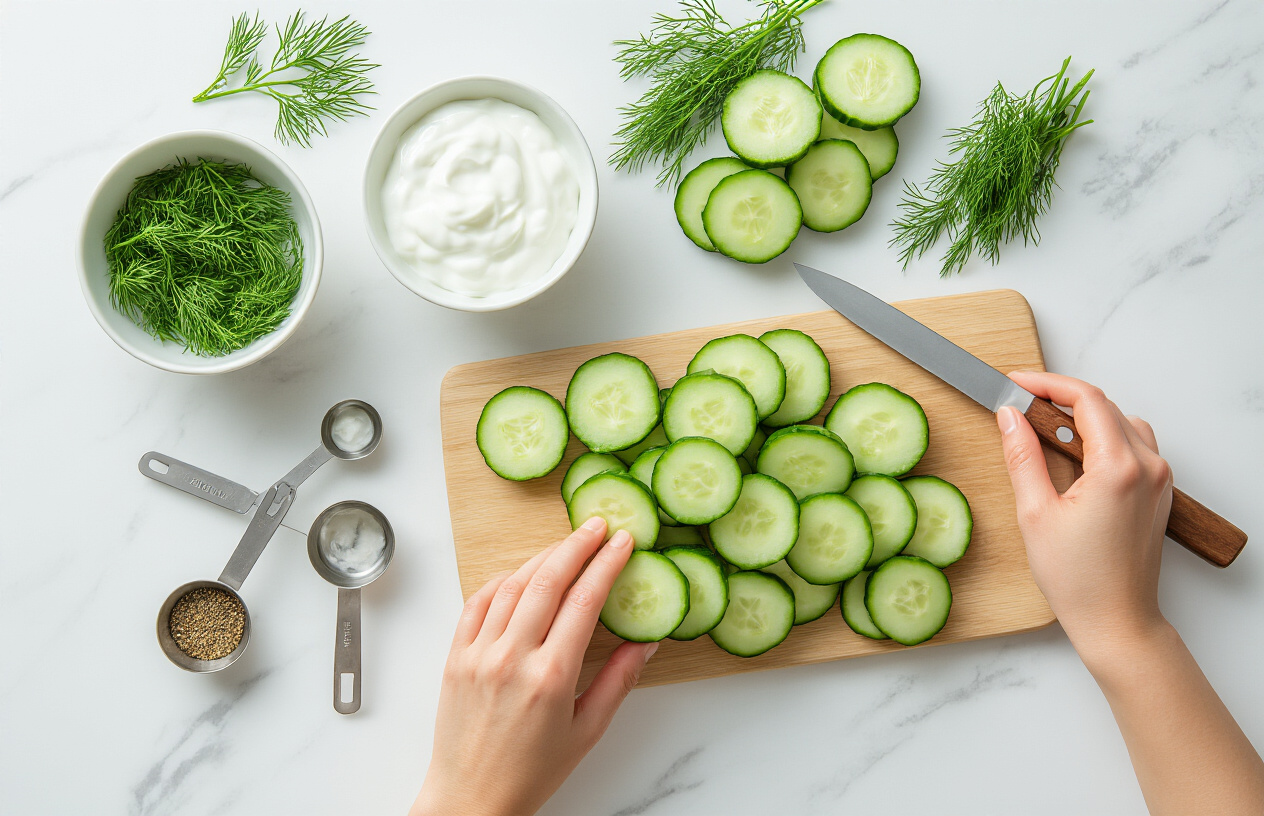
Slice your cucumbers into consistent pieces – about ¼-inch thick rounds or half-moons work perfectly. Place the sliced cucumbers in a large colander and sprinkle generously with coarse salt, using about 1 teaspoon per large cucumber. Toss the pieces to coat evenly, then let them sit for 20-30 minutes.
During this waiting period, the salt draws out excess water through osmosis. You’ll see moisture pooling at the bottom of the colander. After the resting time, rinse the cucumber slices thoroughly under cold water to remove the salt, then pat them completely dry with paper towels or a clean kitchen towel. This extra step prevents your finished salad from becoming watery and diluted.
For even crispier results, place the dried cucumber slices on a clean towel and refrigerate for an additional 15 minutes before adding them to your yogurt base.
Creating the Perfect Greek Yogurt Base
Choose full-fat Greek yogurt for the richest, most satisfying base – the extra fat content prevents the dressing from breaking and provides better flavor absorption. Avoid non-fat varieties, which can taste chalky and separate easily.
Start with cold yogurt straight from the refrigerator. Measure out your desired amount into a mixing bowl and let it sit at room temperature for 5 minutes to soften slightly, making it easier to mix. Add a pinch of salt to enhance the yogurt’s natural tanginess.
For extra richness, fold in a tablespoon of high-quality olive oil per cup of yogurt. This creates a silkier texture and helps the dressing cling better to the cucumbers. Some home cooks add a squeeze of fresh lemon juice at this stage, but save the citrus for the final seasoning step to maintain better control over acidity levels.
Whisk the yogurt base gently until smooth and creamy. Avoid overmixing, which can make the yogurt thin and watery. The goal is a thick, luxurious consistency that coats the cucumbers without pooling at the bottom of the bowl.
Balancing Flavors with Strategic Seasoning
Building layers of flavor transforms simple ingredients into something extraordinary. Start with fresh garlic – either minced extremely fine or pressed through a garlic press. One small clove per cup of yogurt provides enough punch without overwhelming the delicate cucumber flavor.
Add herbs gradually, tasting as you go. Fresh dill is the classic choice, providing a bright, grassy note that pairs beautifully with both cucumber and yogurt. Chop it finely and add about 2 tablespoons per cup of yogurt. Fresh mint offers a refreshing alternative, while parsley adds earthiness.
Season with kosher salt and freshly ground black pepper, starting with small amounts. The cucumbers have already been salted, so taste before adding more. A touch of white wine vinegar or fresh lemon juice brightens the entire dish – start with 1 teaspoon per cup of yogurt.
For depth, consider these finishing touches:
- Sumac for tangy, fruity notes
- Za’atar for Mediterranean complexity
- Smoked paprika for subtle warmth
- Crumbled feta for extra saltiness and texture
Mix all seasonings into the yogurt base first, then fold in the prepared cucumbers. Let the salad rest in the refrigerator for at least 30 minutes before serving, allowing flavors to meld and develop.
Health Benefits That Make This Salad a Superfood Choice
Protein Power from Greek Yogurt for Muscle Building
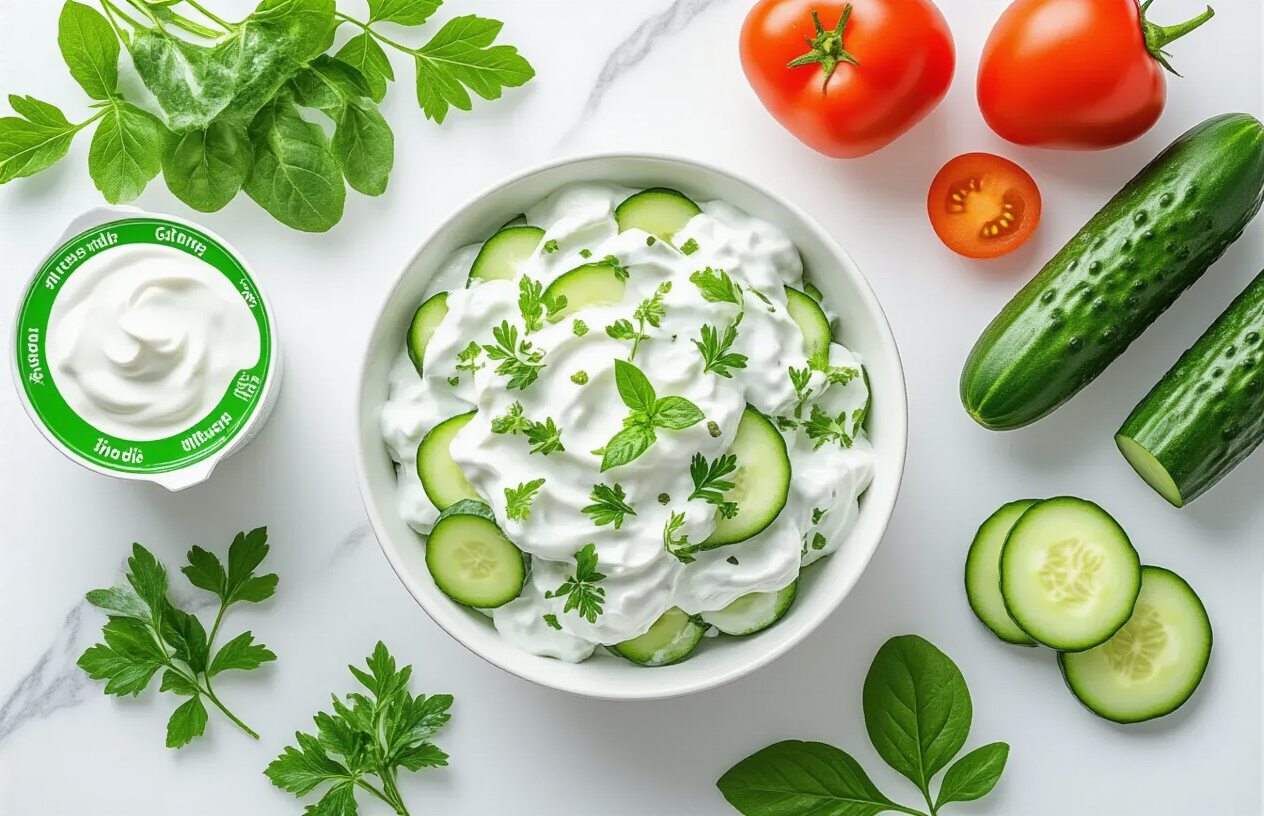
Greek yogurt delivers an impressive protein punch that makes this salad a muscle-building powerhouse. With approximately 15-20 grams of protein per cup, Greek yogurt contains nearly double the protein of regular yogurt. This high-quality complete protein provides all nine essential amino acids your body needs for muscle repair and growth.
The slow-digesting casein protein in Greek yogurt makes it particularly valuable for sustained muscle recovery. Athletes and fitness enthusiasts often turn to Greek yogurt as a post-workout snack because it supports muscle protein synthesis for hours after consumption. When combined with the light carbohydrates from cucumbers, this salad creates an ideal recovery meal that helps rebuild muscle tissue while preventing muscle breakdown.
Hydration and Vitamins from Fresh Cucumbers
Cucumbers bring serious hydration benefits to the table with their 96% water content. This makes the salad an excellent choice for maintaining optimal fluid balance, especially during hot summer months or after physical activity. The high water content also helps create that refreshing, crisp texture that makes this dish so satisfying.
Beyond hydration, cucumbers pack essential vitamins and minerals including:
- Vitamin K: Supports bone health and blood clotting
- Vitamin C: Boosts immune function and collagen production
- Potassium: Regulates blood pressure and heart function
- Magnesium: Supports muscle and nerve function
- Silica: Promotes healthy skin and connective tissue
The skin of cucumbers contains the highest concentration of nutrients, so keeping it on maximizes the nutritional value while adding extra fiber and antioxidants.
Digestive Health Support from Probiotics
Greek yogurt serves as an excellent source of beneficial probiotics that promote a healthy gut microbiome. These live bacterial cultures, including Lactobacillus bulgaricus and Streptococcus thermophilus, help balance intestinal flora and support digestive wellness.
Regular consumption of probiotic-rich foods like Greek yogurt can improve lactose digestion, reduce bloating, and enhance overall gut health. The probiotics work by crowding out harmful bacteria while supporting the growth of beneficial microorganisms in your digestive system.
The combination of probiotics from yogurt and the natural fiber from cucumber skins creates a gut-friendly duo that supports regular bowel movements and may help reduce symptoms of digestive discomfort. This makes the salad particularly beneficial for people with sensitive stomachs or those looking to improve their digestive health naturally.
Weight Management Benefits for Healthy Living
This salad excels as a weight management tool thanks to its unique nutritional profile. The high protein content from Greek yogurt increases satiety and helps control hunger hormones, making you feel fuller for longer periods. Protein also has a higher thermic effect than carbohydrates or fats, meaning your body burns more calories digesting it.
Cucumbers add volume and crunch with minimal calories – just 16 calories per cup. This creates a satisfying dish that fills you up without packing on pounds. The high water and fiber content helps you feel satisfied while consuming fewer overall calories.
The salad works well as a healthy snack replacement or light meal that won’t derail weight loss goals. Its low energy density means you can eat a generous portion while staying within your caloric needs.
Anti-inflammatory Properties for Overall Wellness
Both main ingredients in this salad offer natural anti-inflammatory compounds that support overall health. Cucumbers contain flavonoids and tannins that have been shown to reduce inflammatory markers in the body. The antioxidant quercetin found in cucumber skin specifically helps combat oxidative stress and inflammation.
Greek yogurt contributes anti-inflammatory benefits through its probiotic content, which helps reduce systemic inflammation by supporting gut health. Research shows that a healthy gut microbiome plays a crucial role in regulating inflammatory responses throughout the body.
The anti-inflammatory properties of this salad may help reduce the risk of chronic diseases, support joint health, and promote faster recovery from exercise. Regular consumption as part of a balanced diet can contribute to lower levels of inflammatory markers like C-reactive protein.
Serving Suggestions and Pairing Ideas for Every Occasion
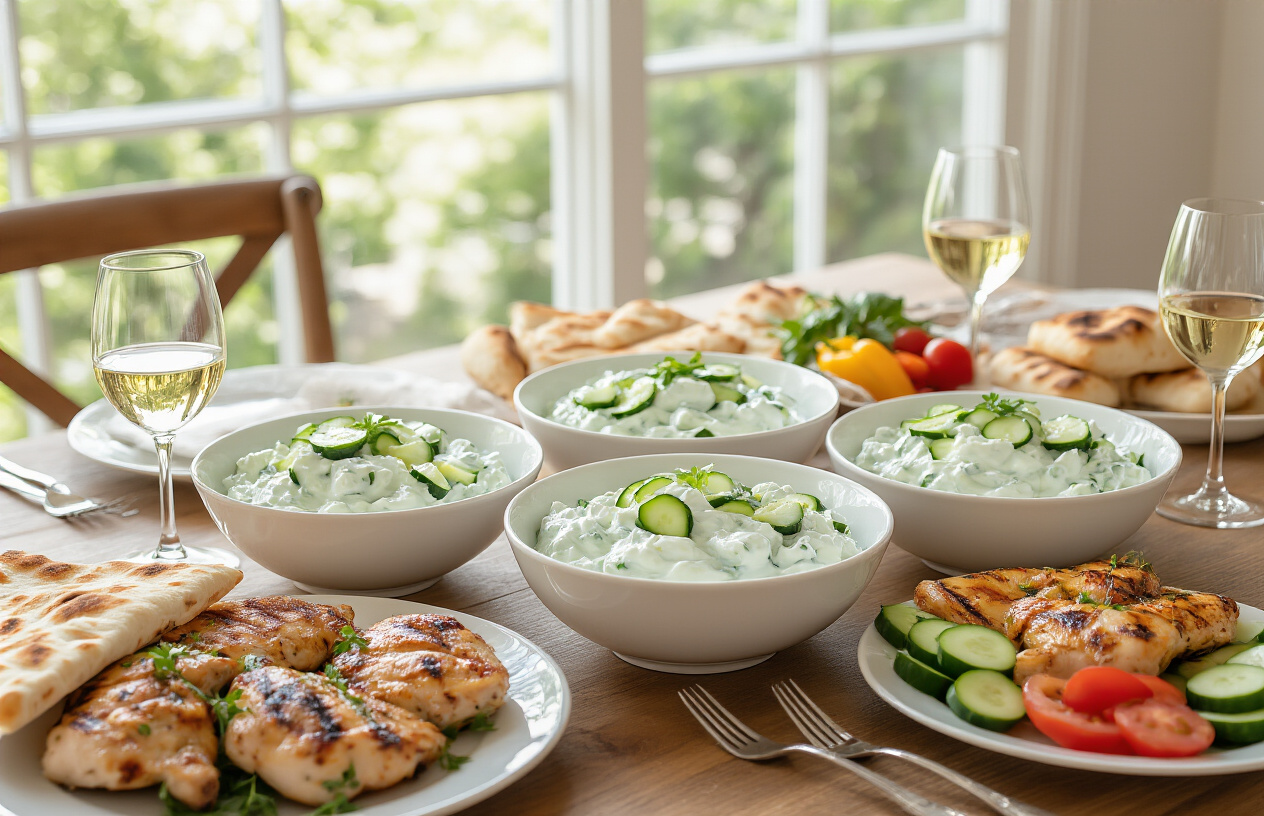
Perfect Side Dish Combinations for Mediterranean Meals
This creamy cucumber salad shines brightest when paired with bold Mediterranean flavors. Serve it alongside grilled lamb kebabs, where the cool, tangy yogurt provides a refreshing contrast to the rich, seasoned meat. The salad’s crisp texture complements tender moussaka beautifully, cutting through the heavy béchamel sauce with its bright acidity.
For seafood lovers, pair this salad with grilled salmon or pan-seared halibut. The cucumber’s freshness enhances the fish’s natural flavors while the Greek yogurt adds protein without overwhelming delicate seafood. Chicken souvlaki becomes even more satisfying when accompanied by this cooling side dish.
Vegetarian Mediterranean meals benefit tremendously from this addition. Serve it with stuffed grape leaves, roasted eggplant, or a hearty lentil stew. The probiotics in Greek yogurt help balance richer vegetable dishes, while the cucumber adds necessary crunch to softer textures.
| Main Dish | Why It Works | Flavor Profile |
|---|---|---|
| Grilled Lamb | Cooling contrast to spiced meat | Tangy meets savory |
| Seafood | Enhances without overpowering | Fresh and light |
| Vegetarian Stews | Adds protein and texture | Creamy meets earthy |
Transforming Into a Complete Light Lunch
Turn this simple salad into a satisfying meal by incorporating protein-rich additions and hearty elements. Add cubed grilled chicken breast for a protein boost that keeps you full for hours. The chicken absorbs the yogurt dressing beautifully, creating a cohesive dish that feels substantial.
Chickpeas make an excellent plant-based protein addition. Their nutty flavor pairs wonderfully with cucumber’s freshness, while their fiber content creates lasting satiety. Toss in a handful of toasted pine nuts or chopped walnuts for healthy fats and extra crunch.
Create a Mediterranean grain bowl by serving the salad over quinoa, bulgur wheat, or brown rice. These whole grains provide complex carbohydrates that transform the salad into a complete nutritional package. Add cherry tomatoes, Kalamata olives, and crumbled feta cheese to round out the flavors.
For a lighter approach, serve the salad in large lettuce cups or over a bed of mixed greens. This creates volume without heavy calories while maintaining the dish’s refreshing character.
Complete Lunch Add-ins:
- Grilled protein (chicken, fish, tofu)
- Legumes (chickpeas, white beans)
- Whole grains (quinoa, bulgur)
- Nuts and seeds (pine nuts, pumpkin seeds)
- Additional vegetables (tomatoes, bell peppers)
Party and Gathering Presentation Tips
Presentation transforms this simple salad into an elegant party offering that impresses guests while remaining budget-friendly and easy to prepare. Serve in individual glass mason jars for a modern, Instagram-worthy presentation. Layer the cucumber mixture at the bottom, add a sprinkle of fresh herbs on top, and provide small spoons for easy eating while mingling.
For larger gatherings, create a stunning display using a large, shallow ceramic bowl. Arrange the salad in the center and surround it with colorful vegetable crudités, pita chips, and olives. This creates an attractive Mediterranean spread that encourages social interaction around the food.
Consider setting up a DIY cucumber salad bar where guests can customize their portions. Provide the base salad alongside small bowls of add-ins like chopped herbs, crumbled cheese, nuts, and different seasoning blends. This interactive approach works especially well for casual outdoor gatherings.
Presentation Ideas:
- Individual mason jar portions for easy serving
- Large ceramic bowl surrounded by Mediterranean accompaniments
- DIY bar with customizable toppings
- Garnish with edible flowers for elegant occasions
- Serve in chilled bowls to maintain freshness
Temperature control remains crucial for food safety and taste. Keep the salad chilled until serving time, and consider placing the serving bowl on a bed of ice for longer events. Provide serving utensils that won’t break down the cucumber’s texture, such as slotted spoons that drain excess liquid.
Storage Tips and Make-Ahead Strategies for Busy Schedules
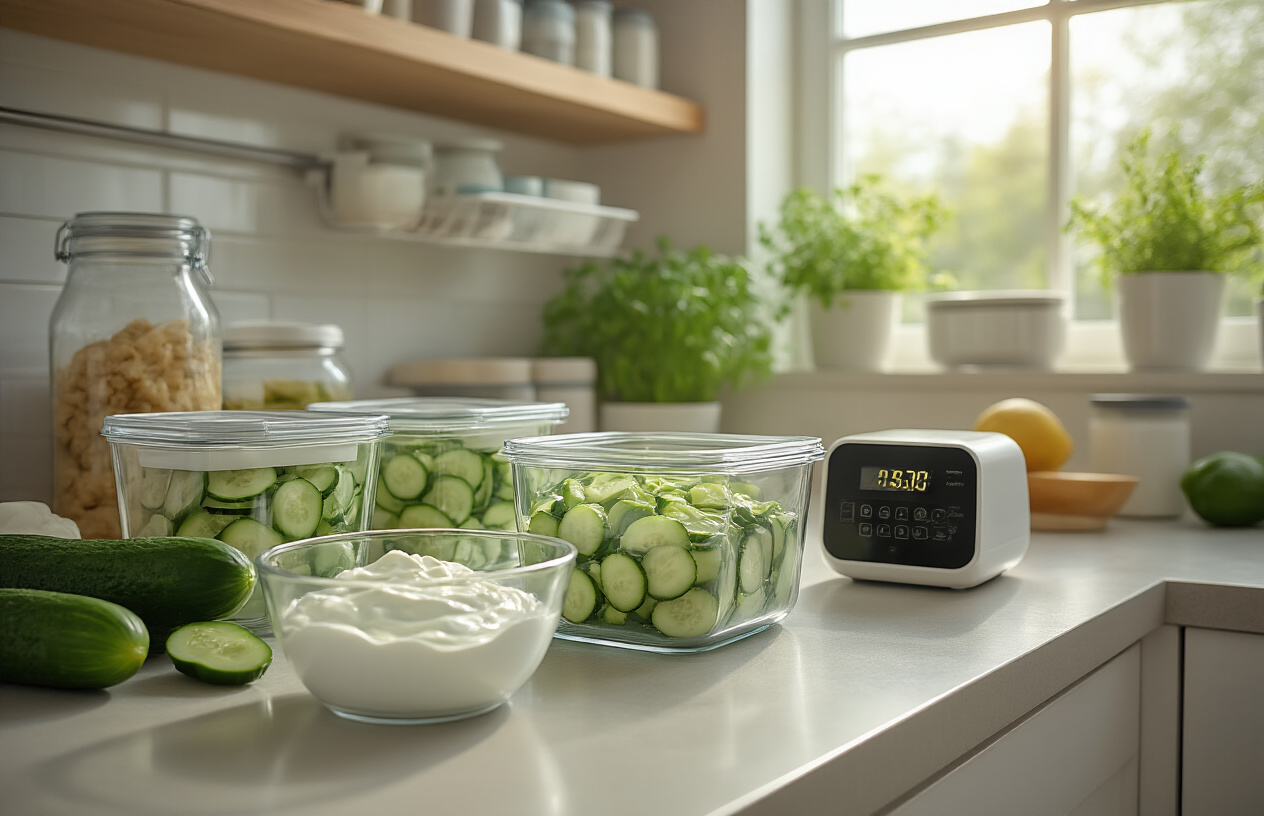
Proper Storage Techniques to Maintain Freshness
Your creamy Greek yogurt cucumber salad stays fresh longer when stored correctly. Always use an airtight container to prevent the salad from absorbing other flavors in your refrigerator. Glass containers work best since they don’t retain odors and allow you to see the contents clearly.
Keep the salad refrigerated at 40°F or below. The yogurt-based dressing can spoil quickly at room temperature, so never leave it out for more than two hours. If you’re making the salad ahead of time, consider storing the dressing separately from the cucumbers and other vegetables to prevent them from becoming soggy.
Place a paper towel at the bottom of your storage container to absorb excess moisture. Cucumbers naturally release water, and this simple trick helps maintain the salad’s texture. Change the paper towel if it becomes saturated.
For maximum freshness, consume your prepared salad within 2-3 days. The yogurt will stay safe longer, but the vegetables lose their crispness and vibrant flavor after this timeframe.
Meal Prep Guidelines for Weekly Planning
Sunday meal prep sessions make weekday eating effortless with this versatile salad. Prepare all your ingredients in advance by washing, peeling, and chopping vegetables, then storing them in separate containers. This approach gives you flexibility to customize portions throughout the week.
Pre-portion your salad ingredients into individual glass containers. Add cucumbers, herbs, and any other vegetables to one compartment, while keeping the yogurt dressing in a separate small container or divided section. This prevents sogginess and keeps everything fresh.
| Prep Component | Storage Method | Duration |
|---|---|---|
| Chopped cucumbers | Airtight container with paper towel | 4-5 days |
| Fresh herbs | Wrapped in damp paper towel | 3-4 days |
| Yogurt dressing | Small sealed container | 5-7 days |
| Complete salad | Assembled and refrigerated | 2-3 days |
Batch preparation works wonderfully for this recipe. Make a large batch of dressing since it keeps well and can be used for multiple meals. Pre-cut vegetables on Sunday, and you’ll have fresh salads ready in minutes all week long.
Signs to Know When Your Salad Needs Refreshing
Watch for these telltale signs that indicate your salad has passed its prime. Fresh cucumbers should feel firm and crisp when you bite into them. If they become soft, mushy, or develop a slimy texture, it’s time to make a fresh batch.
The yogurt dressing provides clear visual cues about freshness. Look for any separation, curdling, or watery consistency that wasn’t there originally. Fresh Greek yogurt maintains a smooth, creamy texture throughout storage.
Smell changes signal spoilage before visible signs appear. Your salad should smell fresh and tangy from the yogurt and herbs. Any sour, off, or unpleasant odors mean bacteria has started growing and the salad should be discarded immediately.
Color changes in vegetables indicate declining quality. Cucumbers may develop yellow spots or lose their vibrant green color. Fresh herbs will wilt and turn dark or black when they’re no longer good to eat.
Trust your instincts – if something looks, smells, or tastes different from when you first made it, err on the side of caution and prepare a fresh batch. Food safety always comes first, and this salad is quick enough to remake when needed.
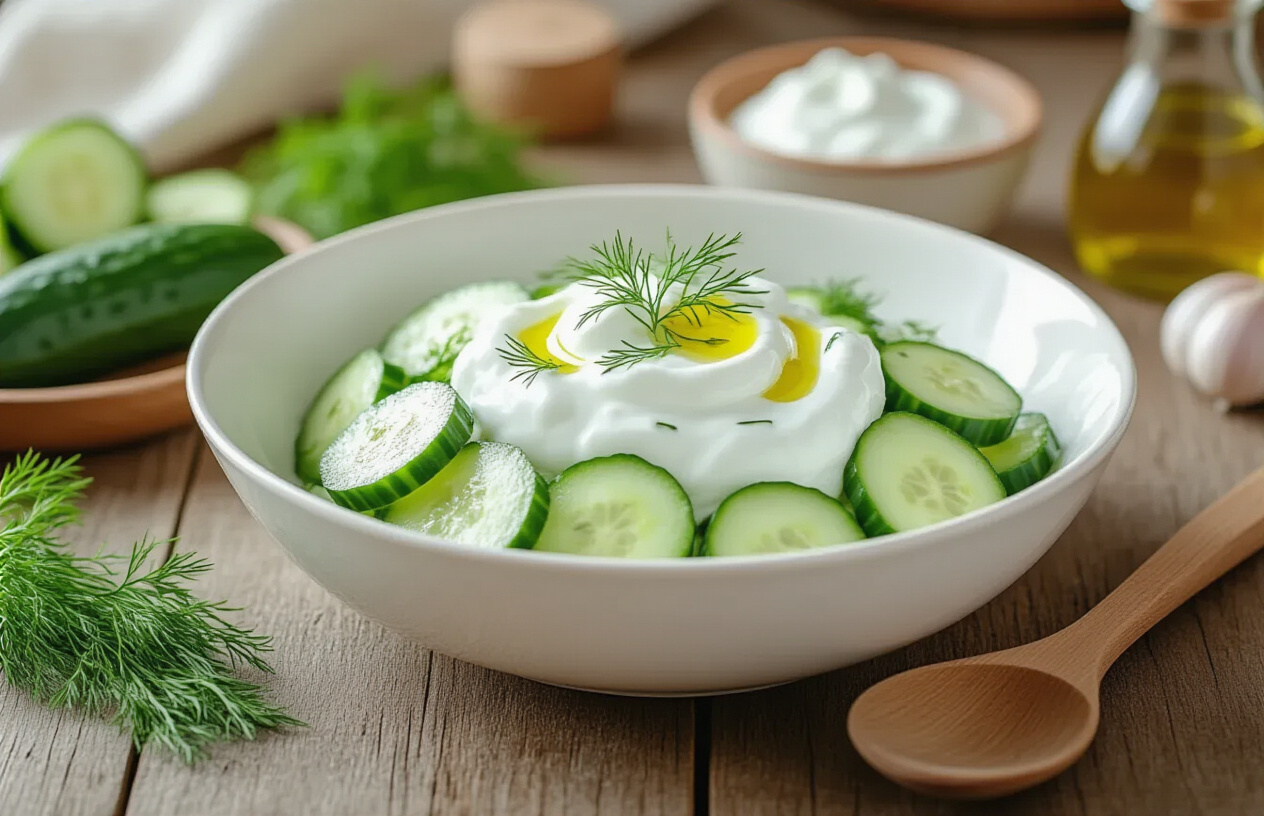
This refreshing cucumber salad brings together simple ingredients to create something truly special. The combination of protein-rich Greek yogurt with fresh cucumbers gives you a dish that’s both nutritious and satisfying. Getting the preparation right makes all the difference – from properly draining your cucumbers to achieving that perfect creamy texture that keeps everyone coming back for more.
The beauty of this salad lies in its versatility and health benefits. You’re getting probiotics, vitamins, and hydration all in one delicious package. Whether you’re serving it as a side dish for dinner, packing it for lunch, or bringing it to a potluck, this recipe adapts to any situation. Make it ahead on Sunday, store it properly, and you’ll have a healthy option ready throughout the week. Give this creamy Greek yogurt cucumber salad a try – your taste buds and your body will thank you.