Introduction
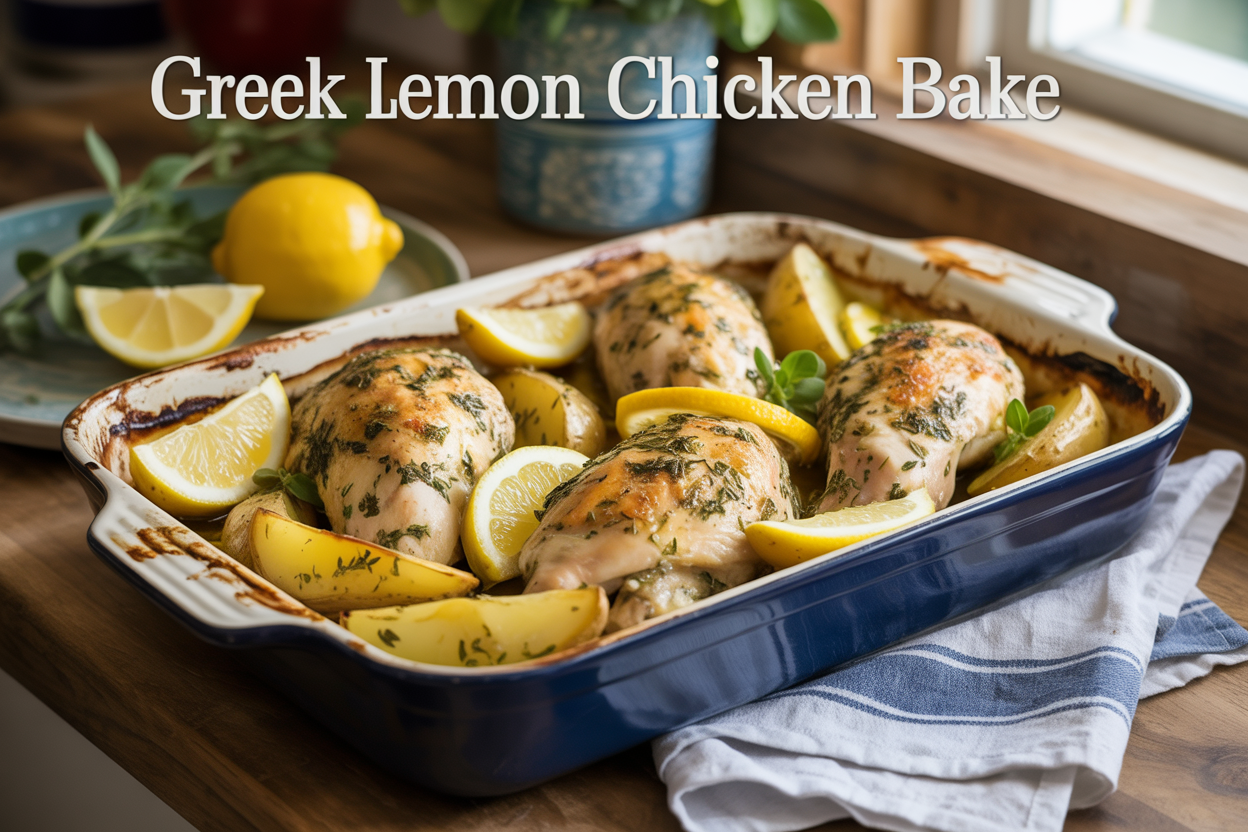
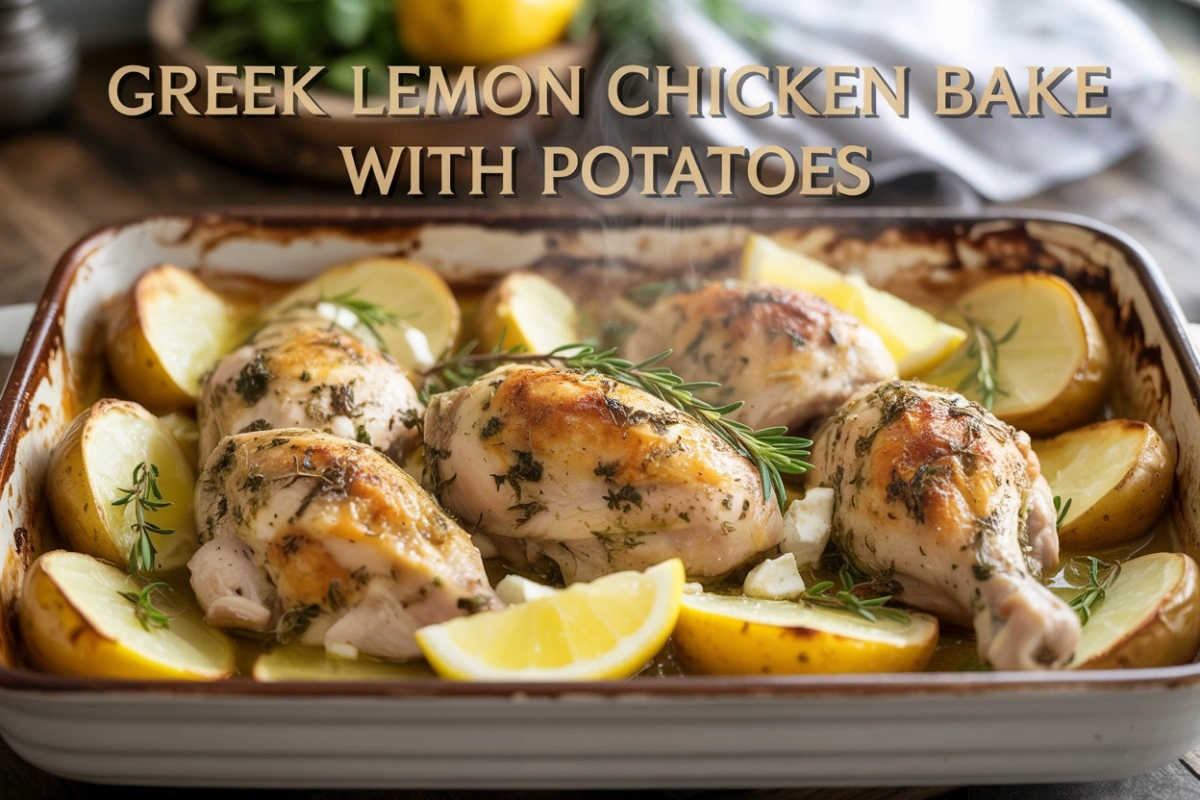
This Greek Lemon Chicken Bake with Potatoes brings together tender, herb-crusted chicken and golden roasted potatoes in one pan for a complete Mediterranean meal. Perfect for busy weeknight dinners or weekend entertaining, this recipe delivers authentic Greek flavors without complicated techniques.
You’ll learn the key ingredients that create that signature Greek taste, plus foolproof preparation methods that guarantee juicy chicken and perfectly crispy potatoes every time. We’ll also share expert tips for taking your dish from good to restaurant-quality, along with creative serving ideas to make this family favorite even more special.
Essential Ingredients for Authentic Greek Flavor
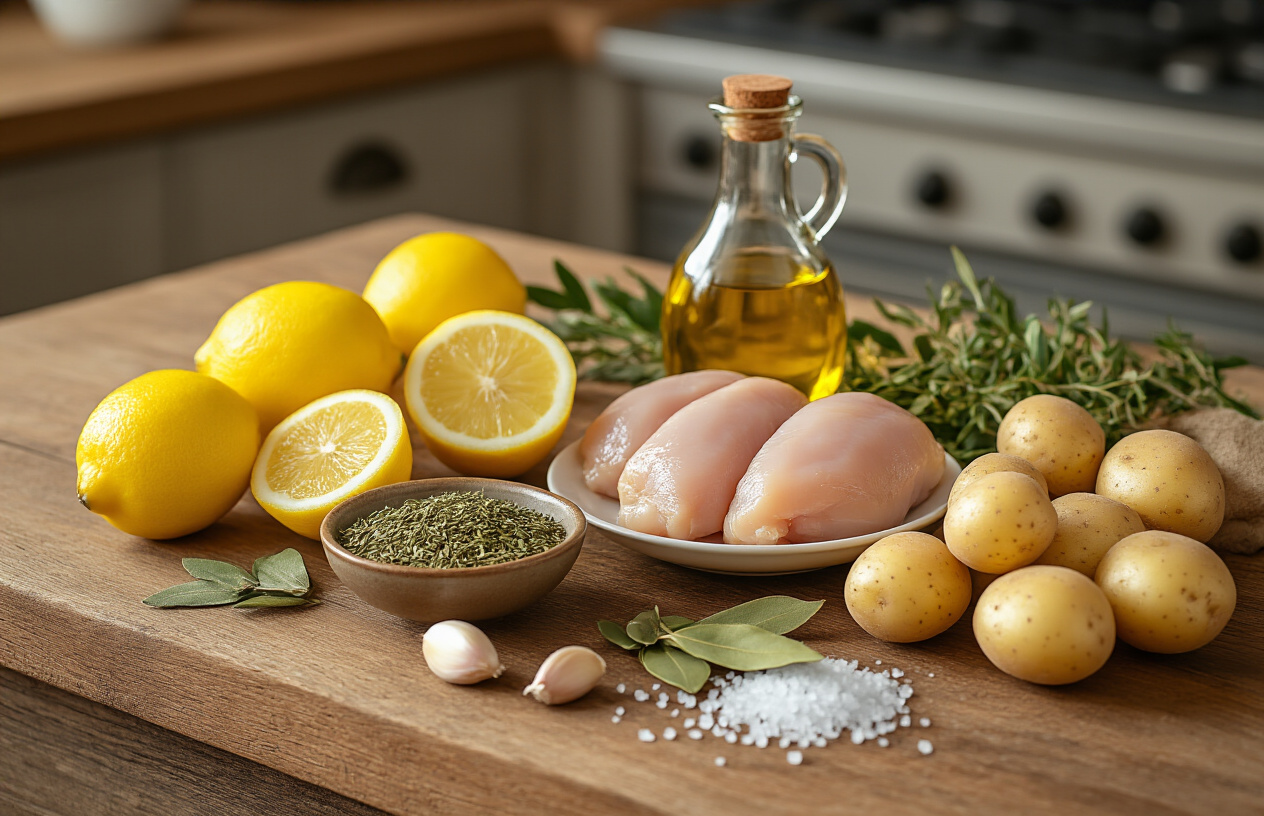
Fresh lemon juice and zest for maximum citrus impact
The backbone of any authentic Greek lemon chicken lies in the quality and preparation of your lemons. Choose fresh, heavy lemons with bright yellow skin that gives slightly when pressed. Meyer lemons work beautifully when available, offering a sweeter, more complex flavor profile than standard varieties.
You’ll need both juice and zest from approximately 3-4 large lemons for a typical family-sized bake. The zest contains essential oils that create that distinctive Mediterranean aroma, while the juice provides the tangy acidity that tenderizes the chicken and infuses every bite with brightness.
Roll each lemon firmly on your counter before cutting to maximize juice extraction. Zest first using a microplane grater, avoiding the bitter white pith underneath. Fresh juice beats bottled every time – the difference in flavor is remarkable and immediately noticeable.
Extra virgin olive oil as the foundation
Greek cuisine revolves around exceptional olive oil, and this dish demands nothing less than high-quality extra virgin. Look for cold-pressed oils with harvest dates within the past 18 months. Greek varieties like Koroneiki or Kalamata bring authentic regional character to your bake.
You’ll use olive oil in multiple ways throughout this recipe. Start with about ½ cup for marinating and coating, then add more for drizzling before and during cooking. The oil helps create golden, crispy skin while keeping the meat moist and flavorful.
Don’t skimp on quality here – the olive oil’s fruity, peppery notes become concentrated during the long baking process, creating layers of flavor that cheaper oils simply can’t match.
Traditional Greek herbs and spices
Oregano reigns supreme in Greek cooking, and dried Mediterranean oregano delivers more concentrated flavor than fresh for this application. Crush it between your palms before adding to release maximum aroma. Combine with dried thyme for earthy depth.
Fresh rosemary sprigs tucked around the chicken and potatoes infuse everything with pine-like fragrance. Strip some leaves and chop finely for the marinade while leaving whole sprigs for visual appeal.
Garlic plays a starring role – use at least 6-8 cloves, crushed and minced. Add plenty of coarse sea salt and freshly cracked black pepper. A pinch of sweet paprika adds subtle warmth and beautiful color.
Quality chicken pieces selection guide
Choose bone-in, skin-on pieces for the best results. Thighs and drumsticks stay juicier than breasts during the longer cooking time, while the bones add flavor to the dish. A whole chicken cut into 8 pieces works perfectly, or mix thighs with drumsticks for even cooking.
Look for free-range or organic chicken when possible – the superior flavor justifies the extra cost. Pat pieces completely dry before seasoning to ensure proper browning and crispy skin development.
Avoid pre-marinated or enhanced chicken, which can contain excess sodium that interferes with the traditional Greek flavors you’re building.
Preparing Your Chicken and Potatoes for Perfect Results
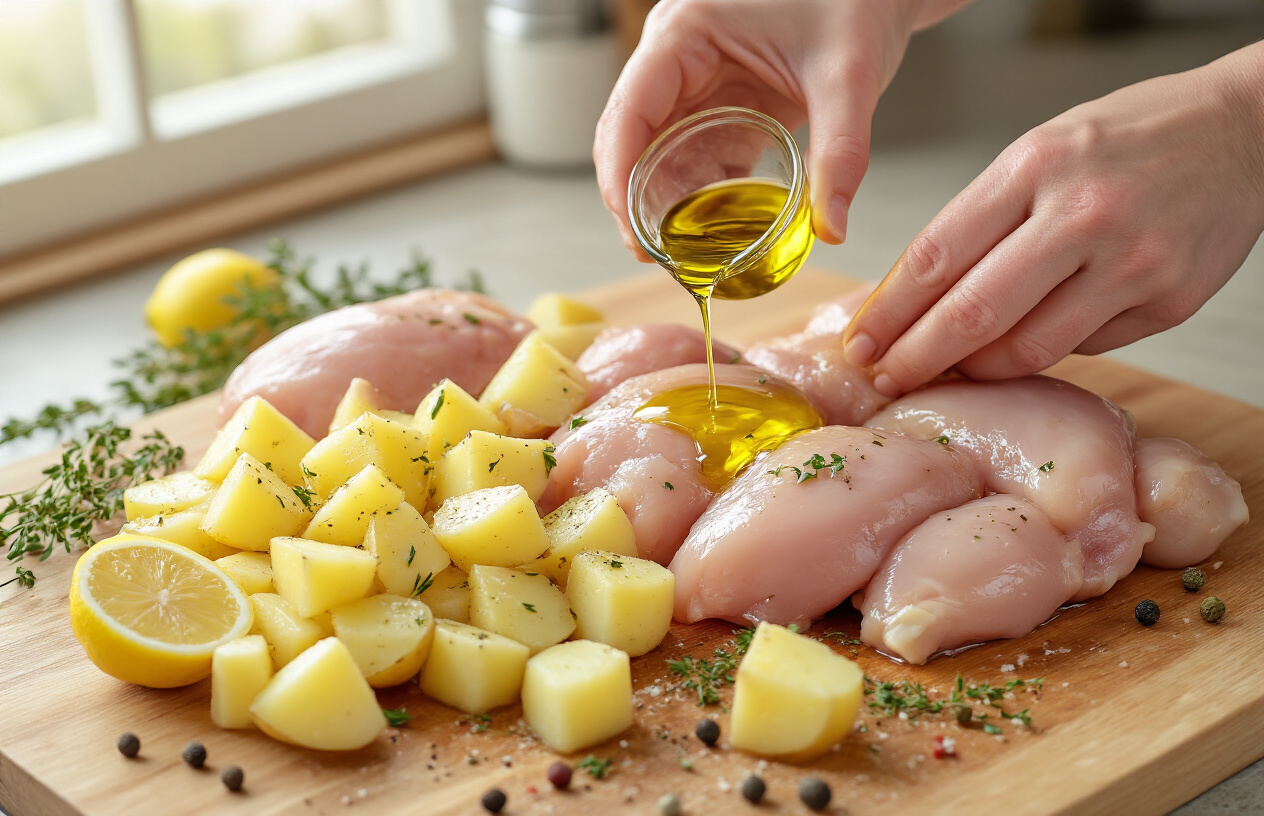
Marinating techniques for tender, flavorful chicken
The secret to succulent Greek lemon chicken lies in proper marinating. Start by creating a marinade with olive oil, fresh lemon juice, minced garlic, dried oregano, and a pinch of salt. The acid in lemon juice breaks down tough muscle fibers, while olive oil carries flavors deep into the meat.
For best results, marinate chicken pieces for 2-4 hours at room temperature or overnight in the refrigerator. Skin-on thighs and drumsticks benefit most from extended marinating since they have more connective tissue. If you’re short on time, even 30 minutes makes a noticeable difference.
Score the chicken skin in a crosshatch pattern before marinating – this allows flavors to penetrate better and creates crispy edges during baking. Avoid over-marinating beyond 24 hours, as the acid can make the meat mushy.
Potato varieties that hold their shape during baking
Choosing the right potato variety prevents your dish from turning into mush. Waxy potatoes work best for this recipe because they maintain their structure during long cooking times.
| Potato Type | Cooking Performance | Best Use |
|---|---|---|
| Yukon Gold | Excellent – holds shape well | Perfect for Greek lemon bakes |
| Red Potatoes | Very good – creamy texture | Great alternative option |
| Fingerlings | Good – unique presentation | Special occasion dishes |
| Russets | Poor – become mealy | Avoid for this recipe |
Yukon Gold potatoes are the gold standard here. Their thin skin crisps beautifully while the flesh stays creamy. Red potatoes come in second place, offering similar benefits with a slightly different flavor profile.
Proper cutting and seasoning methods
Cut potatoes into uniform wedges about 1½ inches thick. This size ensures they cook evenly alongside the chicken without becoming overcooked or undercooked. Irregular pieces create hot spots and uneven textures.
After cutting, rinse potato wedges in cold water to remove excess starch, then pat completely dry. This step is crucial for achieving crispy edges. Toss the dried potatoes with olive oil, salt, pepper, and a generous sprinkle of oregano.
Arrange potatoes cut-side down in your baking dish first – they need more cooking time than chicken. Season the cut surfaces generously since potatoes absorb flavors slowly. The direct contact with the pan creates those coveted golden-brown edges that make this dish restaurant-worthy.
Step-by-Step Cooking Process for Restaurant-Quality Results
Optimal Oven Temperature and Rack Positioning
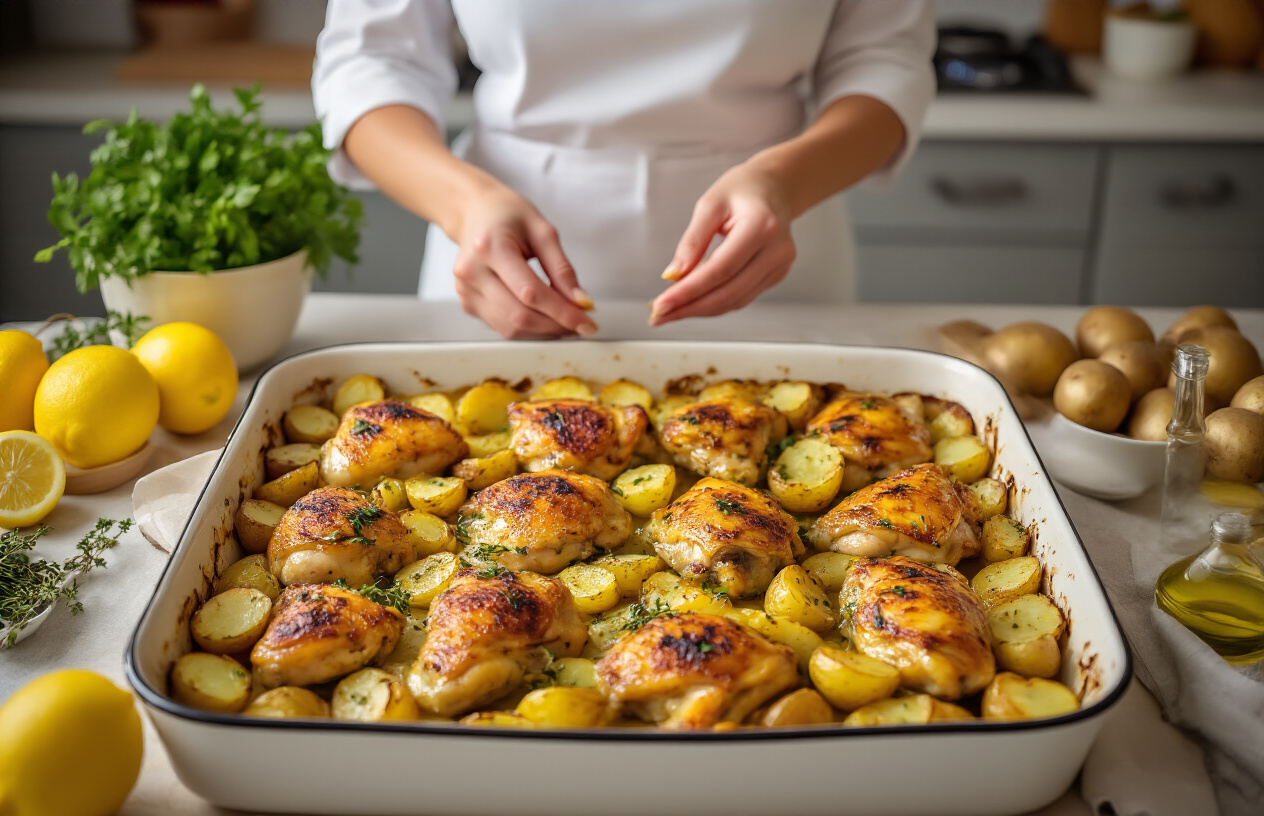
Preheat your oven to 425°F (220°C) for the perfect balance of crispy skin and tender meat. This temperature creates the ideal environment where the chicken skin becomes beautifully golden while the potatoes develop a crispy exterior and fluffy interior. Position your oven rack in the middle position to ensure even heat distribution around your dish. Avoid placing the rack too high, which can cause the top to brown too quickly while leaving the bottom undercooked.
Layering Ingredients for Even Cooking
Start by spreading your seasoned potato wedges in a single layer across the bottom of your roasting pan. The potatoes need direct contact with the pan to achieve that coveted crispy bottom. Drizzle half of your olive oil and lemon juice mixture over the potatoes before placing the chicken pieces on top. This layering technique allows the chicken juices to drip down and flavor the potatoes while preventing the chicken from sitting in liquid and becoming soggy.
| Layer | Ingredient | Purpose |
|---|---|---|
| Bottom | Potato wedges | Direct heat contact for crispiness |
| Middle | Chicken pieces | Allows juices to flavor potatoes |
| Top | Herbs and lemon slices | Aromatics and visual appeal |
Timing Guidelines for Perfectly Cooked Chicken and Potatoes
Plan for a total cooking time of 45-60 minutes, depending on the size of your chicken pieces. Bone-in thighs typically need 50-55 minutes, while breast pieces require 45-50 minutes. The potatoes will be ready when they’re easily pierced with a fork and have golden-brown edges. Start checking at the 40-minute mark to gauge your progress and adjust timing as needed.
Basting Techniques for Golden, Crispy Skin
Baste your chicken every 20 minutes using the pan juices combined with fresh lemon juice and olive oil. Use a large spoon or baster to drizzle the liquid over the chicken skin, which helps develop that restaurant-quality golden color. Avoid over-basting, as this can make the skin soggy rather than crispy. Two to three basting sessions during cooking provide optimal results.
Testing for Doneness Without Overcooking
Insert a meat thermometer into the thickest part of the chicken, avoiding bone contact. Chicken is perfectly cooked at 165°F (74°C) internal temperature. The juices should run clear when pierced, and the skin should be golden brown and crispy to the touch. For potatoes, they’re done when easily pierced with a fork and the edges are crispy and golden.
Pro Tips for Enhanced Flavor and Presentation
Creating the perfect lemon-herb crust
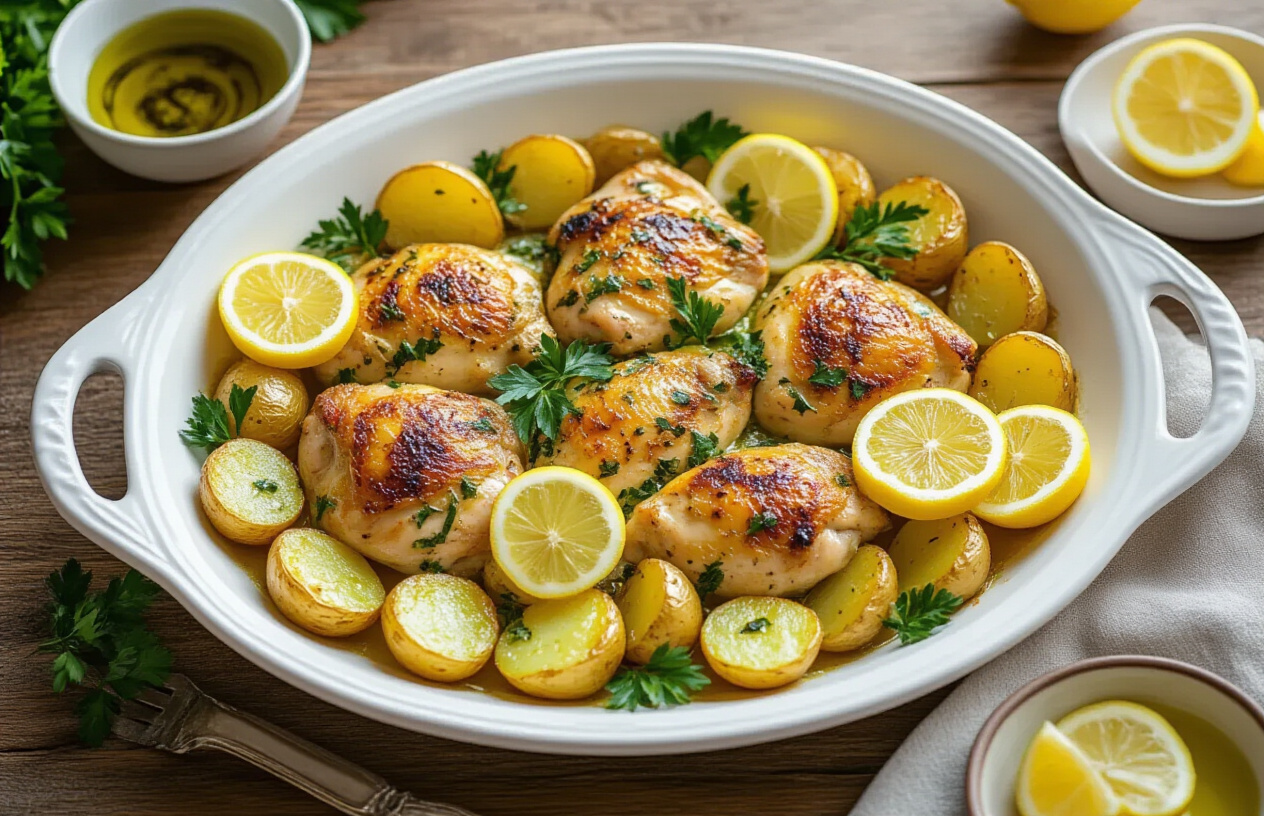
The secret to achieving that golden, aromatic crust lies in combining fresh herbs with citrus zest at just the right moment. Mix freshly chopped oregano, thyme, and rosemary with lemon zest and a touch of garlic powder about 30 minutes before your dish finishes cooking. Pat the chicken skin completely dry before applying this mixture – moisture is the enemy of crispy skin.
For extra crispiness, brush the chicken with olive oil and sprinkle the herb mixture generously over the surface. The oil helps the herbs adhere while promoting browning. If your chicken isn’t developing enough color, switch to broil mode for the final 3-5 minutes, watching carefully to prevent burning.
Consider adding a light dusting of semolina flour to your herb mixture. This Mediterranean trick creates an exceptionally crispy texture while absorbing excess moisture. The flour becomes almost invisible but adds substantial crunch to every bite.
Achieving crispy potatoes while keeping chicken moist
Temperature control makes all the difference between soggy potatoes and perfectly cooked chicken. Start by cutting potatoes into uniform 1-inch pieces – smaller pieces cook faster and develop more crispy edges. Toss them with olive oil and salt, then arrange them around the chicken rather than underneath it.
The key timing strategy involves giving potatoes a 15-minute head start in the oven before adding the chicken. This ensures both components finish cooking simultaneously while achieving optimal textures. Place potatoes on the bottom rack and chicken on the middle rack to prevent the chicken from steaming the potatoes.
| Temperature Stage | Time | Purpose |
|---|---|---|
| 425°F | First 15 min | Crispy potato edges |
| 400°F | Next 30 min | Even cooking |
| 375°F | Final 15 min | Gentle finish |
Cover the chicken loosely with foil if it’s browning too quickly while potatoes need more time. Remove the foil for the last 10 minutes to restore crispiness.
Garnishing ideas that elevate the dish
Fresh elements added after cooking transform this rustic dish into restaurant-worthy presentation. Scatter torn fresh mint leaves over the finished dish – the cool, bright flavor cuts through the rich lemony goodness beautifully. Add paper-thin lemon slices and a handful of Kalamata olives for authentic Greek flair.
Crumbled feta cheese sprinkled while the dish is still hot creates creamy pockets that melt slightly into the sauce. For color contrast, add diced fresh tomatoes and thinly sliced red onion just before serving.
Create height and visual interest by arranging lemon wedges around the platter’s edge and placing a small bowl of extra virgin olive oil with red pepper flakes for drizzling. A final sprinkle of toasted pine nuts adds textural contrast and nutty richness that complements the Mediterranean flavors perfectly.
Serving Suggestions and Recipe Variations
Traditional Greek Side Dishes that Complement the Meal
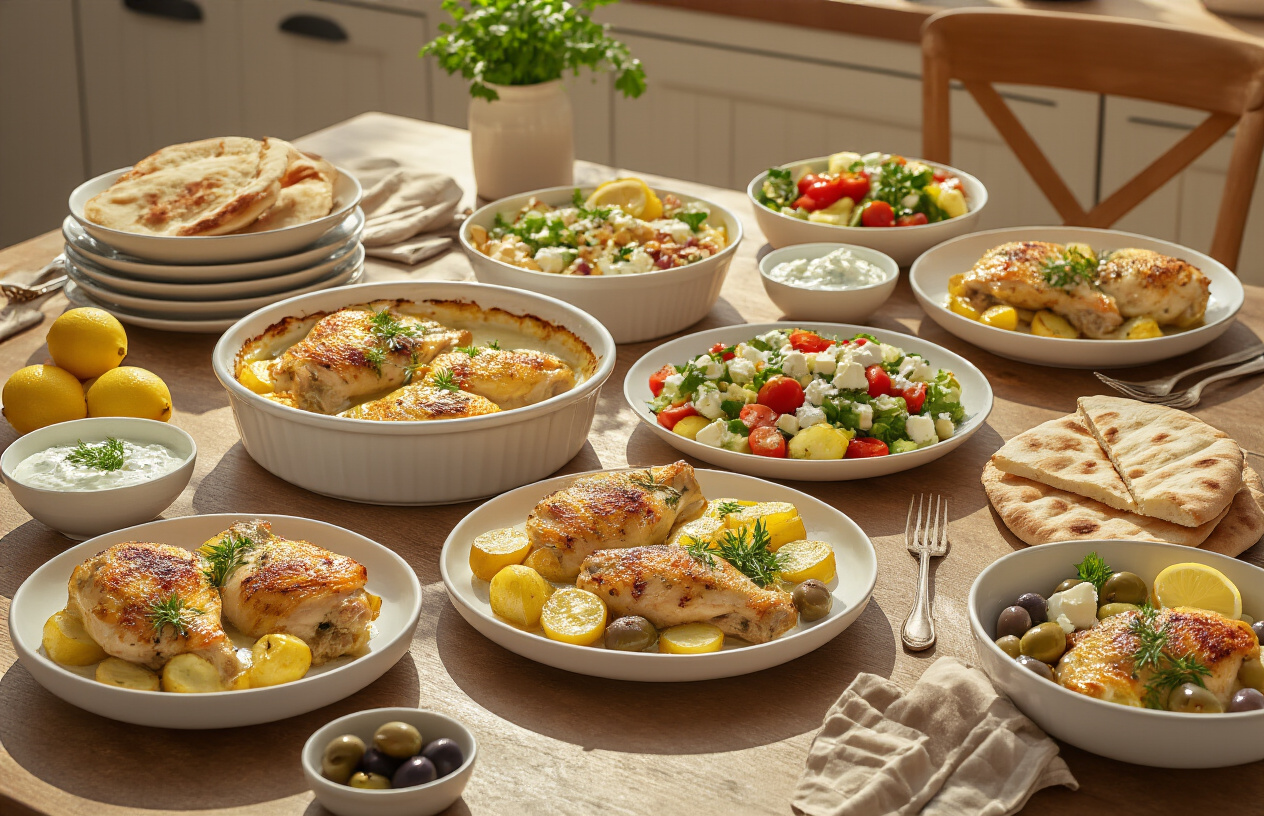
Your Greek lemon chicken bake pairs beautifully with classic Mediterranean sides that enhance the meal’s authentic flavors. Start with a traditional village salad (horiatiki) featuring chunky tomatoes, cucumbers, red onions, green peppers, and feta cheese dressed in olive oil and red wine vinegar. The fresh, crisp vegetables provide a refreshing contrast to the rich, lemony chicken.
Warm pita bread or crusty Greek country bread works perfectly for soaking up the delicious pan juices. Consider serving tzatziki on the side – the cool cucumber-yogurt sauce balances the dish’s bold flavors. Greek-style green beans (fasolakia) braised in tomato sauce make an excellent vegetable accompaniment, while dolmades (stuffed grape leaves) add an elegant touch to your dinner table.
For a heartier meal, serve alongside Greek rice pilaf cooked with chicken broth and finished with fresh herbs. Roasted vegetables like zucchini, eggplant, or bell peppers seasoned with oregano and olive oil echo the Mediterranean theme while adding color and nutrition to your plate.
Wine Pairing Recommendations
The bright, citrusy flavors of this dish call for wines that complement rather than compete with the lemon and herbs. Greek wines offer authentic pairings – try Assyrtiko from Santorini, a crisp white wine with mineral notes that enhances the dish’s Mediterranean character. Moschofilero provides another excellent Greek option with its floral aromatics and refreshing acidity.
For non-Greek wines, Sauvignon Blanc works wonderfully with its herbaceous qualities matching the oregano and thyme. Pinot Grigio or Albariño offer clean, bright flavors that won’t overpower the delicate chicken. If you prefer red wine, choose lighter options like Pinot Noir or a Greek Agiorgitiko, which provides enough body without overwhelming the dish’s subtle flavors.
Rosé wines bridge the gap beautifully – their fruit-forward character and refreshing acidity make them versatile companions. A Provence rosé or Greek rosé from Nemea region brings out the dish’s sunny Mediterranean essence.
Adaptations for Different Dietary Preferences
This versatile recipe adapts easily to various dietary needs without sacrificing flavor. For gluten-free diners, the dish is naturally compliant – just verify your seasonings and broth are gluten-free certified. The potatoes provide satisfying carbohydrates that make the meal complete.
Dairy-free versions work perfectly since traditional Greek lemon chicken doesn’t rely on dairy products. The rich flavors come from olive oil, lemon, and herbs rather than butter or cream. For those avoiding nightshades, simply omit any paprika and substitute sweet potatoes for regular potatoes.
Creating a lower-carb version is simple – replace potatoes with cauliflower florets, zucchini chunks, or a medley of low-carb vegetables like broccoli and Brussels sprouts. These alternatives still absorb the wonderful pan juices while reducing the carbohydrate content.
For meal prep enthusiasts, this dish freezes beautifully for up to three months. Portion into individual containers with chicken, potatoes, and sauce for convenient weekday meals. The flavors actually improve after a day or two in the refrigerator, making it perfect for entertaining when you want to prepare ahead.
Vegetarian adaptations can substitute chickpeas or halloumi cheese for the chicken, maintaining the protein content while keeping the authentic Greek flavors intact.
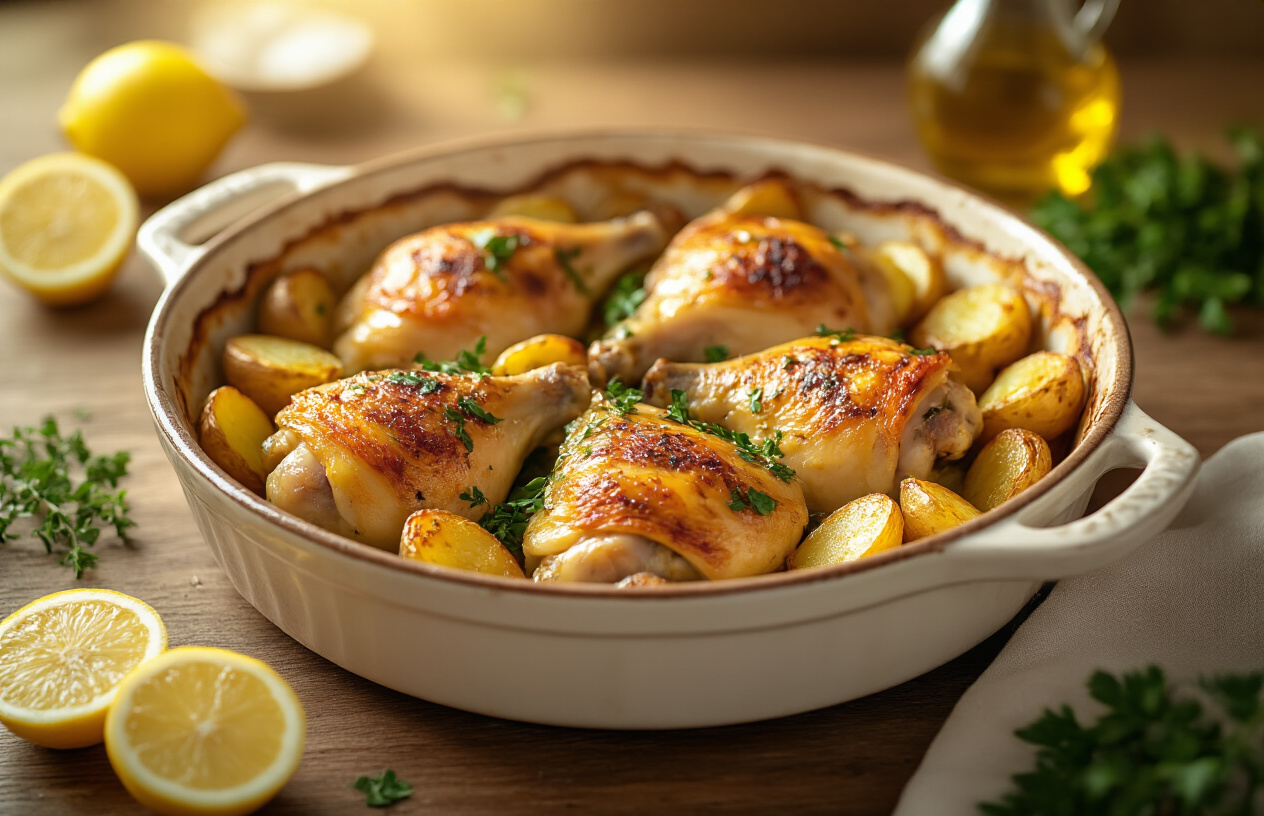
This Greek Lemon Chicken Bake brings together all the bright, bold flavors that make Mediterranean cooking so irresistible. With the right ingredients like fresh lemons, quality olive oil, and aromatic herbs, plus proper preparation techniques for both chicken and potatoes, you can create a restaurant-worthy meal right in your own kitchen. The step-by-step process we covered takes the guesswork out of getting that perfect golden skin and tender, flavorful meat every time.
The beauty of this dish lies in its simplicity and versatility. Try the pro tips we shared to elevate your presentation, and don’t be afraid to experiment with the serving suggestions and variations to make it your own. Whether you’re cooking for family dinner or entertaining guests, this one-pan wonder delivers authentic Greek flavors with minimal cleanup. Give it a try this weekend – your taste buds will thank you for the Mediterranean escape.