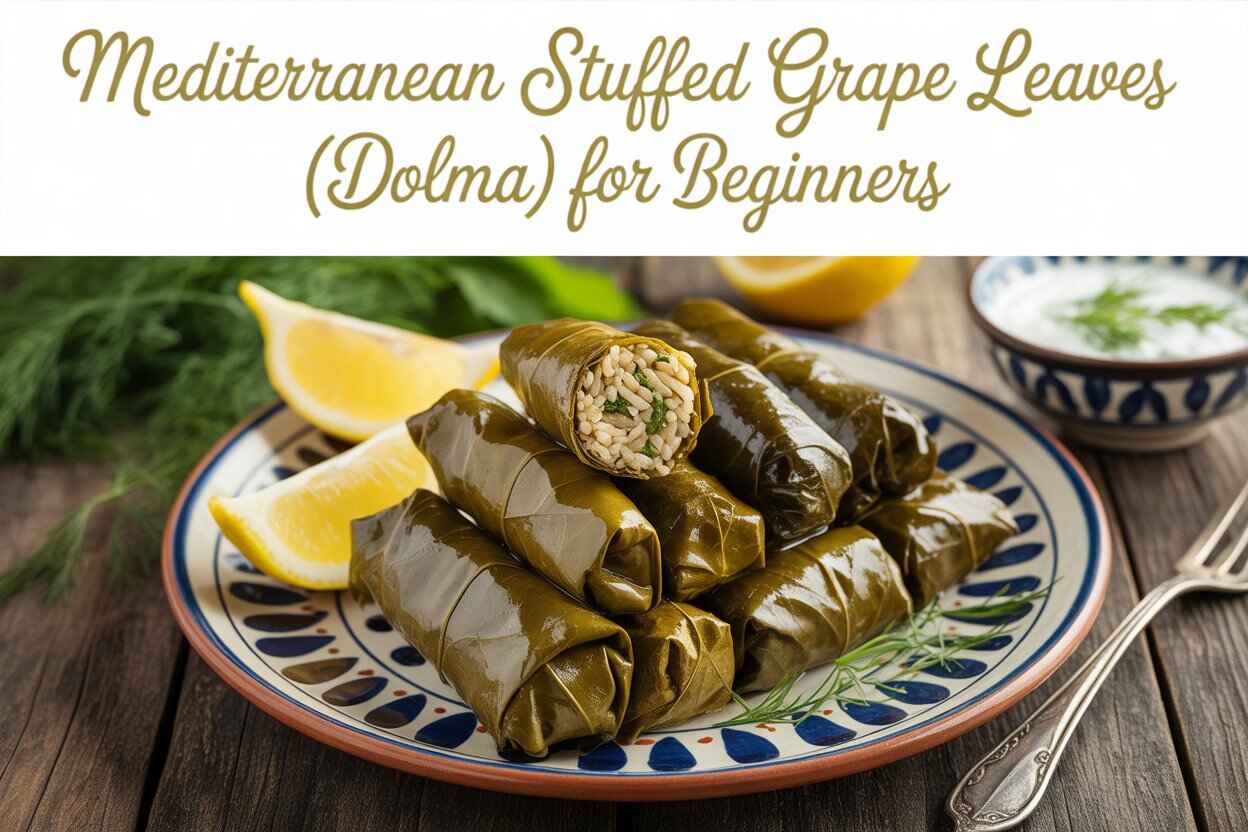
Welcome to the world of Mediterranean cuisine. Here, flavors and traditions blend in a rich culinary experience. If you’re new to this world, making Dolma is a great start. Dolma, or Mediterranean Stuffed Grape Leaves, is a traditional dish that’s both delicious and fun to make.

You’ll learn about the cultural importance of this dish and its different regional versions. You’ll also get step-by-step instructions on how to prepare and cook these tasty treats. As you start this culinary adventure, you’ll discover the simple ingredients and techniques needed to make an authentic Grape Leaves recipe.
Key Takeaways
- Learn the basics of Mediterranean cuisine through a traditional dish.
- Understand the cultural significance and regional variations of Dolma.
- Get step-by-step instructions for making Grape Leaves recipe.
- Discover simple ingredients and techniques for an authentic dish.
- Explore the fun and rewarding experience of making Dolma.
What Are Stuffed Grape Leaves (Dolma)?
Dolma, or stuffed grape leaves, is a beloved tradition in the Mediterranean region. You might have seen them at Mediterranean restaurants or family events. But have you ever wondered about their history and importance?
Dolma is more than a dish; it’s a symbol of cultural heritage and community. Exploring Dolma, you’ll learn about its rich history and how it’s enjoyed in different cultures.
The Cultural Significance of Dolma
Dolma holds a special place in Mediterranean hearts and kitchens. It’s linked to hospitality, family, and celebrations. Making Dolma is a way to share stories, laughter, and love.
Dolma is also a key part of celebrations and festivals. It’s often at the center of tables, symbolizing unity and abundance.
Regional Variations Across the Mediterranean
Traveling the Mediterranean, you’ll find Dolma with different flavors and styles. Each country adds its own twist, from Greece’s tangy Dolmades to Turkey’s rice and spice Dolma.
- In Greece, Dolmades are typically made with a rice and herb filling, often served as an appetizer or side dish.
- Turkish Sarma, on the other hand, may include meat and spices, making it a heartier version of Dolma.
- In Lebanon and other parts of the Middle East, Dolma has a unique flavor with lemon juice and garlic.
These variations show Dolma’s versatility and the shared culinary heritage of the Mediterranean. Exploring these different versions, you’ll appreciate the region’s cultural and culinary richness.
Essential Ingredients for Traditional Dolma
To make delicious Dolma, you need the right ingredients. You’ll need grape leaves, rice or grains, and herbs and spices. These are the key to a true Mediterranean dish.
Grape Leaves: Fresh vs. Jarred
Grape leaves wrap your Dolma. You can pick fresh or jarred leaves. Fresh leaves taste better and feel softer, but they take more time to prepare. Jarred leaves are easier to use and taste great too.
If you choose fresh grape leaves, blanch them briefly in boiling water. This makes them easier to fold. Jarred leaves are already ready to use, but rinse them first.
Rice and Grain Options
The filling of Dolma often has rice or grains. You can use sticky short-grain rice or try bulgur or barley for a different feel.
Herbs and Spices
The taste of Dolma comes from herbs and spices. You’ll need parsley, dill, mint, and spices like cinnamon and black pepper. The mix can change based on your recipe or taste.
Here’s a quick look at what you need and what you can choose:
| Ingredient | Options | Notes |
|---|---|---|
| Grape Leaves | Fresh, Jarred | Fresh leaves need blanching; jarred leaves are ready to use |
| Rice/Grains | Short-grain rice, Bulgur, Barley | Choose based on desired texture and tradition |
| Herbs | Parsley, Dill, Mint | Fresh herbs add flavor and freshness |
| Spices | Cinnamon, Allspice, Black Pepper | Blend according to regional or personal preference |
Kitchen Tools You’ll Need
Before you start making Dolma, make sure your kitchen is ready. You need the right tools to make it easy. It’s not just about the ingredients; the right equipment helps a lot.
Basic Equipment
To begin, you’ll need some basic kitchen tools. Here’s what you’ll need:
- A large pot with a heavy bottom (preferably with a lid) to cook the Dolma
- A cutting board for preparing the grape leaves and filling ingredients
- A sharp knife for chopping herbs and other ingredients
- A mixing bowl to combine the filling ingredients
- A measuring cup and spoons to accurately measure ingredients
Optional Tools That Make the Process Easier
While basic tools are enough to start, some optional tools can make things easier:
- A grape leaf stripper to simplify the process of preparing fresh grape leaves
- A small spoon or dolma filler to help with filling the grape leaves
- A kitchen scale for precise measurement of ingredients, useful for large batches
- A steamer basket as an alternative method for cooking Dolma
Having these tools will make making Dolma more fun and less scary, even for beginners. With the right tools, you’re all set to make delicious Mediterranean Stuffed Grape Leaves.
Preparing the Grape Leaves
Before you start filling your grape leaves, it’s essential to prepare them properly for the best results. Preparing grape leaves is a key step that can make or break your Dolma. Whether you’re using fresh or jarred grape leaves, the process is quite simple.
Handling Fresh Grape Leaves
If you’re using fresh grape leaves, start by cleaning them well. Rinse the leaves under cold running water to remove dirt or impurities. Then, blanch the leaves in boiling water for about 30 seconds to make them pliable.
This step is important as it makes the leaves easier to roll. After blanching, immediately submerge the leaves in an ice bath to stop the cooking process. This helps preserve their color and texture. Once cooled, gently pat the leaves dry with a clean kitchen towel to remove excess moisture.
Preparing Jarred Grape Leaves
If you’re using jarred grape leaves, the preparation is simpler. Start by draining the brine from the jar and rinsing the leaves under cold water to remove excess salt. Rinse them several times to get rid of the salty taste.
After rinsing, you can use the leaves directly from the jar. But, if they’re too salty or briny, you can blanch them briefly in boiling water or soak them in warm water for a few minutes to reduce the saltiness.
Here’s a comparison of the preparation methods for fresh and jarred grape leaves:
| Preparation Step | Fresh Grape Leaves | Jarred Grape Leaves |
|---|---|---|
| Cleaning | Rinse under cold water | Drain brine and rinse under cold water |
| Blanching | Blanch in boiling water for 30 seconds | Optional: Blanch briefly to reduce saltiness |
| Drying | Pat dry with a clean kitchen towel | Not necessary |
By following these steps, you’ll have perfectly prepared grape leaves ready for filling, whether you’re using fresh or jarred leaves.
Creating the Perfect Filling
Making the perfect filling is key to delicious Dolma, whether it’s rice or meat. The filling adds flavor and character to this Mediterranean dish.
Traditional Rice Filling
The traditional rice filling is a must in many Dolma recipes. It’s a mix of rice, herbs, and spices. Here’s what you need:
- 1 cup of uncooked rice
- 2 tablespoons of olive oil
- 1 onion, finely chopped
- 1 tablespoon of tomato paste
- 1 tablespoon of chopped fresh parsley
- 1 tablespoon of chopped fresh mint
- 1 teaspoon of salt
- 1/2 teaspoon of black pepper
- 1/4 teaspoon of cayenne pepper (optional)
Mix all these ingredients in a bowl until well combined. The rice should be coated with oil and spices. The herbs should be spread out evenly.
Yotam Ottolenghi, a famous chef, said, “The key to great Dolma is the filling’s flavor balance.”
“The rice should be flavorful but not too strong. The herbs should add freshness without taking over.”
Meat Filling Variations
For a heartier Dolma, try a meat filling. You can use ground beef, lamb, or both. Here’s a basic recipe:
| Ingredient | Quantity |
|---|---|
| Ground meat | 1 pound |
| Onion, finely chopped | 1 medium |
| Garlic, minced | 2 cloves |
| Salt | 1 teaspoon |
| Black pepper | 1/2 teaspoon |
| Paprika | 1/4 teaspoon |
Mix the ground meat with onion, garlic, salt, pepper, and paprika in a bowl. Don’t overmix to avoid a tough filling.
Whether you pick rice or meat, the secret to great Dolma is flavor balance. Try different herbs and spices to find your favorite.
Mediterranean Stuffed Grape Leaves (Dolma) for Beginners: Step-by-Step Rolling Technique
Learning to roll Dolma is simpler than you might think. Our guide will help you master this skill. It’s all about placing the grape leaf right, adding just the right amount of filling, and rolling it correctly.
Positioning the Leaf
To begin, place the grape leaf flat on a clean surface. Make sure the stem end is facing you and the shiny side is down. If using jarred leaves, rinse and dry them well. Position the leaf so the stem end is closest to you for a tight roll.

Adding the Filling
Now, add the filling to the leaf. Put a tablespoon of filling in the center, near the stem. Don’t overfill to avoid the Dolma bursting open. The right amount lets you roll it tightly without it falling apart.
Rolling Technique
The right rolling technique is key to making perfect Dolma. Here’s how to do it:
Tucking the Sides
First, fold the stem end over the filling. Then, tuck in the sides to make a neat envelope. This keeps the filling inside during cooking.
Securing the Roll
Roll the leaf away from you, applying gentle pressure. Keep the roll tight and even to ensure the edges are tucked in. Adjust the tightness as you roll to get it just right.
As
“The art of making Dolma is a tradition passed down through generations, and mastering the rolling technique is a key part of this culinary heritage.”
Common Rolling Mistakes to Avoid
Even experienced cooks can make mistakes when rolling Dolma. Here are some common errors to watch out for:
- Overfilling the leaves, causing them to burst during cooking
- Not tucking in the sides properly, leading to filling leakage
- Rolling the Dolma too loosely, resulting in unraveling during cooking
By avoiding these mistakes and following our guide, you’ll make beautifully rolled Dolma. It will impress your family and friends.
| Common Mistakes | Solutions |
|---|---|
| Overfilling | Use the right amount of filling |
| Not tucking sides | Fold in the sides securely |
| Rolling too loose | Apply gentle pressure while rolling |
Arranging Dolma in the Cooking Pot
After rolling your Dolma, it’s time to put them in the pot. This step is key to ensure they cook evenly and don’t stick together.
Creating a Protective Base Layer
First, make a protective layer at the pot’s bottom. This layer stops the Dolma from sticking and makes cleaning up easier. Use grape leaves, onion skins, or lemon slices for this.
Tips for the Base Layer:
- Use grape leaves that are too damaged for rolling.
- Onion skins add a subtle flavor and protect the pot.
- Lemon slices can enhance the flavor of your Dolma.
Proper Stacking Techniques
Stacking your Dolma right is important for even cooking and to keep them from coming apart. Here’s how to do it:
Put the Dolma seam-side down in the pot, in circles. This spreads the heat evenly and keeps them stable.
| Stacking Method | Description | Benefits |
|---|---|---|
| Concentric Circles | Place Dolma in circles, starting from the outside. | Even heat distribution, stable. |
| Seam-Side Down | Place Dolma with the seam facing down. | Prevents unraveling, secure. |
| Layering | Stack Dolma in layers, with a plate or lid in between. | Prevents sticking, easy to serve. |
By using these methods, you’ll get perfectly cooked Dolma with little effort.
Cooking Your Dolma to Perfection
Getting your dolma just right is easier than you think. It all comes down to the right liquid ratios and cooking times. With a bit of focus, you can make delicious dolma every time.
Liquid Ratios and Cooking Times
The secret to great dolma is finding the perfect liquid balance. Aim for about 2 cups of liquid for every cup of dolma. This keeps your dolma moist but not soggy.
How long you cook dolma depends on the leaves. Dolma with jarred leaves cooks in 20-25 minutes. Fresh leaves might take up to 40 minutes. Always keep an eye on it to avoid overcooking.
The Plate Trick: Keeping Dolma Secure
One big challenge is keeping dolma together. The “plate trick” makes this easier. It involves using a heat-proof plate to keep the dolma submerged.
To use the plate trick, place a plate that fits in your pot on top of the dolma. This keeps them down and prevents them from coming apart. Just make sure the plate can handle the heat.
With the right liquid ratios, cooking times, and the plate trick, you’re set. Soon, you’ll be making perfect dolma every time. It will become a favorite dish in your kitchen.
How to Tell When Your Dolma Is Done
Figuring out if your Dolma is done can be tricky. But, there are clear signs to look for. You need to watch for both visual cues and texture. Let’s dive into the signs that will tell you when your Dolma is ready.
Visual Indicators
Looking at the grape leaves is a key way to check if your Dolma is done. When cooked right, the leaves turn darker and get softer. Here are some visual signs to look for:
- The grape leaves should be darker and more olive-green compared to their raw state.
- The leaves should be soft and pliable, not hard or brittle.
- The rice inside should be visible through the leaf, indicating it’s cooked.

Texture Tests
Checking the texture of both the grape leaves and the filling is also important. Here are some texture tests you can do:
- Gently squeeze a Dolma; it should yield to pressure but not fall apart.
- Check the rice filling by carefully opening one of the Dolma. The rice should be cooked and not crunchy.
To help you more, here’s a simple table with the key indicators:
| Indicator | Cooked Dolma | Undercooked Dolma |
|---|---|---|
| Grape Leaf Color | Darker, olive-green | Bright green, vibrant |
| Leaf Texture | Soft, pliable | Hard, brittle |
| Rice Visibility | Visible through the leaf | Not visible, leaf opaque |
| Filling Texture | Cooked, tender | Crunchy, undercooked |
By watching these visual indicators and texture tests, you’ll know when your Dolma is perfectly cooked. And then, you can enjoy it.
Serving Suggestions for Your Homemade Dolma
When you serve your homemade Dolma, it’s a moment of truth. We’re here to help you with the best ways to serve it. Serving Dolma is more than just putting it on a plate. It’s about creating an experience that brings out its rich flavors and textures.
Traditional Accompaniments
In traditional Mediterranean cuisine, Dolma is often paired with certain accompaniments. These enhance its flavor. Some classic options include:
- A dollop of yogurt to cool down the palate
- A squeeze of fresh lemon juice for added brightness
- A side of tabbouleh or other fresh salads
- A drizzle of olive oil for richness
These accompaniments not only complement Dolma’s flavors but also make the dining experience better.
Modern Serving Ideas
If you want to try something new, there are many modern ways to serve Dolma. You can:
- Serve Dolma as an appetizer with a twist, such as a spicy aioli
- Incorporate Dolma into a salad bowl with mixed greens and a citrus vinaigrette
- Use Dolma as a side dish for grilled meats or fish
- Create a Dolma platter with various dips and spreads
By using these serving suggestions, you can make your Dolma experience better. You’ll impress your guests with both traditional and modern presentations.
Storing and Reheating Leftover Dolma
Don’t let leftover Dolma go to waste; learn how to store and reheat them. Proper storage is key to maintaining the flavor and texture of your Dolma.
Refrigeration Methods
To store Dolma in the refrigerator, place them in an airtight container. Make sure they are completely covered with the cooking liquid or a flavorful broth. This helps maintain their moisture and flavor. You can store them in the refrigerator for up to 3-4 days.
Reheating is simple: gently warm the Dolma on the stovetop over low heat, or you can use a microwave. If using a microwave, cover the container to ensure even heating and to prevent drying out.
Freezing for Later Use
For longer storage, freezing is an excellent option. Place the Dolma in a single layer on a baking sheet and freeze until solid. Then, transfer them to a freezer-safe bag or container, making sure to include some of the cooking liquid. Frozen Dolma can be stored for up to 3 months.
To reheat frozen Dolma, you can thaw them overnight in the refrigerator or thaw quickly by submerging the container in cold water. Once thawed, reheat as you would refrigerated Dolma.
By following these storage and reheating tips, you can enjoy your homemade Dolma at a later time without compromising on taste or texture.
Vegetarian and Vegan Dolma Variations
Exploring vegetarian and vegan dolma is a fun journey for those who follow a plant-based diet. This dish, once filled with meat and rice, can now be enjoyed in many ways. It’s a great way to adapt to different tastes and needs.
Choosing the right plant-based proteins is key to making tasty vegetarian and vegan dolma. These proteins add texture and flavor, making your dish even better.
Plant-Based Protein Options
Adding plant-based proteins to your dolma makes it more nutritious and filling. Here are some great options:
- Lentils: They’re packed with protein and fiber, making them a top choice for veggie dolma.
- Chickpeas: You can use them whole or mashed to add protein and texture.
- Tofu: Crumbled and marinated tofu is a great protein source for vegan dolma.
- Mushrooms: Meaty mushrooms like portobello add texture and a rich flavor.
Flavor Enhancers for Meatless Dolma
To make your vegetarian or vegan dolma flavorful, try these enhancers:
- Herbs: Fresh or dried herbs like parsley, dill, and mint add a bright taste.
- Spices: Cumin, coriander, and paprika add depth and warmth.
- Lemon juice or zest: A squeeze of lemon brightens the flavors, while zest adds a citrusy aroma.
- Garlic and onions: Sauteed garlic and onions create a savory base.
Here’s a simple table to show how different ingredients can be combined:
| Filling Type | Main Ingredients | Flavor Profile |
|---|---|---|
| Lentil and Herb | Lentils, parsley, dill | Earthy, fresh |
| Chickpea and Spice | Chickpeas, cumin, paprika | Warm, spicy |
| Mushroom and Rice | Mushrooms, rice, garlic | Savory, umami |
As you try out different vegetarian and vegan dolma, you’ll see endless possibilities. Feel free to mix ingredients to make your ideal dolma.
“The art of cooking is not just about recipes, but about understanding the harmony of flavors and textures. Vegetarian and vegan dolma is a perfect canvas for this culinary creativity.”
Chef’s Insight
Regional Dolma Recipes to Try
Start a food adventure through the Mediterranean with Dolma recipes. Dolma is loved in many countries, each with its own special way of making it.
Greek Dolmades
Greek Dolmades are a favorite in Greece. They’re filled with rice, herbs, and sometimes meat. You’ll often find them as an appetizer or side dish.
“Dolmades are a taste of Greek hospitality, bringing people together with their delicious flavor and aroma.”
Turkish Sarma
Turkish Sarma is a Dolma twist, using grape leaves. It’s filled with rice, spices, and sometimes meat. It’s a hit at special events.
Lebanese Warak Enab
Lebanese Warak Enab is known for its tangy taste. It uses fresh lemon juice in the filling. The mix of rice, tomatoes, onions, and spices makes it flavorful and aromatic.
Armenian Yalanchi
Armenian Yalanchi, or “yalanchi dolma,” is a vegetarian choice. It’s made with rice, herbs, and spices. It’s served cold, perfect for hot summer days.
| Region | Dolma Variation | Key Ingredients |
|---|---|---|
| Greece | Dolmades | Rice, herbs, ground meat (optional) |
| Turkey | Sarma | Rice, spices, meat (optional) |
| Lebanon | Warak Enab | Rice, lemon juice, tomatoes, onions |
| Armenia | Yalanchi | Rice, herbs, spices |
These Dolma recipes show the Mediterranean’s rich food culture. Each one has its own taste and story, making Dolma a dish worth trying.
Troubleshooting Common Dolma Problems
When making dolma, you might face some common problems. These issues are simple to fix with the right techniques and practice.
Leaves Tearing During Rolling
One common problem is grape leaves tearing when rolling. This can happen if the leaves are too delicate or not prepared well.
- Use fresh or high-quality jarred grape leaves to minimize tearing.
- Handle the leaves gently to avoid damaging them.
- If a leaf tears, don’t worry; you can often use it by patching it together or for the bottom layer where it won’t be visible.
Filling Falling Out
To prevent filling from falling out, make sure the dolma are rolled tightly and securely.
- Place the right amount of filling in the center of the leaf.
- Fold the stem end over the filling, then fold in the sides and roll into a neat package.
- Make sure the dolma are packed tightly in the cooking pot to prevent them from unraveling.
Undercooked or Overcooked Rice
Getting the rice just right is key. Undercooked rice is hard and crunchy, while overcooked rice is mushy.
- Monitor the cooking liquid and adjust as necessary to prevent overcooking or undercooking.
- Use the right ratio of rice to liquid, and adjust cooking time based on the type of rice used.
- Taste the dolma during cooking to check the rice’s doneness.
Dolma Unraveling During Cooking
Dolma unraveling can be a letdown, but it’s often due to simple mistakes that can be fixed.
To prevent unraveling:
- Ensure the dolma are tightly rolled.
- Place a plate or lid on top of the dolma in the pot to keep them submerged and secure.
- Cook on low heat to prevent the dolma from bursting open.
By understanding and addressing these common issues, you’ll be well on your way to making delicious, perfectly formed dolma that will impress your family and friends.
Beginner’s Tips for Dolma Success
These beginner’s tips will help you make perfect Dolma every time. Making Dolma is fun and rewarding with the right guidance. Here are some valuable tips for delicious Dolma.
Preparation Shortcuts
To save time and effort, consider these shortcuts:
- Use jarred grape leaves instead of fresh ones to skip the process of blanching and cleaning.
- Prepare the filling ingredients ahead of time and store them in the refrigerator.
- Use a food processor to chop herbs and onions quickly.
These shortcuts will help you make Dolma faster without losing flavor or quality.
Make-Ahead Strategies
Planning ahead is key to making Dolma a success. Here are some make-ahead strategies:
- Prepare the filling and store it in an airtight container in the refrigerator for up to a day.
- Assemble the Dolma and store them in the refrigerator for a few hours before cooking.
- Cook the Dolma and reheat them when needed.
By making ahead, you can enjoy your Dolma at a convenient time.
Scaling the Recipe Up or Down
Scaling the recipe is easy, whether for a large gathering or a few people. Here are some tips:
- To scale up, simply multiply the ingredients and use a larger cooking pot.
- To scale down, reduce the ingredients proportionally and use a smaller cooking pot.
- Keep the cooking time and liquid ratio in mind when scaling the recipe.

By following these tips, you can enjoy delicious Dolma in any quantity you desire.
Conclusion
You’ve now reached the end of our guide to making Mediterranean Stuffed Grape Leaves, also known as Dolma. By following the steps in this article, you’ve learned how to make delicious Dolma. This will impress your family and friends.
As you explore Dolma more, try different fillings and ingredients. You can make your own unique Dolma. Whether it’s traditional rice-filled or new flavors, the skills you’ve learned are a great start.
Now that you know the basics, look into regional Dolma recipes. Try Greek Dolmades or Turkish Sarma to add variety to your cooking. With practice, you’ll make Dolma as good as those in Mediterranean cuisine.
Enjoy sharing your homemade Mediterranean Stuffed Grape Leaves with others. Savor the flavors of this traditional dish.
FAQ
What is Dolma, and where does it originate from?
Dolma is a traditional dish from the Mediterranean. It’s made with stuffed grape leaves. It comes from the Ottoman Empire and is loved in many Middle Eastern and Mediterranean countries.
Can I use fresh grape leaves instead of jarred ones for making Dolma?
Yes, you can use fresh grape leaves. But, they need to be blanched and cleaned first. Jarred grape leaves are also a good choice and can be found in Middle Eastern or Mediterranean stores.
What are the essential ingredients for traditional Dolma filling?
The filling for Dolma usually has rice, herbs like parsley and dill, and spices like black pepper and cinnamon. Some recipes might add ground meat or other ingredients.
How do I prevent the grape leaves from tearing while rolling Dolma?
Handle the grape leaves gently to avoid tears. Roll them carefully. Using larger leaves or overlapping the edges can also help keep them secure.
Can I make Dolma ahead of time, and how do I store it?
Yes, you can make Dolma ahead of time. Store it in an airtight container. Cover it with plastic wrap or foil and refrigerate or freeze for later.
How do I cook Dolma to perfection, and what is the ideal cooking time?
To cook Dolma, place them in a pot, cover, and simmer in broth. Cook for 30-40 minutes. This makes the grape leaves tender and the filling cooked.
What are some common mistakes to avoid when making Dolma?
Avoid overfilling the grape leaves and not securing the rolls well. Also, make sure to cook them long enough. Using the right rice and spices helps too.
Can I customize the Dolma filling to suit my dietary preferences?
Yes, you can change the filling to fit your diet. For example, use plant-based proteins for vegetarian or vegan Dolma.
How do I reheat leftover Dolma, and can I freeze it?
Reheat Dolma by steaming or simmering in broth until warm. You can freeze it too. Place in an airtight container or bag and store in the freezer for up to 3 months.