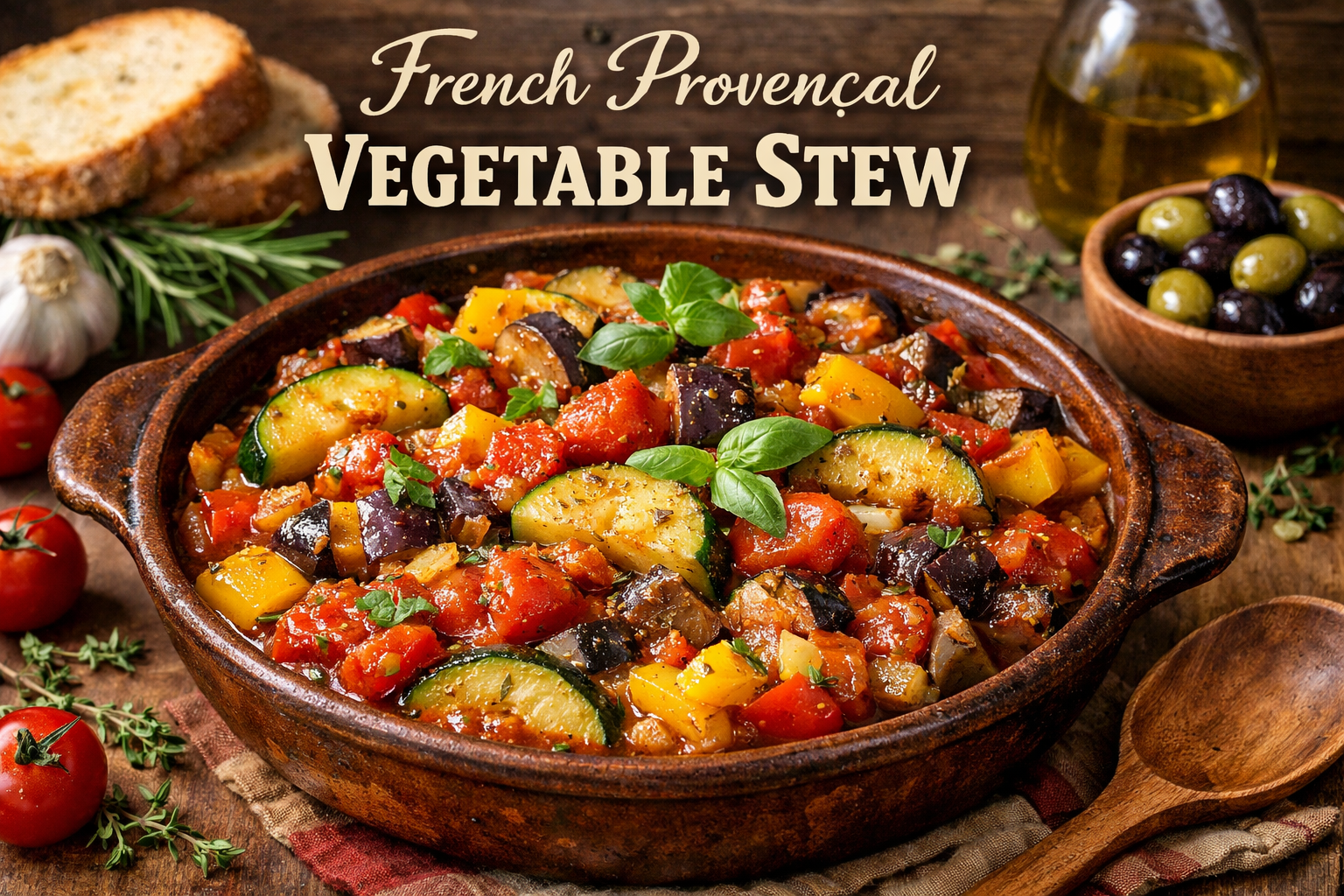
Welcome to the heart of southern French cooking, where vegetables, olive oil, and herbs are treated with care and respect. You are about to learn about French Provençal Vegetable Stew, a classic dish that represents everyday home cooking in the Provence region of France.
This stew is not fancy food. It is simple, slow-cooked, and deeply comforting. It uses fresh vegetables, basic seasonings, and time. People in Provence have been cooking this type of stew for generations, often using whatever vegetables are in season.
French Provençal Vegetable Stew is more than just a recipe. It shows how French families cook at home. It is about patience, balance, and letting ingredients speak for themselves.
As you prepare this dish, you will understand why Provençal cooking is loved around the world and how you can recreate it in your own kitchen.
Key Takeaways
- Learn about the food culture of the Provence region in France
- Understand why vegetable stews are important in French home cooking
- Discover how simple ingredients create deep flavor
- Learn how to prepare an authentic Provençal-style stew
- Get practical tips to make the dish successfully every time
The Culinary Roots of Provence
Provence is a region in southern France known for its warm climate, olive trees, and local vegetables. The food from this area is shaped by the land and the weather. Summers are hot, so people grow tomatoes, zucchini, eggplant, peppers, and herbs.
Because of this, Provençal cuisine focuses heavily on vegetables and olive oil. Meat is used less often, and when it is used, it is usually in small amounts.
French Provençal Vegetable Stew comes from this way of life. It is a dish created by farmers and home cooks who wanted to make filling meals from what they had available.
Regional Cooking Traditions in Provence
Each part of France has its own cooking style. Provence is known for food that is lighter than northern French dishes. Butter and cream are used less. Olive oil is used more.
Herbs are also very important. Thyme, bay leaf, rosemary, and basil are commonly used. These herbs grow naturally in the region and give Provençal food its special taste.
Vegetable stews like this one are often cooked slowly and eaten warm or at room temperature. They are served as main dishes or side dishes and are often even better the next day.
Why Vegetable Stews Matter in French Cooking
Vegetable stews play a big role in French home cooking. They are affordable, healthy, and easy to prepare in large amounts.
In many French households, stews are made once and eaten over several meals. This saves time and allows flavors to develop.
French Provençal Vegetable Stew is also flexible. You can change vegetables based on the season, making it a year-round dish.
The Story Behind French Provençal Vegetable Stew
This stew does not come from restaurants or royal kitchens. It comes from homes, farms, and village kitchens.
Historically, people in Provence relied on vegetables they grew themselves. Stews were a practical way to cook food slowly while doing other work.
Over time, this stew became a symbol of Provençal cooking. It represents simplicity, patience, and respect for ingredients.
Cultural Importance in French Homes
In French households, meals are about more than eating. They are about sitting together, talking, and taking time.
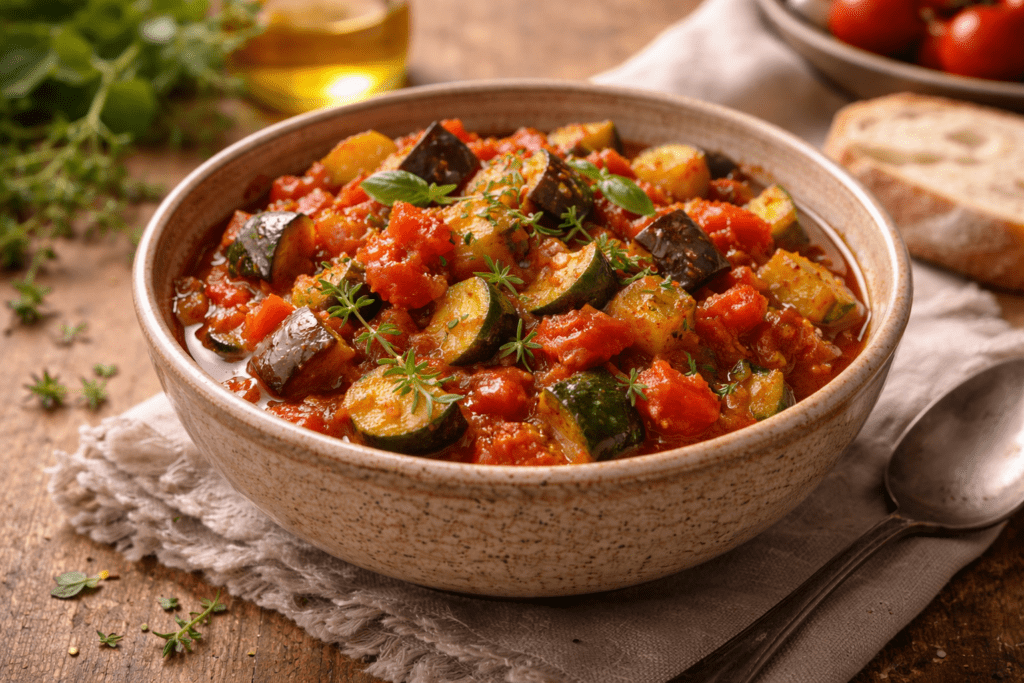
French Provençal Vegetable Stew is often served during family lunches or casual dinners. It is not rushed. It is usually served with bread and sometimes with rice or potatoes.
Many families have their own version of this stew, passed down through generations.
Essential Ingredients for French Provençal Vegetable Stew
To make an authentic version of this stew, you need fresh vegetables and good olive oil. The ingredients are simple, but quality matters.
Main Vegetables Used
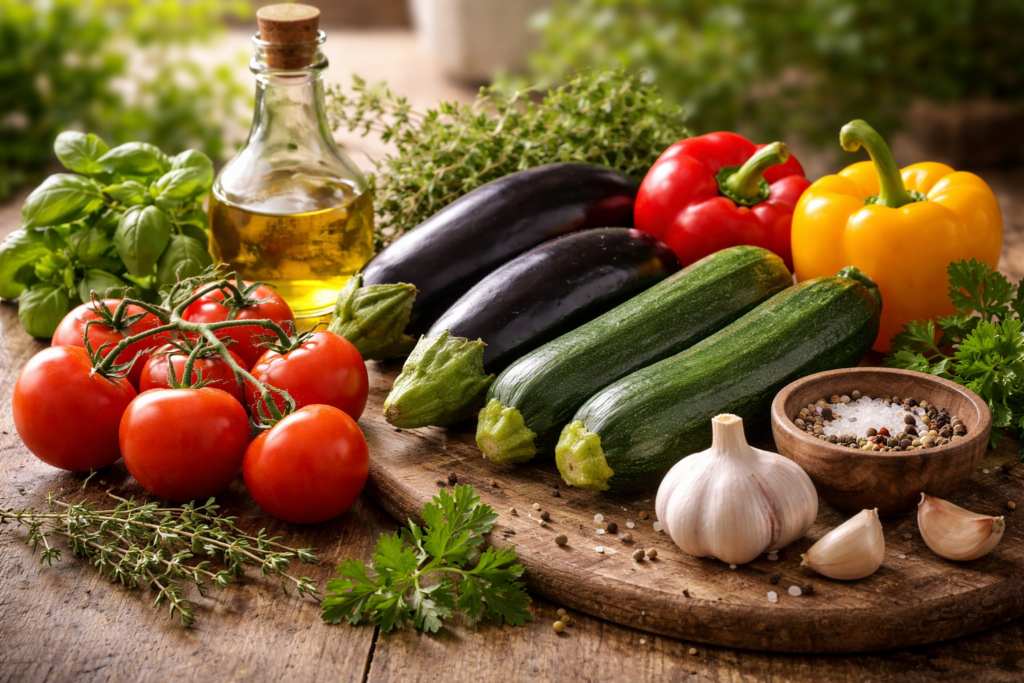
Common vegetables include:
- Tomatoes
- Zucchini
- Eggplant
- Bell peppers
- Onion
- Garlic
These vegetables form the base of the stew.
Choosing the Right Tomatoes
Tomatoes are the heart of this dish. They create the sauce and add natural sweetness.
Fresh tomatoes are best when in season. If they are not available, canned tomatoes can be used.
Choose tomatoes that are ripe but not soft. Good tomatoes make a big difference in taste.
Selecting Zucchini and Eggplant
Zucchini should be firm and not too large. Large zucchini can be watery.
Eggplant should be shiny and firm. Older eggplants can taste bitter.
Cut these vegetables into similar-sized pieces so they cook evenly.
The Role of Olive Oil
Olive oil is very important in Provençal cooking. It is used for cooking and flavor.
Use good-quality olive oil. It should smell fresh and fruity.
Do not use butter for this dish. Olive oil gives the stew its traditional taste.
Herbs and Seasonings Used
Typical herbs include:
- Thyme
- Bay leaf
- Basil
Salt and black pepper are added to taste.
Do not add too many spices. This stew is meant to taste natural and balanced.
Optional Ingredients and Variations
Some people add:
- Potatoes
- Carrots
- White beans
These make the stew more filling. You can also add a small amount of tomato paste for a deeper flavor.
Kitchen Equipment You Will Need
This stew does not require special equipment.
You will need:
- A large pot or Dutch oven
- A cutting board
- A knife
- A wooden spoon
A heavy-bottomed pot works best for slow cooking.
Preparation Before Cooking
Good preparation makes cooking easier and more enjoyable.
Washing and Cutting Vegetables
Wash all vegetables well.
Cut them into medium-sized pieces. Try to keep them similar in size so they cook evenly.
Keep vegetables separate if possible. This helps during cooking.
Organizing Ingredients
Measure your olive oil and herbs before you start cooking.
Having everything ready prevents mistakes and helps you stay relaxed while cooking.
Step-by-Step Cooking Instructions
Follow these steps carefully for best results.
Step 1: Start with Onion and Garlic
Heat olive oil in your pot over medium heat.
Add chopped onion and cook until soft. This takes about 5 minutes.
Add garlic and cook for one more minute. Stir to prevent burning.
Step 2: Add Hard Vegetables
Add bell peppers and eggplant first. These take longer to cook.
Stir and cook for about 5 to 7 minutes.
Step 3: Add Tomatoes and Herbs
Add chopped tomatoes or canned tomatoes.
Add thyme and bay leaf.
Stir well and lower the heat.
Step 4: Add Zucchini and Simmer
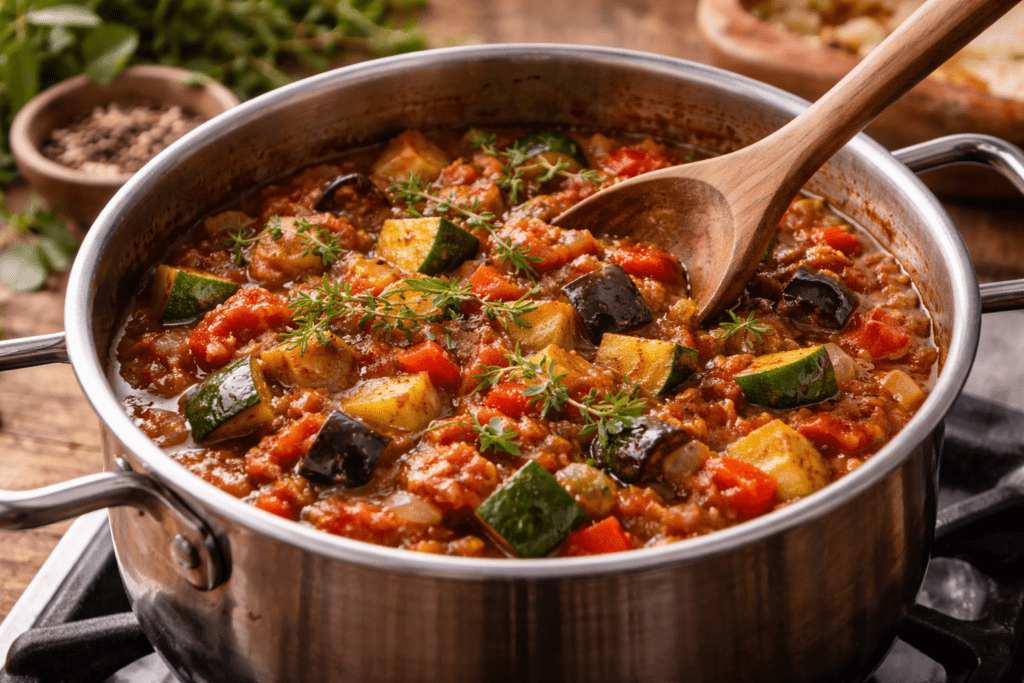
Add zucchini last because it cooks quickly.
Cover the pot and let the stew simmer on low heat for 30 to 40 minutes.
Stir occasionally.
Step 5: Rest Before Serving
Turn off the heat and let the stew rest for 10 minutes.
Remove bay leaf before serving.
How the Stew Should Taste
The vegetables should be soft but not mushy.
The sauce should be thick but not dry.
Each vegetable should keep its own flavor while blending with others.
Common Mistakes to Avoid
- Cooking on high heat
- Adding all vegetables at once
- Using poor-quality olive oil
- Over-seasoning
Slow cooking is key.
Regional and Modern Variations
Some regions add olives or capers.
Modern versions may include chickpeas or lentils.
The base method stays the same.
Serving Suggestions
Serve this stew:
- With crusty bread
- Over rice
- With boiled potatoes
It can be eaten hot or warm.
Pairing with Other French Dishes
This stew pairs well with:
- Simple green salad
- Grilled fish
- Roasted chicken
It also works as a main dish on its own.
Storing and Reheating Leftovers
Store leftovers in an airtight container.
Refrigerate for up to 4 days.
Reheat gently on the stove. Add a little water if needed.
Making It for Gatherings
This stew is easy to make in large amounts.
It is perfect for family meals and casual dinners.
Make it one day ahead for better flavor.
Conclusion
French Provençal Vegetable Stew is a simple and honest dish.
It shows how fresh vegetables and basic cooking can create deep flavor.
When you cook this stew, you are cooking the way families in Provence have cooked for many years.
Take your time, use good ingredients, and enjoy the process.