
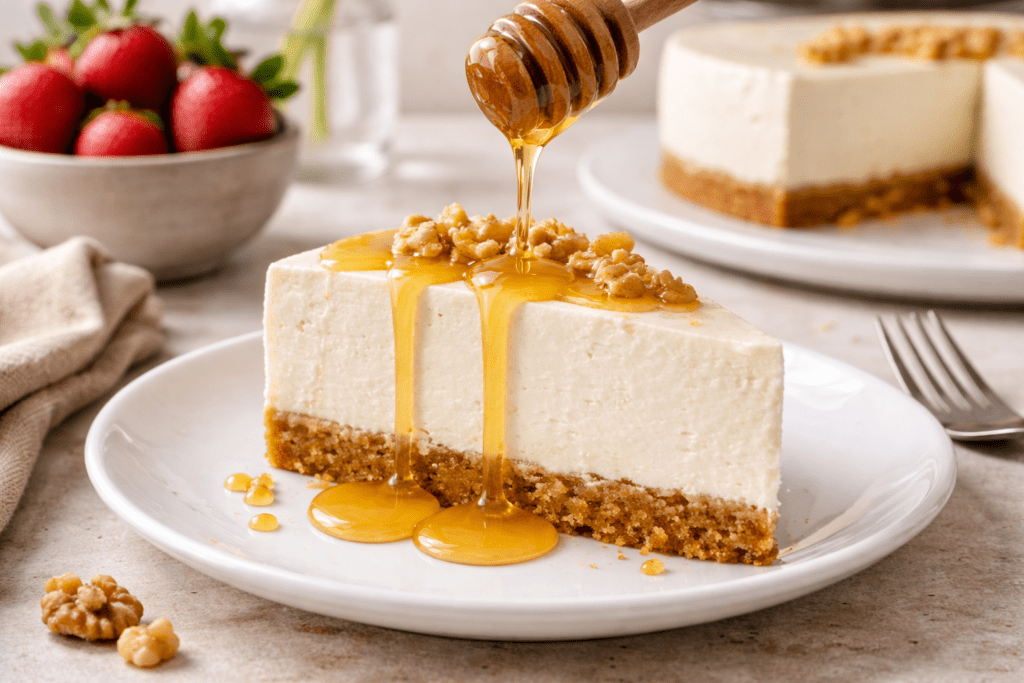
Greek Yogurt Cheesecake with Honey is a lighter and fresher version of traditional cheesecake. It combines the creamy texture of cream cheese with the smooth thickness of Greek yogurt. Instead of heavy sugar toppings, it uses natural honey for sweetness.
This dessert keeps the rich feel of classic cheesecake but adds a mild tang and a cleaner finish. It is simple to prepare if you follow each step carefully. In this detailed guide, you will learn the ingredients, preparation method, baking techniques, common mistakes, storage tips, and serving ideas.
What Makes Greek Yogurt Cheesecake Different
Traditional cheesecake usually relies heavily on cream cheese, sugar, and sometimes heavy cream. Greek Yogurt Cheesecake with Honey is different because:
- It uses Greek yogurt to lighten the texture
- It uses honey instead of refined sugar as the main sweetener
- It has a balanced flavor with slight tanginess
- It feels less heavy after eating
Greek yogurt adds protein and moisture. Honey adds natural sweetness and aroma.
The Role of Greek Yogurt in Cheesecake
Greek yogurt is thicker than regular yogurt because it is strained. That thickness makes it perfect for baking.
Benefits of using Greek yogurt:
- Adds smooth texture
- Prevents dryness
- Balances sweetness
- Reduces heaviness
Always use full-fat plain Greek yogurt for best results.
Why Honey Works So Well in Cheesecake
Honey brings more than sweetness. It adds:
- Natural floral flavor
- Smooth texture
- Moisture
Honey blends well with lemon and vanilla. It creates a gentle sweetness instead of sharp sugary taste.
Choose mild honey for baking. Strong honey flavors can overpower the dessert.
Ingredients for Greek Yogurt Cheesecake with Honey
For the Crust
- 2 cups graham cracker crumbs
- ½ cup melted butter
- 2 tablespoons honey
For the Filling
- 16 oz full-fat cream cheese (room temperature)
- 1 cup full-fat Greek yogurt
- ¾ cup honey
- 3 large eggs
- 1 teaspoon vanilla extract
- 1 tablespoon lemon juice
- 1 teaspoon lemon zest
Choosing the Right Cream Cheese
Cream cheese must be softened before mixing. Cold cream cheese causes lumps.
Use full-fat cream cheese. Low-fat versions may change texture and cause cracks.
Preparing the Crust Properly
- Preheat oven to 325°F (160°C).
- Mix graham cracker crumbs, melted butter, and honey in a bowl.
- Press mixture firmly into bottom of 9-inch springform pan.
- Bake for 10 minutes.
- Remove and allow to cool.
Pressing firmly helps prevent crumbling.
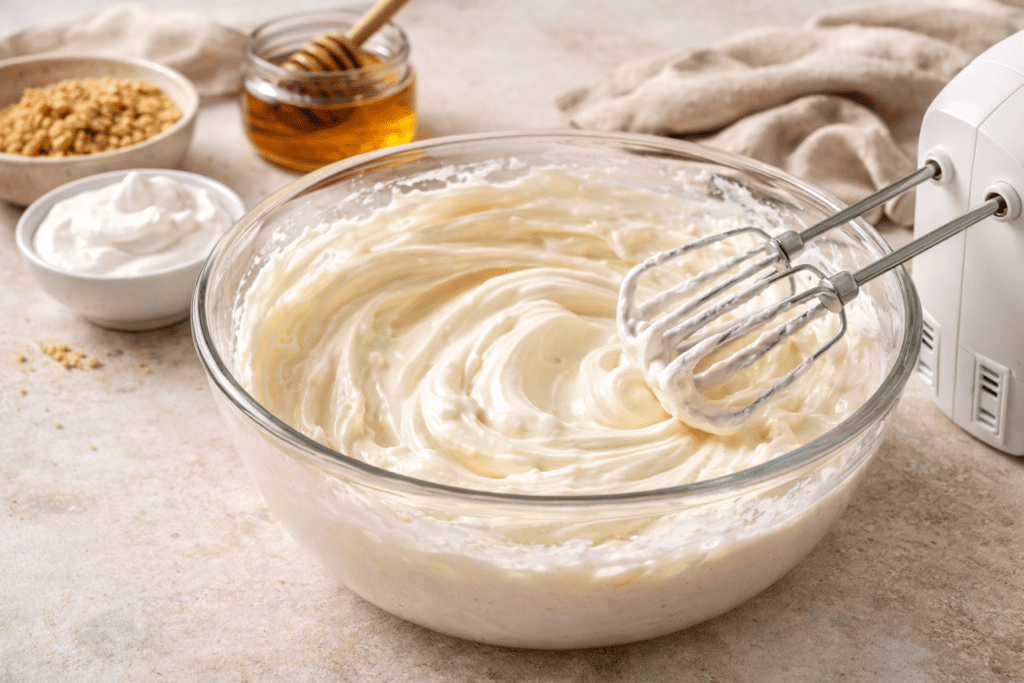
Making the Filling Step by Step
- Beat cream cheese until smooth.
- Add Greek yogurt and mix slowly.
- Add honey and mix gently.
- Add eggs one at a time.
- Stir in vanilla, lemon juice, and zest.
Do not overmix. Too much air causes cracking.
Baking the Cheesecake
Pour filling over cooled crust.
Place springform pan on a baking sheet.
Bake for 50–60 minutes.
The edges should look set. The center should slightly jiggle when shaken.
Do not overbake.
Cooling the Cheesecake Correctly
- Turn off oven.
- Leave cheesecake inside with door slightly open for 1 hour.
- Remove and cool at room temperature.
- Refrigerate for at least 4 hours or overnight.
Slow cooling prevents cracks.
Optional Water Bath Method
Using a water bath helps achieve smoother texture.
To use a water bath:
- Wrap bottom of springform pan with foil.
- Place pan inside larger roasting pan.
- Add hot water halfway up the sides.
This method keeps temperature even.
Common Mistakes to Avoid
Overmixing
Adds too much air, leading to cracks.
Baking at High Temperature
Causes dry texture.
Skipping Cooling Time
Cheesecake will not set properly.
Using Cold Ingredients
Creates lumps in batter.
How to Get Perfect Texture Every Time
For best results:
- Use room temperature ingredients
- Mix slowly
- Bake at low temperature
- Cool gradually
- Refrigerate long enough
Patience is important.
Flavor Variations
You can adjust Greek Yogurt Cheesecake with Honey slightly:
- Add fresh berries on top
- Add crushed nuts to crust
- Add a thin honey glaze after chilling
- Add a small amount of cinnamon
Keep changes simple to maintain balance.
Serving Suggestions
Serve chilled.
Drizzle extra honey before serving.
Top with:
- Fresh strawberries
- Blueberries
- Pistachios
- Mint leaves
Cut with a warm knife for clean slices.
Storage Instructions
Store in refrigerator in airtight container.
Lasts 4 to 5 days.
You can freeze for up to 2 months.
To freeze:
- Wrap tightly in plastic wrap
- Place in freezer-safe container
Thaw overnight in refrigerator.
Nutritional Overview
Greek Yogurt Cheesecake with Honey provides:
- Protein from yogurt
- Healthy fats from dairy
- Natural sweetness from honey
It is lighter than traditional cheesecake but still a dessert.
When to Serve This Dessert
This cheesecake works well for:
- Family dinners
- Holidays
- Birthdays
- Weekend desserts
It looks elegant but is easy to prepare.
Frequently Asked Questions
1. Can I make it without baking?
Yes, but you must use gelatin to help it set.
2. Why did my cheesecake crack?
It may have been overmixed or cooled too quickly.
3. Can I use low-fat yogurt?
Full-fat gives better texture.
4. How do I know when it is done?
Edges set, center slightly moves.
5. Can I replace honey with sugar?
Yes, but flavor will change.
6. How long should it chill?
At least 4 hours, overnight is better.
Final Thoughts
Greek Yogurt Cheesecake with Honey is a simple but elegant dessert. It combines creamy texture with natural sweetness. The Greek yogurt gives balance, while honey adds depth.
By following each step carefully and avoiding common mistakes, you can create a smooth, flavorful cheesecake at home.
Take your time, allow proper cooling, and enjoy a dessert that feels rich but not heavy.