
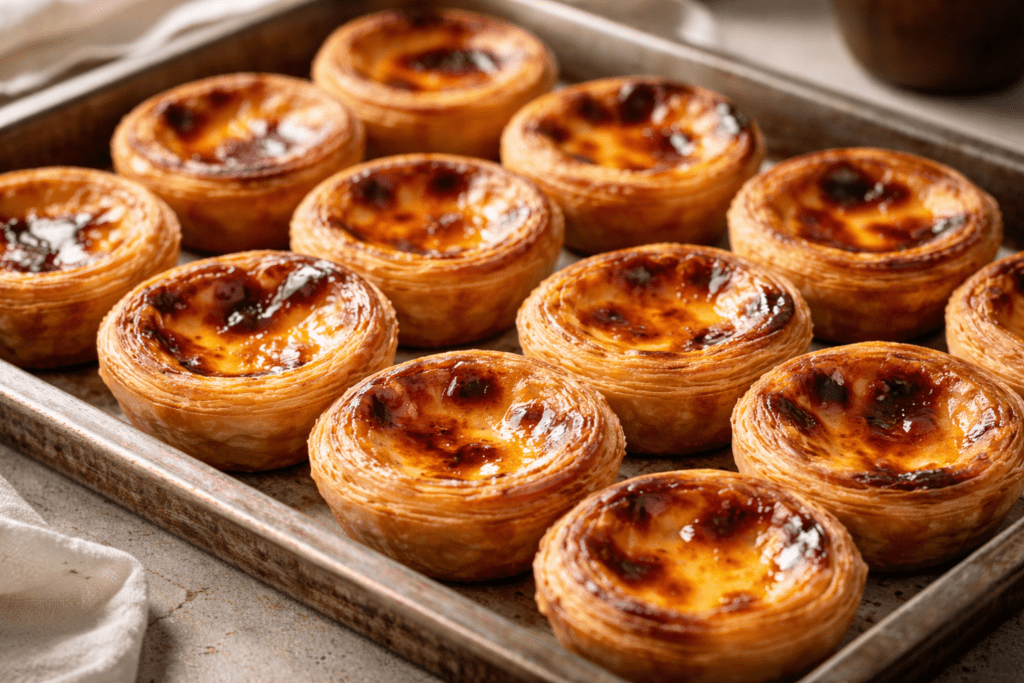
Pastéis de Nata (Portuguese Custard Tarts) are one of the most famous desserts from Portugal. These small custard tarts have a crisp, flaky pastry shell and a creamy custard center with slightly caramelized spots on top.
They are often enjoyed warm with a light dusting of cinnamon and powdered sugar. In Portugal, they are served in cafés, bakeries, and homes throughout the day.
In this detailed guide, you will learn about the history of Pastéis de Nata (Portuguese Custard Tarts), the essential ingredients, step-by-step preparation, expert tips, common mistakes to avoid, storage advice, and serving suggestions.
What Are Pastéis de Nata (Portuguese Custard Tarts)?
Pastéis de Nata are small round tarts made with:
- Puff pastry
- Egg yolks
- Milk
- Sugar
- Flour
- Lemon peel
- Cinnamon
The pastry is layered and crisp. The custard is smooth and lightly sweet. The top should have golden brown or slightly dark spots from high-heat baking.
The texture should be:
- Crisp on the outside
- Creamy inside
- Not runny
- Not rubbery
The History of Pastéis de Nata
Pastéis de Nata originated in Lisbon, Portugal. They were first created by monks at the Jerónimos Monastery in the 18th century.
After the monasteries closed, the recipe was sold to a bakery called Pastéis de Belém, which still sells them today.
Today, Pastéis de Nata (Portuguese Custard Tarts) are a symbol of Portuguese pastry tradition.
Essential Ingredients for Pastéis de Nata (Portuguese Custard Tarts)
High-quality ingredients are important.
1. Puff Pastry
Traditional tarts use laminated dough.
You can:
- Make homemade puff pastry
- Use high-quality store-bought puff pastry
Pastry must be thin and flaky.
2. Egg Yolks
Egg yolks provide color and richness.
Do not use whole eggs.
3. Milk
Whole milk is recommended.
Milk creates smooth custard texture.
4. Sugar
Sugar sweetens custard and creates slight caramelization.
5. Flour
Small amount of flour helps thicken custard.
6. Lemon Peel and Cinnamon
These provide subtle flavor.
Remove lemon peel before pouring custard.
Step-by-Step Guide to Making Pastéis de Nata (Portuguese Custard Tarts)
Step 1: Prepare the Custard Base
In saucepan:
- Mix flour with small amount of milk until smooth.
- Add remaining milk gradually.
- Heat gently while stirring.
Remove from heat once slightly thickened.
Step 2: Prepare Sugar Syrup
In separate saucepan:
- Combine sugar, water, cinnamon stick, and lemon peel.
- Bring to boil.
- Simmer for 3–5 minutes.
Remove cinnamon and lemon peel.
Slowly add syrup to milk mixture while stirring.
Allow mixture to cool slightly.
Add egg yolks and stir gently.
Strain mixture for smooth texture.
Step 3: Prepare Pastry Shells
Roll puff pastry tightly into log.
Slice into small pieces.
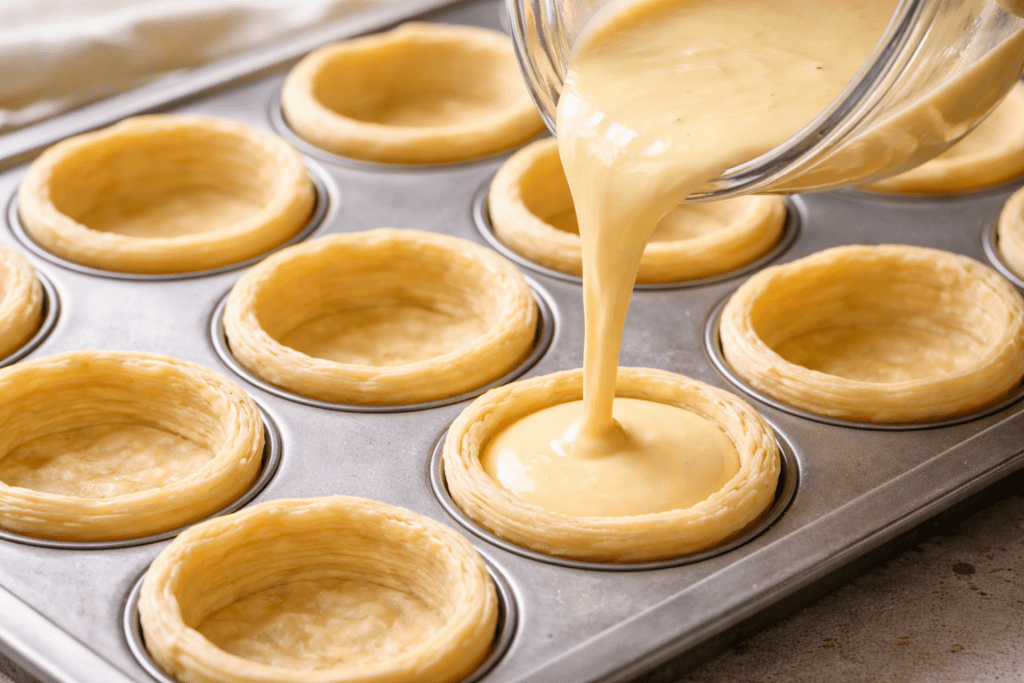
Press each slice into tart mold.
Spread dough evenly up sides.
Shell should be thin.
Step 4: Fill and Bake
Preheat oven to 475°F (245°C).
Fill pastry shells about ¾ full.
Bake for 12–15 minutes.
Top should develop dark golden spots.
Edges should be crisp.
Remove and cool slightly.
Texture and Flavor Expectations
Proper Pastéis de Nata (Portuguese Custard Tarts) should be:
- Crisp and flaky outside
- Creamy inside
- Lightly sweet
- Slightly caramelized on top
They should not be watery.
Common Mistakes to Avoid
Baking at Low Temperature
High heat is essential for caramelized top.
Overfilling Shells
Custard may overflow.
Overbaking
Custard becomes rubbery.
Using Thick Pastry
Shell will not be crisp.
Expert Tips for Perfect Pastéis de Nata
- Use high oven temperature.
- Strain custard before filling.
- Fill shells just before baking.
- Do not overcook custard mixture.
- Serve warm for best texture.
Timing and heat are critical.
Storage Tips
Pastéis de Nata are best eaten fresh.
Store:
- At room temperature for 1 day
- In refrigerator up to 3 days
Reheat briefly in oven to restore crispness.
Do not microwave.
Can You Freeze Pastéis de Nata?
You can freeze unbaked tarts.
Bake directly from frozen, adding extra time.
Freezing baked tarts may reduce crispness.
Variations of Portuguese Custard Tarts
Some variations include:
- Adding vanilla
- Using orange zest
- Adding cream
However, traditional Pastéis de Nata (Portuguese Custard Tarts) use lemon and cinnamon.
Serving Suggestions
Serve:
- Warm
- Lightly dusted with cinnamon
- With powdered sugar
- With espresso or strong coffee
They are often enjoyed for breakfast or dessert.
Nutritional Overview
These tarts contain:
- Eggs
- Milk
- Sugar
- Pastry
They are rich but small in size.
Why Pastéis de Nata (Portuguese Custard Tarts) Remain Popular
They remain popular because:
- They have crisp and creamy contrast
- They are small and easy to serve
- They represent Portuguese tradition
- They taste best fresh
- They are simple but impressive
They are a signature pastry of Portugal.
Frequently Asked Questions
1. Why is my custard runny?
It may not have baked long enough.
2. Why is the top not caramelized?
Oven temperature may be too low.
3. Can I use store-bought puff pastry?
Yes, high-quality puff pastry works well.
4. Why did my pastry shrink?
Pastry may not have been pressed properly.
5. Can I add vanilla?
Yes, but lemon and cinnamon are traditional.
6. How should they be served?
Warm, with cinnamon dusting.
Final Thoughts
Pastéis de Nata (Portuguese Custard Tarts) are one of Portugal’s most famous desserts. Their crisp puff pastry and creamy custard make them unique.
By using high heat, smooth custard mixture, and thin pastry shells, you can recreate authentic Portuguese custard tarts at home.
Take your time, follow each step carefully, and enjoy a dessert that reflects Portugal’s rich pastry tradition.