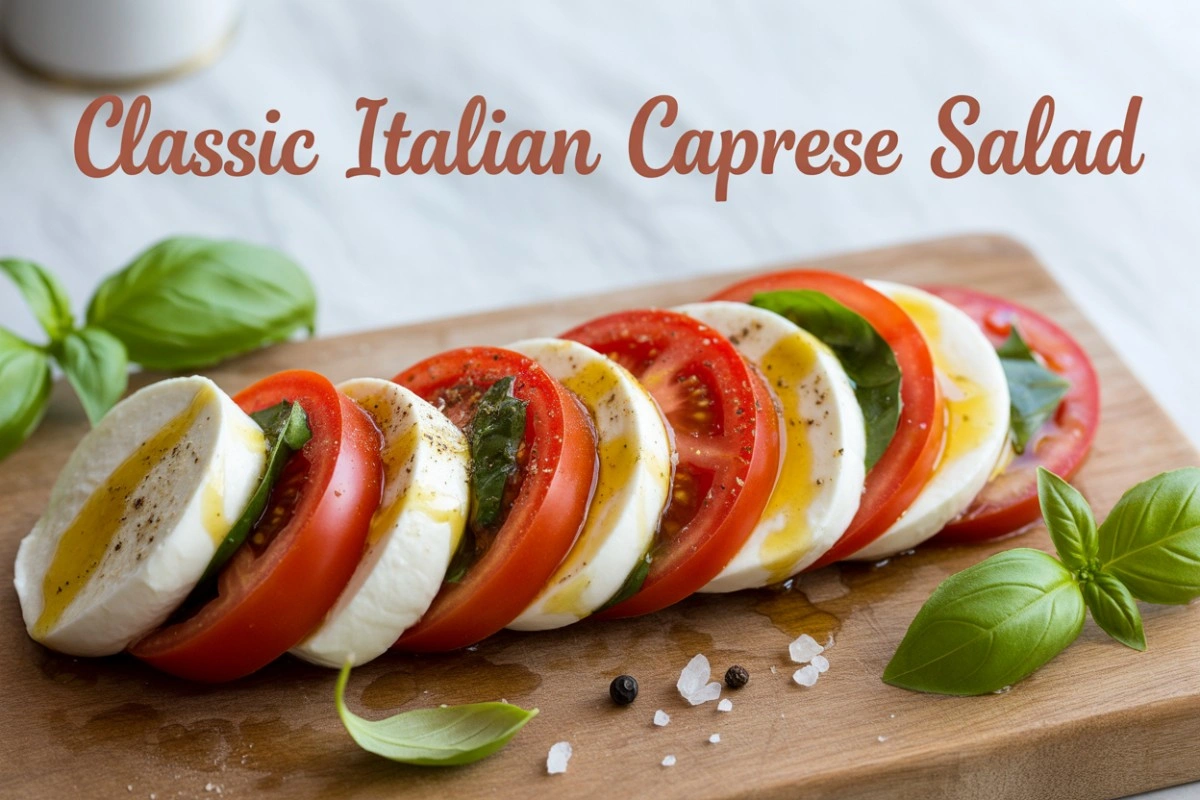
Imagine a dish that captures the essence of summer. It’s fresh, vibrant, and full of flavor. You’re probably thinking of the Caprese salad. This classic from Italy is a lesson in simplicity, with juicy tomatoes, creamy mozzarella, and fragrant basil.

Exploring Caprese, you’ll see its importance in Italian food. It’s a favorite in many Italian restaurants around the world. The salad’s beauty is in its simplicity, letting its ingredients stand out.
Key Takeaways
- Understanding the origins of the classic Italian Caprese salad.
- Learning about the key ingredients that make this salad special.
- Discovering tips for preparing an authentic Caprese salad at home.
- Exploring variations of the classic recipe to suit different tastes.
- Appreciating the cultural significance of the Caprese salad in Italian cuisine.
The Origins and History of Caprese Salad
Exploring the history of Caprese salad reveals its deep roots in Italian culture. This salad, made of tomatoes, mozzarella, and basil, has a fascinating story. It all started on the island of Capri.
The Birth of Caprese on the Island of Capri
The Caprese salad was born on Capri in the mid-20th century. It was made to honor the Italian flag. The colors of the flag are reflected in the salad: red tomatoes, white mozzarella, and green basil.
How Caprese Became an Italian Culinary Icon
Soon, the Caprese salad became loved not just in Italy but around the world. Its simplicity and fresh ingredients won over many. It’s also versatile, making it perfect as an appetizer, side dish, or light meal.
The Cultural Significance in Italian Cuisine
In Italian cuisine, the Caprese salad is very special. It shows the country’s love for quality ingredients and simplicity. It’s often served at special events and is a must-have in Italian restaurants.
| Year | Event | Significance |
|---|---|---|
| 1950s | Caprese salad created | Origin on the island of Capri |
| 1960s | Gained popularity in Italy | Represented Italian flag colors |
| Present | Global recognition | Culinary icon status achieved |
Understanding the Classic Italian Caprese Salad (Tomato, Mozzarella & Basil)
The Caprese salad is a perfect mix of flavors and colors. It shows the heart of Italian cooking. Its beauty comes from the freshness of its ingredients.
The Symbolism of the Italian Flag Colors
The Caprese salad looks like the Italian flag. Tomatoes are red, mozzarella is white, and basil is green. This is not just a coincidence. It shows the salad’s roots and Italy’s heritage.
Giovanni Rana, a famous Italian chef, said, “The Caprese salad celebrates Italy’s colors, flavors, and traditions.”
Why Simplicity is Key to Authentic Caprese
The real beauty of a Caprese salad is its simplicity. It uses just a few top-notch ingredients. Fresh tomatoes, creamy mozzarella, and fragrant basil, with olive oil and salt, make a simple yet rich taste.
As they say, “Less is more.” This is very true for a real Caprese salad.
Regional Variations Throughout Italy
Even though the Caprese salad stays the same, different parts of Italy have their own twists. Some add balsamic glaze or use different tomatoes. These changes show how versatile the salad is while keeping its core.
You can try these regional changes to make your own special Caprese salad.
In short, to understand the Classic Italian Caprese Salad, you need to see its symbolic colors, value simplicity, and know about regional changes. By doing this, you can make a Caprese salad that truly honors Italian cooking traditions.
Essential Ingredients for an Authentic Caprese Salad
A classic Caprese salad is all about quality ingredients. You need to pick the best parts to show off Italian simplicity and elegance.
Selecting the Perfect Tomatoes
Tomatoes are key to a great Caprese salad. You have a few options to choose from.
Heirloom vs. Vine-Ripened Options
Heirloom tomatoes bring unique flavors and colors. Vine-ripened tomatoes are sweet and consistent. Choose based on taste and season.
Ripeness Indicators to Look For
Check for ripe tomatoes by looking at:
- A vibrant color
- A slight give when pressed
- A sweet, earthy aroma
Choosing the Right Mozzarella
Mozzarella is vital in a Caprese salad. The type you pick affects taste and texture.
Buffalo vs. Cow’s Milk Mozzarella
Buffalo mozzarella (Mozzarella di Bufala) is creamier and more authentic. Cow’s milk mozzarella is common and tasty too.
Fresh vs. Packaged Considerations
Fresh mozzarella is best for flavor and texture. If fresh is hard to find, choose high-quality packaged mozzarella.
Fresh Basil: The Aromatic Heart of Caprese
Fresh basil adds a unique flavor. Choose bright green, fragrant leaves for the best taste.
The Importance of Quality Olive Oil
Quality olive oil makes your Caprese salad better. Use it to dress the salad lightly, so it doesn’t overpower the other flavors.
Salt and Pepper: Simple but Essential Seasonings
Season your Caprese salad with salt and pepper. These simple spices bring out the flavors of tomatoes, mozzarella, and basil.
By focusing on quality ingredients, you can make a delicious Caprese salad. It will show off the best of Italian cuisine.
Step-by-Step Guide to Making the Perfect Caprese Salad
Making a perfect Caprese salad is easy. It all comes down to using fresh, quality ingredients. With a few simple steps, you can make a dish that tastes great and looks good too.
Preparing Your Ingredients
The first step is to prepare your ingredients. It’s more than just washing and slicing. You want each part to be at its best.
Slicing Techniques for Tomatoes and Mozzarella
When slicing tomatoes and mozzarella, use a sharp knife. For tomatoes, aim for slices that are about 1/4 inch thick. Mozzarella should be the same thickness, so it’s tender but holds its shape.
- Use a serrated knife for tomatoes to prevent crushing.
- Cut mozzarella just before serving to prevent it from drying out.
Handling Fresh Basil Properly
Fresh basil is key to a great Caprese salad. Handle it gently and add it just before serving. This keeps its flavor and aroma strong.
- Choose leaves that are vibrant and free of blemishes.
- Stack leaves, roll them, and slice into thin strips for even distribution.
Assembly Techniques for Beautiful Presentation
When assembling your Caprese salad, focus on presentation. Arrange tomatoes and mozzarella on a plate in an alternating pattern. Slightly overlap each slice.

- Use a large, flat plate to give your salad a spacious appearance.
- Garnish with fresh basil leaves, drizzled with olive oil.
Seasoning Your Caprese Properly
Seasoning in a Caprese salad is simple. Use high-quality olive oil and a pinch of salt. This enhances flavors without overpowering them.
- Drizzle olive oil in a gentle, sweeping motion to coat evenly.
- Sprinkle salt lightly over the salad to bring out the natural flavors.
Timing Considerations for Optimal Flavor
When to assemble and serve your Caprese salad is important. Assemble just before serving to keep ingredients fresh and flavors balanced.
- Prepare ingredients ahead of time, but assemble just before serving.
- Keep mozzarella refrigerated until assembly to maintain freshness.
Common Variations of Traditional Caprese Salad
Exploring different Caprese salad variations can introduce new flavors. This Italian classic can be tweaked to fit various tastes and events.
Caprese with Balsamic Glaze or Reduction
Adding a balsamic glaze or reduction is a popular twist. It brings a sweet and tangy taste that pairs well with the tomatoes and mozzarella. To make it, just simmer balsamic vinegar until it turns syrupy.
Avocado Caprese Twist
Adding avocado to your Caprese salad makes it creamy and nutritious. Slice the avocado and layer it with tomatoes and mozzarella for a fresh twist. It’s great for those wanting more nutrients.
Caprese Skewers and Bite-Sized Options
Caprese skewers are a fun and easy snack or appetizer. Just thread cherry tomatoes, mozzarella balls, and basil leaves onto toothpicks. They’re perfect for parties.
Grilled or Roasted Caprese Elements
Grilling or roasting parts of the Caprese salad adds flavor. Try grilling peaches or roasting tomatoes for a new twist. Experiment with different ingredients to find your favorite.
Caprese Sandwiches and Panini
Turning Caprese into a sandwich or panini is a creative idea. Layer tomatoes, mozzarella, and basil between bread, then drizzle with olive oil and balsamic glaze. It makes for a tasty meal.
These Caprese salad variations offer exciting ways to enjoy this classic dish. Feel free to try different ingredients and methods to create your own unique Caprese.
Modern Interpretations and Creative Twists
The Caprese salad is now a canvas for creativity. It has evolved into many new forms. These modern versions mix old traditions with new ideas.

Caprese-Inspired Pasta Dishes
One big change is adding Caprese to pasta. Tomato, mozzarella, and basil are mixed with pasta. This makes a fresh, tasty meal. Try Caprese pesto pasta or a simple spaghetti with Caprese on top.
Caprese Pizza Variations
Pizza makers have also made their own Caprese pizzas. They use fresh mozzarella, ripe tomatoes, and basil. The pizza is then drizzled with olive oil.
Deconstructed Caprese Concepts
Some chefs have deconstructed the Caprese salad. They serve its parts separately. This lets diners make their own salad. It’s a creative twist on the classic.
Fusion Approaches to the Classic Combination
Fusion cuisine has also changed the Caprese salad. It now includes international flavors. You might find Asian elements or different cheeses and meats. These changes offer a new take on the Caprese.
These new versions show how the Caprese salad can evolve. They let you try new things while keeping the dish’s Italian roots.
Seasonal Considerations for Your Caprese Salad
To enjoy your Caprese salad to the fullest, think about when its main ingredients are best. Tomatoes, mozzarella, and basil taste and feel different at different times of the year. This affects how good your salad will be.
Summer: Peak Season for Caprese
Summer is the best time for Caprese salad. Tomatoes are ripe and juicy, and fresh basil is everywhere. The warm weather brings out the best flavors and textures.
Making Caprese in Off-Seasons
You can have Caprese salad all year, even when it’s not summer. Use greenhouse tomatoes or other varieties to keep it tasty. You can also swap some ingredients for preserved or high-quality ones.
Adapting Your Recipe to Seasonal Ingredients
Change your Caprese recipe with the seasons to keep it interesting. In spring, use early tomatoes and fresh herbs. In winter, add roasted or grilled elements for extra flavor.
By paying attention to the seasons, your Caprese salad will always be a hit. It will stay delicious and enjoyable all year.
Pairing Your Caprese Salad with Other Dishes
Make your Caprese salad even better by pairing it with other dishes and drinks. Its simple nature makes it easy to mix and match with different meals. Whether you’re hosting a big dinner or having a relaxed lunch, Caprese is a great choice.
Wine Pairings for Caprese
For wine, a crisp white like Pinot Grigio or Sauvignon Blanc pairs well with Caprese. If you prefer red, a light-bodied Chianti is good, perfect for cooler times.
Complete Italian Meal Suggestions
Pair your Caprese salad with pasta carbonara or grilled chicken for a full Italian meal. Adding garlic bread or bruschetta makes the meal even better.
Caprese as an Appetizer vs. Main Course
Caprese salad works as an appetizer or a light main course. As an appetizer, it gets you ready for the meal. As a main course, it’s refreshing and filling, great with a protein.
Complementary Side Dishes
For a complete meal, add side dishes that match Caprese’s flavors. Roasted veggies, grilled asparagus, or a simple green salad are great choices. They add variety and make your Italian meal even more enjoyable.
Nutritional Benefits of Caprese Salad Ingredients
The classic Italian Caprese salad is packed with nutrients. It’s made from tomatoes, mozzarella cheese, basil, and olive oil. Each ingredient brings its own health benefits.
Health Benefits of Tomatoes
Tomatoes are full of vitamin C and lycopene. Lycopene is an antioxidant that fights cancer and heart disease. Tomatoes also have potassium, which helps keep blood pressure healthy.
Nutritional Value of Fresh Mozzarella
Fresh mozzarella is a calcium powerhouse for strong bones. It’s also a good protein source for muscles. Plus, it’s low in calories if eaten in moderation.
Basil’s Health-Boosting Properties
Basil is more than just a tasty herb. It’s packed with vitamins A and K and has anti-inflammatory properties. Its antioxidants protect cells and support health.
Olive Oil: Heart-Healthy Fats
Olive oil is a key part of the Mediterranean diet. It’s full of monounsaturated fats that lower bad cholesterol. This makes it great for heart health.
Caprese as Part of a Mediterranean Diet
The Caprese salad follows the Mediterranean diet’s fresh and healthy fats focus. Adding it to your meals can make your diet more balanced and nutritious.
Common Mistakes to Avoid When Making Caprese Salad
To make a real Caprese salad, avoid some common mistakes. This Italian dish is simple but needs the right ingredients and technique. The quality of what you use can make a big difference.
Ingredient Selection Errors
One big mistake is using bad ingredients. For example, fresh mozzarella is key. It has a creamy texture and a mild taste that’s hard to replace. Also, heirloom tomatoes should be ripe and taste great. Don’t use unripe or tasteless tomatoes, as they can mess up the salad.
Assembly and Seasoning Pitfalls
Another mistake is not assembling and seasoning right. The ingredients should look good together. Drizzle extra virgin olive oil just before serving to keep it from getting soggy. Season with salt and pepper carefully to boost the flavors without overpowering them.
Serving Temperature Considerations
It’s important to serve the salad at the right temperature. The ingredients should be at room temperature to bring out their flavors. Don’t serve it straight from the fridge, as it can dull the taste.
Storage and Make-Ahead Mistakes
While it’s best to make the salad just before eating, you can prep the ingredients ahead. Keep them in the fridge and put the salad together when you’re ready to eat.
Overcomplicating the Classic Recipe
Lastly, don’t try to make the recipe too complicated. The charm of Caprese salad is in its simplicity. Use the traditional ingredients and methods to get the true taste of Italy.
Conclusion: Celebrating the Timeless Appeal of Caprese Salad
You now know the heart of the classic Italian Caprese salad. It shows the beauty of Italian food in its simplest form. With fresh tomatoes, creamy mozzarella, and fragrant basil, it’s a symbol of Italy’s food culture.
The Caprese salad has been loved for years. Its simple yet tasty mix makes it a favorite. It’s perfect as an appetizer, side dish, or light meal, bringing a taste of Italy to your table.
Creating a great Caprese salad is all about using the best ingredients and keeping it simple. This way, you make a dish that’s not just tasty but also connects you to Italy’s food traditions.
The Caprese salad’s lasting popularity shows its timeless appeal. It’s a call to enjoy the moment, appreciate fresh food, and taste the essence of Italy.
FAQ
What is the traditional Caprese salad made of?
The traditional Caprese salad has fresh tomatoes, mozzarella cheese, and basil. It’s dressed with olive oil and seasoned with salt and pepper.
How do I choose the best tomatoes for a Caprese salad?
Choose ripe, flavorful tomatoes for a Caprese salad. Heirloom or vine-ripened tomatoes are great. Look for a sweet aroma and a slight yield to pressure.
What type of mozzarella is best for Caprese salad?
Fresh mozzarella, like buffalo mozzarella, is the best. It has a creamy texture and mild flavor.
Can I make Caprese salad ahead of time?
You can prepare the ingredients ahead of time. But, assemble the salad just before serving. This prevents the mozzarella from getting soggy and the basil from wilting.
How do I properly store leftover Caprese salad?
Store leftover Caprese salad in an airtight container in the fridge. But, it’s best to eat it fresh. The quality of the ingredients can decrease over time.
What are some common variations of the traditional Caprese salad?
Variations include adding balsamic glaze or reduction, using avocado, making Caprese skewers, or grilling or roasting elements.
Can I use other types of cheese instead of mozzarella?
You can try other cheeses, but the flavor and texture will be different. Mozzarella is traditional for a reason.
Is Caprese salad suitable for a Mediterranean diet?
Yes, Caprese salad fits well in a Mediterranean diet. It includes tomatoes, olive oil, and fresh herbs, typical of Mediterranean cuisine.