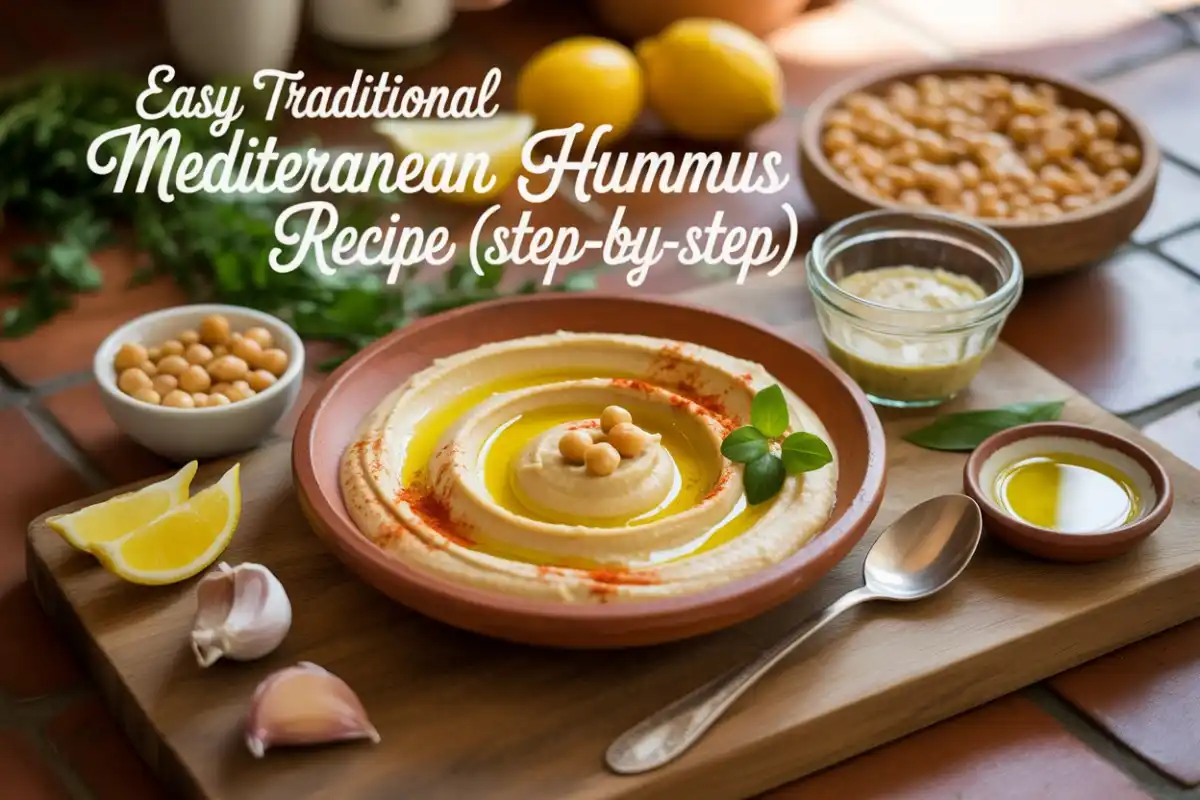
Are you ready to explore the rich flavors of the Mediterranean with a simple hummus recipe? Hummus is more than a dip; it’s a cultural treasure that unites people. In this article, we’ll show you how to make authentic hummus at home easily.

With just a few ingredients and simple steps, you can make a tasty and healthy snack for any time. Our guide makes it easy to follow along and enjoy making this beloved dip.
Key Takeaways
- Learn how to make authentic Mediterranean hummus at home.
- Discover the essential ingredients for a classic hummus recipe.
- Follow a simple, step-by-step guide to creating delicious hummus.
- Enjoy a healthy and tasty snack that’s perfect for any occasion.
- Explore the cultural significance of hummus in Mediterranean cuisine.
The Rich Heritage of Mediterranean Hummus
Mediterranean hummus has a long history, deeply rooted in the Middle East. It’s a beloved dip in countries like Lebanon, Syria, and Palestine. It’s been enjoyed for generations.
Origins and Cultural Significance
The exact origins of hummus are debated, but it’s known to come from the Middle East. It’s more than just food; it symbolizes hospitality and community. In many homes, it’s part of a mezze platter, bringing people together.
Some key aspects of hummus’ cultural significance include:
- It’s a dish often served during special occasions and gatherings.
- Hummus is a staple in many Middle Eastern households, reflecting the region’s culinary identity.
- The preparation and sharing of hummus embody the values of hospitality and generosity.
Why Authentic Hummus Stands Apart
Authentic hummus is special because it sticks to traditional ingredients and methods. It uses high-quality chickpeas, tahini, garlic, and lemon juice. This makes a creamy, flavorful dip that’s hard to make with shortcuts.
Claudia Roden, a famous food writer, said, “The preparation of hummus is an art that requires patience and attention to detail.” This shows why traditional methods are key to making authentic hummus.
To truly enjoy Middle Eastern cuisine, understanding the authenticity of dishes like hummus is essential.
Essential Ingredients for Traditional Mediterranean Hummus
Making authentic Mediterranean hummus begins with picking the right ingredients. The quality and taste of your hummus depend on the freshness and type of ingredients you pick.
Selecting the Perfect Chickpeas
The main ingredient in hummus is chickpeas, also known as garbanzo beans. For the best taste and texture, choose high-quality chickpeas. You can use either canned or dried chickpeas. If using dried chickpeas, make sure they are soaked and cooked right to get the right tenderness.
- Look for chickpeas that are firm and have a smooth texture.
- Avoid chickpeas with broken or shriveled skins.
Choosing Quality Tahini
Tahini is key in hummus, giving it a rich, nutty taste. When picking tahini, go for a high-quality, smooth paste.
- Check the ingredient list to ensure it’s made from 100% sesame seeds.
- Stir the tahini well before using, as oil separation is common.
Fresh Lemons and Garlic
Fresh lemons and garlic bring brightness and depth to your hummus. Use fresh, plump garlic cloves and ripe lemons for the best taste.
- Adjust the amount of garlic to your taste, as it can be quite pungent.
- Freshly squeeze the lemon juice to avoid bitterness.
Olive Oil and Spices
Olive oil makes hummus creamier and richer, while spices like salt and paprika add depth. Choose a good quality olive oil and adjust the spices to your liking.
- Drizzle olive oil on top of your hummus as a garnish for added flavor.
- Sprinkle paprika or parsley for a colorful and tasty finish.
Kitchen Tools You’ll Need
To make traditional Mediterranean hummus, a popular healthy snack and mediterranean appetizer, you’ll need a few key kitchen tools. Having the right equipment will make the preparation process smoother and more enjoyable.
Essential Equipment
The most critical tool for making hummus is a blender or food processor. This appliance will help you achieve the desired creamy texture. You’ll also need a measuring cups and spoons to accurately measure ingredients like chickpeas, tahini, and lemon juice. A garlic press is another essential tool for mincing garlic cloves efficiently.
Optional Tools for Convenience
While not necessary, there are several optional tools that can make the hummus-making process more convenient. A citrus juicer can help you extract fresh lemon juice efficiently. A spice grinder can be used to grind spices to the desired consistency. Also, a serving bowl and garnish tools, such as a spoon for creating the traditional hummus “well,” can enhance the presentation of your dish.
| Tool | Purpose |
|---|---|
| Blender/Food Processor | Blending hummus to a smooth consistency |
| Measuring Cups/Spoons | Accurate measurement of ingredients |
| Garlic Press | Mincing garlic cloves |
| Citrus Juicer | Extracting fresh lemon juice |
| Spice Grinder | Grinding spices to desired consistency |
Preparing Your Chickpeas
To make authentic Mediterranean hummus, start with the right chickpea preparation. Chickpeas are the main ingredient in hummus. Their preparation affects the taste and texture of your chickpea dip. Whether you use dried or canned chickpeas, knowing the preparation process is key.
Dried vs. Canned: Making the Right Choice
The choice between dried or canned chickpeas for your hummus recipe depends on your preference and time. Dried chickpeas need soaking and cooking, which takes time but offers better texture control. Canned chickpeas are quicker but might have added salt and preservatives.
Dried chickpeas give a more authentic flavor because they’re cooked from scratch. But, canned chickpeas are a good choice when you’re short on time. Just pick high-quality canned chickpeas with few added ingredients.
Soaking and Cooking Dried Chickpeas
Start with soaking dried chickpeas if you choose to use them. Soaking rehydrates the chickpeas, making them easier to cook. Soak them for at least 8 hours or overnight. Then, drain and rinse them before cooking in boiling water until tender.
Cooking times vary, but chickpeas are done when soft and mashable. Watch the cooking closely to avoid overcooking, which can make them mushy.
Preparing Canned Chickpeas
Preparing canned chickpeas is simple. Drain the liquid and rinse them under cold water. This removes excess salt and canning liquids that might alter your hummus’s taste.
After rinsing, your canned chickpeas are ready for your hummus recipe. Some people save the liquid from canned chickpeas (aquafaba) for other recipes. It’s a vegan substitute for egg whites.

Traditional Mediterranean Hummus: Step-by-Step Guide
To make traditional Mediterranean hummus, follow simple steps for perfect flavors and textures. This guide will help you from preparing chickpeas to adjusting your hummus.
Step 1: Preparing the Chickpeas
Start by preparing your chickpeas. Use canned or dried chickpeas, but make sure they’re ready for blending. If using dried chickpeas, soak and cook them. For canned chickpeas, just drain and rinse. Proper chickpea preparation is key to a smooth hummus.
Step 2: Creating the Tahini Base
Next, blend tahini with lemon juice to make the tahini base. This base is the creamy heart of your hummus. Start with a lot of tahini and add lemon juice slowly, tasting as you go. The quality of your tahini will significantly impact the flavor of your hummus.
Step 3: Adding Chickpeas and Seasonings
Now, add the chickpeas to the tahini base. Blend until it’s smooth and creamy. Add garlic and seasonings like salt and paprika to enhance the flavor. Adjust the seasoning to taste, ensuring that the flavors are well-balanced.
Step 4: Blending to Perfection
With all ingredients combined, blend the hummus to perfection. Use a high-powered blender or food processor for a smooth consistency. You might need to stop and scrape down the sides a few times. Patience is key here, as the blending process can take a few minutes.
Step 5: Final Adjustments and Tasting
The last step is to taste your hummus and adjust as needed. Add more lemon juice, tahini, or garlic if you like. If it’s too thick, a bit of water can help. Serve your hummus in a bowl, garnished with olive oil, paprika, or fresh herbs, and enjoy!
The Secret to Silky Smooth Hummus
Making silky smooth hummus is more than just a taste preference. It’s about mastering the preparation process. Getting the perfect consistency is key to creating authentic hummus that pleases the taste buds. We’ll look at the main factors that lead to a smooth texture.
The Importance of Chickpea Preparation
The base of excellent hummus is in how you prepare chickpeas. While canned chickpeas are handy, cooking dried chickpeas from scratch improves the texture. It’s important to soak and cook chickpeas well for a smooth consistency.
Blending Techniques for Creamy Texture
The blending process is where the magic happens. Using a high-powered blender and blending the ingredients in the right order is key. Start by blending the tahini paste and lemon juice, then add the chickpeas and blend until smooth.
“The secret to creamy hummus is in the blending. Take your time and blend thoroughly.”
The Role of Ice Water
Ice water is vital for the perfect consistency. Adding ice water gradually while blending helps emulsify the mixture. This results in creamy and smooth hummus. But be careful not to add too much water, as it can make the hummus too thin.
By mastering these techniques, you’ll be well on your way to creating silky smooth hummus that will impress everyone. Remember, practice makes perfect. So, don’t get discouraged if it takes a few tries to get it just right.
Balancing Flavors in Your Hummus
To make great hummus, you need to balance the flavors. A well-balanced hummus is more than just a dip. It’s a culinary delight. The mix of flavors makes it a favorite in the Mediterranean.
The flavors in hummus come from the right mix of ingredients and seasoning. Knowing how to mix these is key to a tasty hummus recipe.
The Lemon-Garlic-Tahini Ratio
The lemon-garlic-tahini mix is the heart of hummus flavor. Tahini gives a rich, nutty taste, lemon juice adds brightness, and garlic adds a pungent flavor. Getting the right mix is important.
Ottolenghi says in his book, “balance is what makes good hummus.” Start with equal parts tahini and lemon juice. Adjust to taste. Add garlic carefully, as it can overpower.
Salt and Spice Adjustments
Salt and spices are the final steps to perfect your hummus. Salt brings out the flavors, and spices like cumin add depth. Taste as you go and adjust.
“Hummus is not just a dip, it’s a canvas for flavors.”
Chef Yotam Ottolenghi
Begin with a little salt and cumin. Add more as needed. It’s better to add more seasoning than to fix an over-seasoned hummus.
Mastering the lemon-garlic-tahini mix and adjusting salt and spices will make your hummus delicious and true to its Mediterranean roots.
Traditional Garnishes and Presentation
How you present your hummus can make it more than just a dip. It becomes a true experience in Middle Eastern cuisine. Traditional garnishes and presentation methods make it look great and taste even better. This turns a simple healthy snack into something special.

The Classic Olive Oil Drizzle
Drizzling high-quality olive oil on hummus is a classic move. It brings a silky texture and a rich, fruity taste. This flavor complements the earthy chickpeas perfectly.
To get it just right, slowly pour the olive oil in a circle around the hummus. Let it flow to the center.
Herbs and Spices for Garnish
Fresh herbs like parsley, cilantro, or mint add color and freshness. A pinch of paprika or sumac adds depth and color. Try different mixes to find your favorite.
Creating the Traditional “Well”
The “well” in the hummus is not just for looks. It also helps keep the olive oil and toppings in the center. This way, every bite is full of flavor.
To make the well, gently press down with the back of a spoon in a circle. This creates a space for the drizzle and toppings.
Using these traditional garnishes and presentation methods makes your hummus look and taste amazing. It truly honors its Middle Eastern roots.
Health Benefits of Homemade Mediterranean Hummus
Making Mediterranean hummus at home is a nutritional powerhouse. It’s a tasty way to add important nutrients to your meals.
Nutritional Profile
Homemade Mediterranean hummus is packed with vitamins, minerals, and healthy fats. Chickpeas and tahini boost protein and fiber. A 2-tablespoon serving has a lot of essential nutrients.
| Nutrient | Amount per Serving |
|---|---|
| Calories | 100 |
| Protein | 5g |
| Fat | 10g |
| Fiber | 3g |
Protein and Fiber Content
Chickpeas in hummus are great for plant-based protein and fiber. This combo aids digestion and keeps you full longer. It’s perfect as a healthy snack.
Heart-Healthy Advantages
Hummus is good for the heart thanks to olive oil and tahini’s healthy fats. These fats lower bad cholesterol and boost heart health.
Adding homemade Mediterranean hummus to your diet is a tasty way to boost nutrition. Enjoy a delicious chickpea dip while improving your health.
Regional Variations of Mediterranean Hummus
Exploring Mediterranean hummus reveals regional twists that add unique flavors. This classic dip gets a new spin in each region. It’s a culinary journey filled with discovery.
The Mediterranean is home to diverse cultures, each with its own hummus style. Let’s look at some notable variations.
Lebanese Style Hummus
Lebanese hummus is famous for its smooth texture and rich taste. It’s made with top-quality tahini, fresh lemon juice, and garlic. The secret lies in using the best ingredients.
Israeli Hummus Variations
Israeli hummus is known for its colorful toppings. You’ll find pine nuts, sumac, and pickled red onions on top. It’s hearty and often served as a main dish or snack.
Greek and Turkish Approaches
Greek hummus, or “hummus tourkiko,” is seasoned with paprika and garnished with parsley. Turkish hummus might include cumin and is paired with grilled meats. Both show how hummus adapts to local tastes.
| Region | Key Ingredients | Notable Features |
|---|---|---|
| Lebanese | Tahini, lemon juice, garlic | Smooth texture, rich flavor |
| Israeli | Pine nuts, sumac, pickled onions | Hearty, topped with various ingredients |
| Greek | Paprika, parsley | Seasoned with paprika, fresh parsley garnish |
| Turkish | Cumin, grilled meats | Spiced with cumin, often served with meat |

These regional hummus variations show its versatility and ability to unite cultures. By trying these different styles, you can improve your hummus-making skills and discover new flavors.
Creative Hummus Flavor Additions
The world of hummus is vast and fun to explore. You can change the traditional recipe into many tasty flavors by adding different ingredients.
Roasted Red Pepper Hummus
Roasting red peppers makes them sweet, which goes well with chickpeas. To make roasted red pepper hummus, blend cooked chickpeas with roasted red peppers, tahini, garlic, and lemon juice. This adds a smoky flavor to the classic hummus recipe.
Herb-Infused Variations
Adding fresh herbs like parsley, cilantro, or basil makes hummus bright and refreshing. Just chop the herbs finely and blend them into your hummus. You can also try dried herbs for a different taste. Herb-infused hummus is great for adding freshness to your snack.
Spicy Hummus Options
For those who like a little heat, adding spicy elements to hummus is a good choice. You can add diced jalapeños, serrano peppers, or a sprinkle of cayenne pepper. Spicy hummus is exciting and pairs well with pita chips or veggies for a tasty snack.
Serving Suggestions for Your Homemade Hummus
Now that you’ve made your homemade hummus, it’s time to explore how to enjoy it. Hummus is a versatile dip that can be served in many ways. It’s perfect for both traditional Mediterranean appetizers and modern healthy snacks.
Traditional Accompaniments
In Mediterranean cuisine, hummus is often served with pita bread, vegetables, and sometimes falafel. The classic way is to dip warm pita bread into the creamy hummus. It’s a delightful and satisfying snack. You can also pair it with carrot sticks, cucumber slices, or cherry tomatoes for a fresh and healthy option.

For a more authentic experience, consider serving your hummus with a drizzle of olive oil and a sprinkle of paprika or sumac. This not only enhances the flavor but also adds to the visual appeal. It makes it a great mediterranean appetizer for gatherings.
Modern Serving Ideas
Beyond traditional serving methods, hummus can be incorporated into modern dishes and snacks. Use it as a dip for veggie sticks or as a spread on sandwiches and wraps. Hummus can also be a base for salad dressings or a topping for baked potatoes and grilled meats.
| Modern Serving Ideas | Description |
|---|---|
| Hummus and Veggie Sticks | A healthy snack combining hummus with carrot, cucumber, and bell pepper sticks. |
| Hummus Wrap | Spread hummus on a wrap, add your favorite fillings, and roll it up. |
| Hummus Salad Dressing | Thin out hummus with lemon juice or water to create a creamy salad dressing. |
Experimenting with different serving ideas can turn your homemade hummus into a healthy snack that’s both enjoyable and nutritious.
Storing and Preserving Your Hummus
Keeping your homemade hummus fresh is all about proper storage. Follow these simple steps to enjoy it for longer.
Refrigeration Guidelines
After making your hummus, put it in an airtight container. A glass jar with a tight lid works well. Press plastic wrap on the hummus to keep air out.
Keep the container in the fridge at 40°F (4°C) or lower. Your hummus will stay fresh for up to a week. If it smells bad or feels slimy, throw it away.
Freezing Options and Best Practices
To make your hummus last longer, freeze it. Put it in an airtight container or freezer-safe bag, leaving space for expansion. When you’re ready, thaw it in the fridge or at room temperature.
Freezing might change the texture a bit. You might need to add water or lemon juice to make it creamy again. Frozen hummus can last up to 4 months.
Conclusion
Now that you’ve learned how to make authentic hummus, it’s time to add it to your meals. You’ve used top-notch ingredients and followed traditional ways. This means you can make a traditional Mediterranean hummus that’s as good as any restaurant or store.
As you try new flavors and changes, remember the secret to authentic hummus is its simplicity and quality ingredients. Feel free to tweak the seasoning or add different toppings to make it your own. With time, you’ll get better at making the perfect hummus, and it will be a favorite in your kitchen.
Your homemade traditional Mediterranean hummus will wow everyone, whether it’s for a snack, appetizer, or side dish. So, be creative and enjoy the delicious tastes and health perks that this dip offers.
FAQ
What is traditional Mediterranean hummus made of?
Traditional Mediterranean hummus is made from chickpeas, tahini, garlic, lemon juice, and olive oil.
Can I use canned chickpeas for my hummus recipe?
Yes, you can use canned chickpeas as a convenient alternative to dried chickpeas. Just be sure to drain and rinse them before using.
How do I achieve a silky smooth hummus texture?
To achieve a silky smooth hummus, make sure to prepare your chickpeas properly. Use a high-powered blender or food processor. Add ice water as needed to enhance the texture.
What is the ideal lemon-garlic-tahini ratio for hummus?
The ideal ratio may vary depending on personal taste. A general guideline is to balance the flavors so that no single ingredient overpowers the others.
Can I customize my hummus with different flavors and ingredients?
Yes, you can experiment with various flavor additions. Try roasted red peppers, herbs, and spices to create unique hummus variations.
How should I store my homemade hummus?
Store your homemade hummus in an airtight container in the refrigerator. Consume it within a few days. You can also freeze it for longer storage.
What are some traditional ways to serve hummus?
Traditionally, hummus is served with pita bread, vegetables, and other dippers. You can also use it as a dip for crackers or chips.
Is homemade hummus a healthy snack option?
Yes, homemade hummus is a nutritious snack. It’s rich in protein, fiber, and healthy fats, making it an excellent choice for a balanced diet.