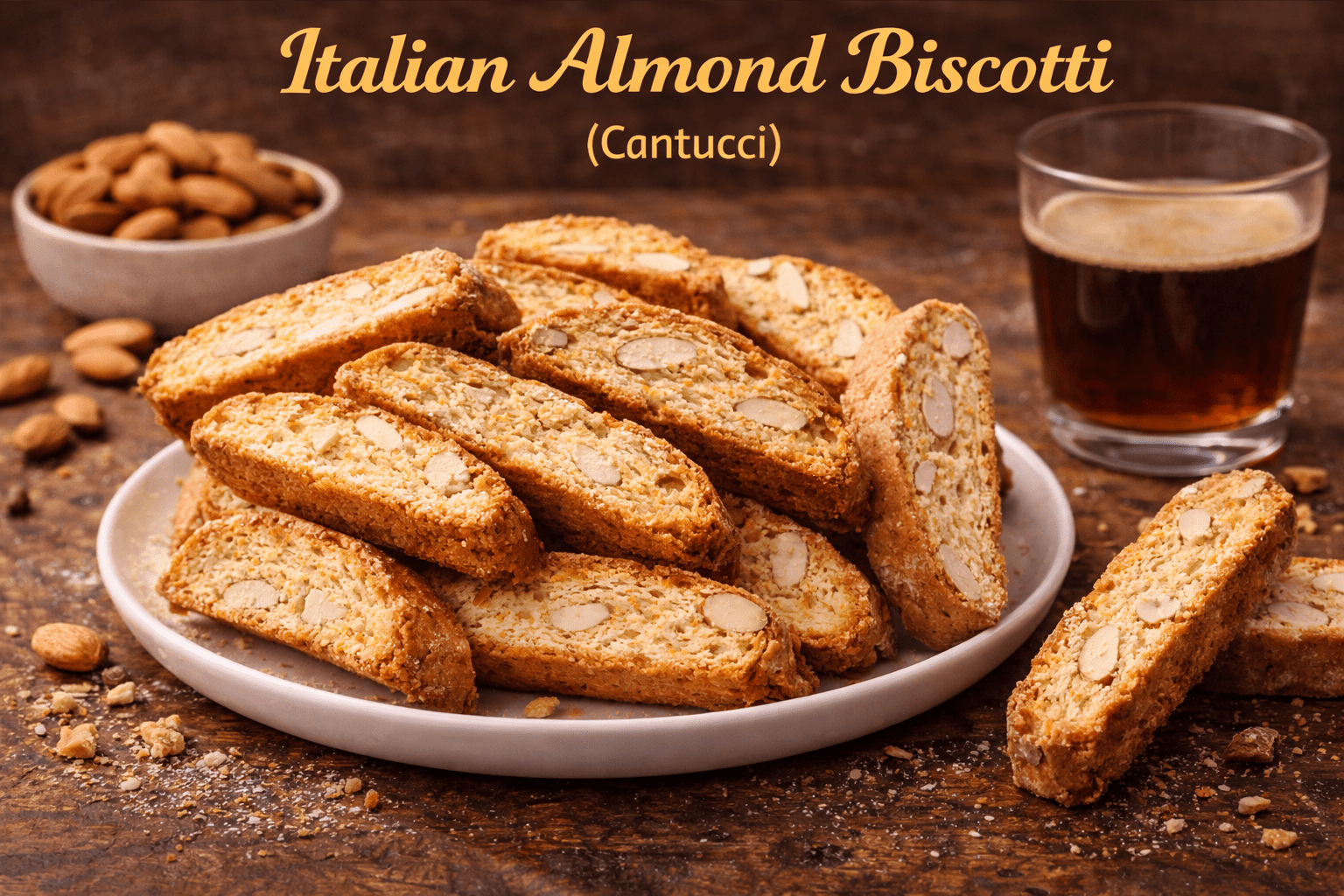
Italian Almond Biscotti (Cantucci) are one of the most traditional and recognizable cookies in Italy. These twice-baked almond cookies are crisp, lightly sweet, and perfect for dipping into coffee or dessert wine. Unlike soft cookies, biscotti are meant to be firm and crunchy.
The word “biscotti” means “twice baked” in Italian. Cantucci is the traditional name used in Tuscany, where this cookie originated. Authentic Italian Almond Biscotti (Cantucci) contain simple ingredients: flour, sugar, eggs, and whole almonds. There is no butter in traditional recipes.
In this complete guide, you will learn about the history of cantucci, the essential ingredients, step-by-step preparation, expert baking techniques, storage tips, common mistakes, and serving suggestions.
What Are Italian Almond Biscotti (Cantucci)?
Italian Almond Biscotti (Cantucci) are hard, dry cookies baked twice to achieve their signature crunch. They are shaped into logs, baked once, sliced, and then baked again.
Traditional cantucci include:
- All-purpose flour
- Sugar
- Eggs
- Whole almonds
- Baking powder
- Optional lemon zest or vanilla
They are known for:
- Crisp texture
- Nutty flavor
- Long shelf life
Unlike many modern biscotti recipes, authentic cantucci do not include butter or oil.
The History of Cantucci
Italian Almond Biscotti (Cantucci) originated in Tuscany, especially in the city of Prato. They date back to the Renaissance period.
These cookies became popular because:
- They were easy to store
- They lasted a long time
- They were perfect for dipping into Vin Santo (a sweet Tuscan wine)
Today, cantucci are served across Italy and around the world.
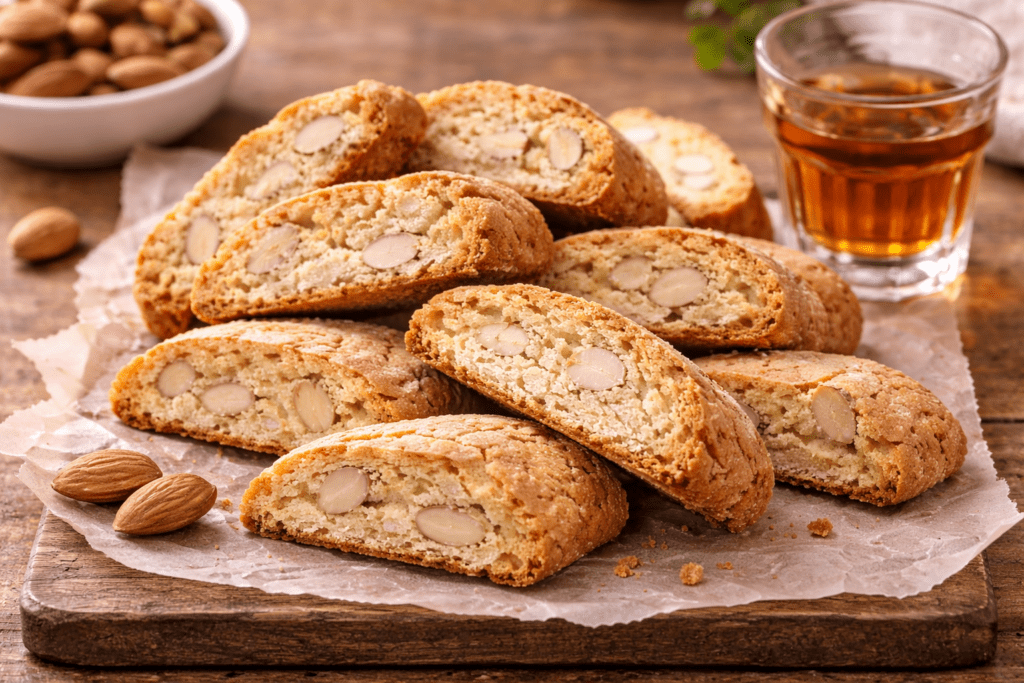
Essential Ingredients for Authentic Italian Almond Biscotti (Cantucci)
Quality ingredients make a big difference.
1. Flour
All-purpose flour works best.
Measure carefully to avoid dense cookies.
2. Sugar
Granulated white sugar is traditional.
Biscotti should be mildly sweet, not overly sugary.
3. Eggs
Eggs bind the dough and add structure.
Use room temperature eggs.
4. Whole Almonds
Use whole raw almonds.
Lightly toast them before adding to dough for better flavor.
Do not chop almonds for authentic cantucci.
5. Baking Powder
Provides slight rise.
Measure accurately.
6. Optional Flavoring
Some traditional variations include:
- Lemon zest
- Vanilla extract
- Anise seeds
Keep flavors subtle.
Step-by-Step Guide to Making Italian Almond Biscotti (Cantucci)
Step 1: Preheat Oven
Preheat oven to 350°F (175°C).
Line baking sheet with parchment paper.
Step 2: Mix Dry Ingredients
In a bowl, combine:
- Flour
- Sugar
- Baking powder
Mix evenly.
Step 3: Add Wet Ingredients
Add eggs to dry mixture.
Mix until dough begins to form.
Dough will be firm and slightly sticky.
Step 4: Add Almonds
Fold in whole almonds.
Distribute evenly.
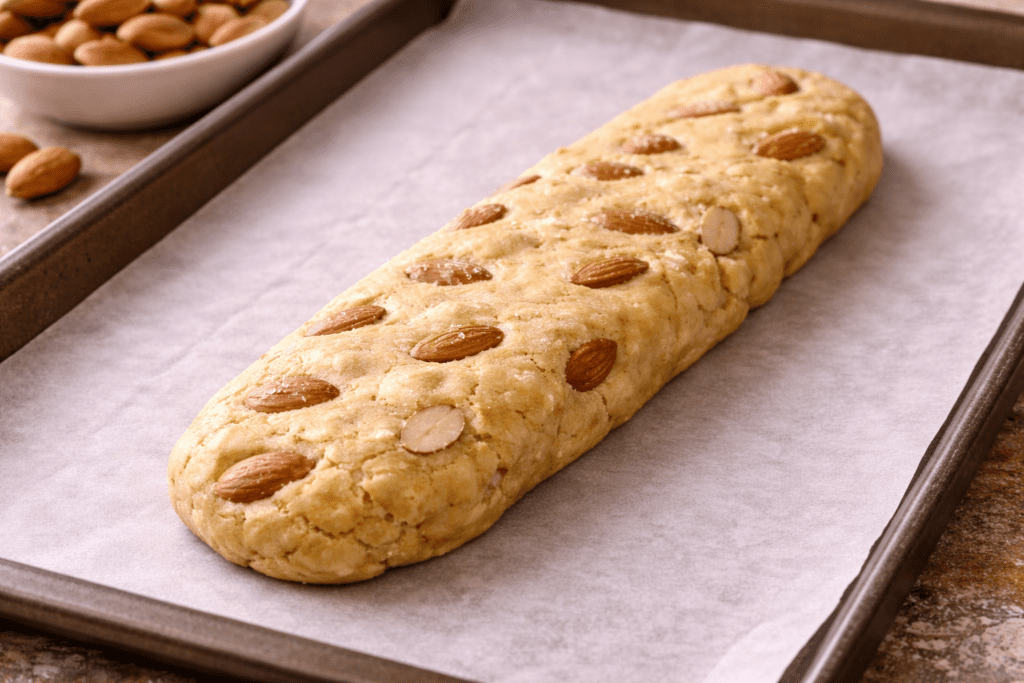
Step 5: Shape into Logs
Divide dough into two portions.
Shape into long logs about 1 inch thick.
Place on baking sheet.
Leave space between logs.
Step 6: First Bake
Bake for 25–30 minutes.
Logs should be lightly golden.
Remove from oven.
Allow to cool for 10–15 minutes.
Step 7: Slice
Using sharp knife, slice logs diagonally into ½-inch pieces.
Be careful not to crumble them.
Step 8: Second Bake
Place sliced biscotti cut-side down on baking sheet.
Bake for 10–15 minutes.
Flip and bake additional 5–10 minutes.
They should be golden and crisp.
Cool completely before storing.
Texture and Flavor Expectations
Proper Italian Almond Biscotti (Cantucci) should be:
- Crisp and firm
- Lightly sweet
- Nutty from whole almonds
- Slightly dry for dipping
They are not meant to be soft.
Common Mistakes to Avoid
Overmixing Dough
Makes biscotti tough.
Underbaking Second Time
Results in soft texture.
Cutting While Too Hot
May cause crumbling.
Using Chopped Almonds
Changes traditional texture.
Storage Tips
Cantucci store very well.
- Keep in airtight container
- Store at room temperature
- Last up to 3 weeks
They are ideal for gifting.
Can You Freeze Biscotti?
Yes.
Store in freezer-safe container for up to 3 months.
Thaw at room temperature.
Variations of Italian Almond Biscotti (Cantucci)
While almond is traditional, other variations include:
- Pistachio biscotti
- Chocolate chip biscotti
- Cranberry almond biscotti
However, authentic Tuscan cantucci focus on whole almonds.
Serving Suggestions
Traditionally, Italian Almond Biscotti (Cantucci) are served with:
- Vin Santo
- Espresso
- Cappuccino
- Black coffee
Dip briefly before eating.
Nutritional Overview
Cantucci contain:
- Carbohydrates from flour
- Protein and healthy fats from almonds
- Moderate sugar
They are simple cookies with minimal fat compared to butter cookies.
Why Italian Almond Biscotti (Cantucci) Remain Popular
These cookies remain popular because:
- They are easy to store
- They have long shelf life
- They are perfect for dipping
- They use simple ingredients
- They represent Tuscan tradition
Their simplicity makes them timeless.
Frequently Asked Questions
1. Why are my biscotti too hard?
They may have been baked too long during second bake.
2. Why are they soft?
Second bake may have been too short.
3. Can I use butter?
Traditional cantucci do not use butter.
4. Can I chop almonds?
Whole almonds are more traditional.
5. Why did my biscotti crumble when slicing?
They were too hot or knife was dull.
6. How thin should I slice?
About ½ inch for balanced crunch.
Final Thoughts
Italian Almond Biscotti (Cantucci) are a traditional Tuscan cookie known for their crisp texture and whole almonds. They are simple to make but require attention during the second bake.
By following each step carefully—especially shaping logs and slicing correctly—you can create authentic cantucci at home.
Take your time, allow them to cool completely, and enjoy a classic Italian cookie that has lasted for centuries.