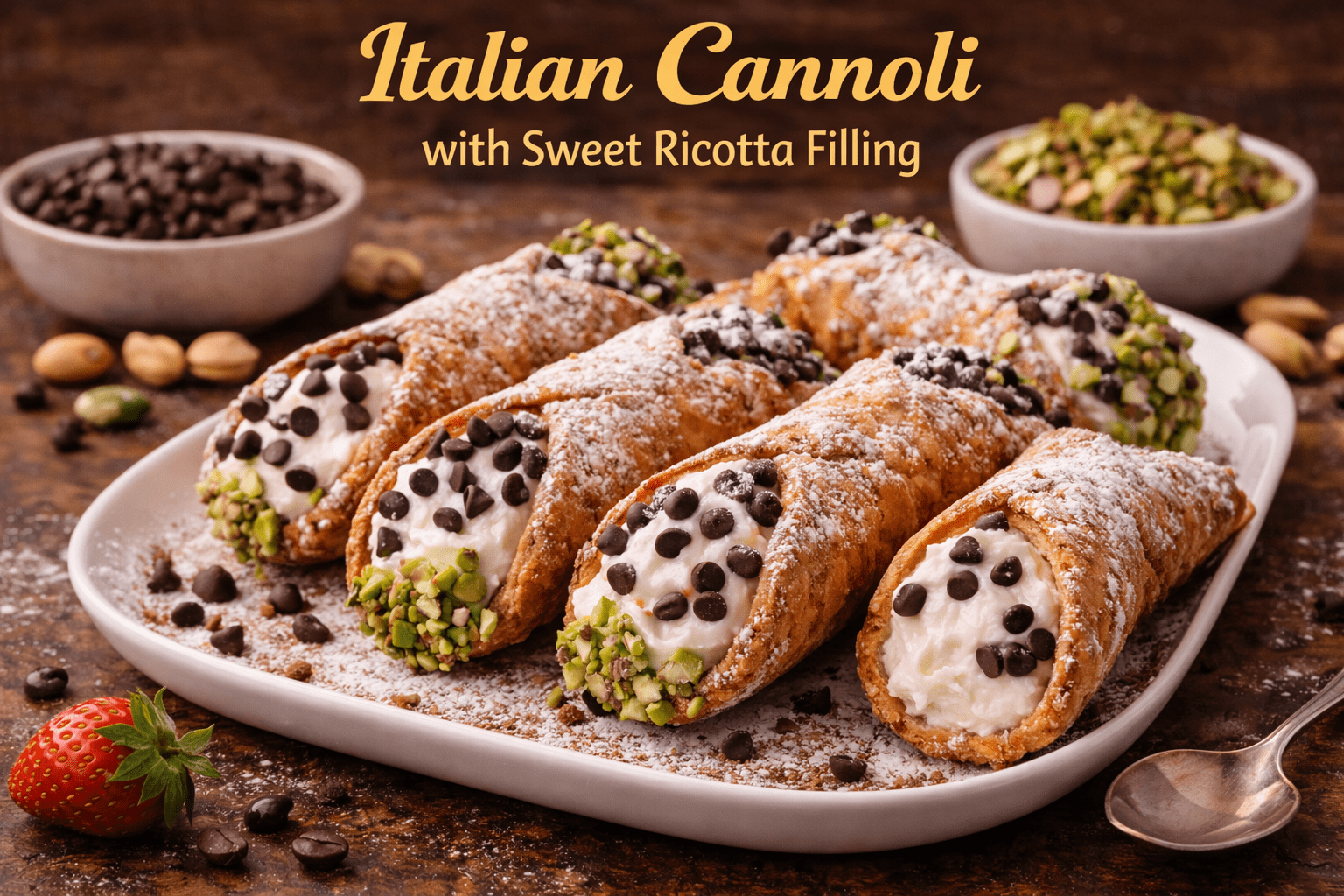
Italian Cannoli with Sweet Ricotta Filling is one of the most famous desserts in Italian pastry tradition. These crisp, tube-shaped shells are filled with smooth, sweetened ricotta cream and often finished with chocolate chips, chopped pistachios, or candied fruit.
Cannoli are strongly connected to Sicily, where they were first created. Today, they are found in bakeries across Italy and around the world. When prepared correctly, cannoli have a crisp shell and a creamy filling that is not too sweet.
In this detailed guide, you will learn the history of cannoli, the essential ingredients, step-by-step preparation, expert techniques, common mistakes to avoid, storage tips, and serving suggestions.
What Are Italian Cannoli with Sweet Ricotta Filling?
Italian Cannoli with Sweet Ricotta Filling are pastries made from fried dough shells filled with sweet ricotta cream.
Traditional cannoli consist of:
- Crisp pastry shells
- Sweetened ricotta filling
- Powdered sugar dusting
- Optional toppings such as chocolate chips or pistachios
The contrast between crunchy shell and creamy filling makes cannoli unique.
The History of Cannoli
Cannoli originated in Sicily. Historians believe they were first made during Carnival season centuries ago.
The dessert became popular because:
- It used locally available ricotta cheese
- It could be filled fresh before serving
- It represented celebration and indulgence
Over time, Italian Cannoli with Sweet Ricotta Filling became a symbol of Sicilian pastry culture.
Essential Ingredients for Authentic Cannoli
Quality ingredients are essential for authentic Italian Cannoli with Sweet Ricotta Filling.
Ingredients for Cannoli Shells
- All-purpose flour
- Sugar
- Salt
- Butter or lard
- Egg
- White wine or vinegar
- Oil for frying
White wine or vinegar helps create bubbles in the shell during frying.
Lard is traditional in Sicily, but butter can be used.
Ingredients for Sweet Ricotta Filling
- Whole milk ricotta cheese
- Powdered sugar
- Vanilla extract
- Mini chocolate chips (optional)
- Orange zest (optional)
- Chopped pistachios (optional)
Ricotta must be thick and well-drained.
Preparing the Cannoli Shell Dough
Step 1: Mix Dry Ingredients
In a bowl, combine:
- Flour
- Sugar
- Salt
Mix well.
Step 2: Add Wet Ingredients
Add:
- Softened butter or lard
- Egg
- White wine or vinegar
Mix until dough forms.
Knead until smooth.
Wrap in plastic wrap and refrigerate for at least 1 hour.
Resting improves texture.
Rolling and Shaping the Shells
After chilling:
- Roll dough thin (about 1/8 inch).
- Cut circles using round cutter.
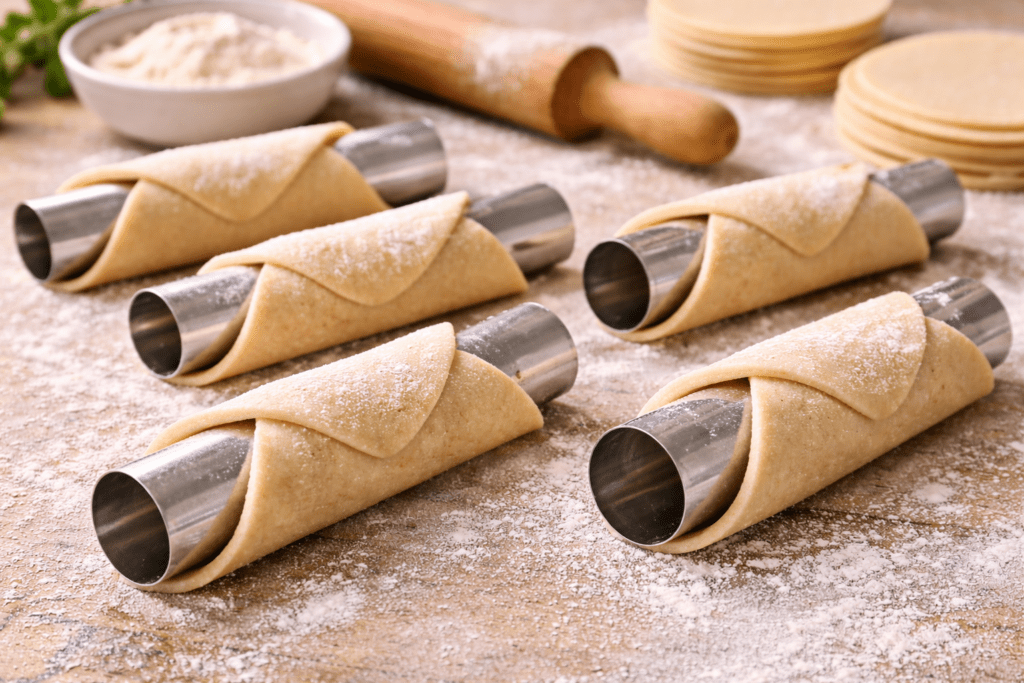
- Wrap each circle around metal cannoli tubes.
- Seal edges with small amount of egg white.
Ensure edges are sealed tightly.
Frying the Cannoli Shells
Heat oil to 350°F (175°C).
Fry shells for 2–3 minutes until golden brown.
Remove carefully.
Allow to cool before removing metal tubes.
Shells should be crisp and bubbly.
Preparing the Sweet Ricotta Filling
Step 1: Drain Ricotta
Place ricotta in cheesecloth.
Let drain in refrigerator for several hours.
Excess moisture can cause runny filling.
Step 2: Mix Filling
In bowl:
- Beat drained ricotta until smooth.
- Add powdered sugar gradually.
- Add vanilla extract.
- Fold in chocolate chips or zest if desired.
Do not overmix.
Chill filling for 1 hour before using.
Filling the Cannoli
Fill shells just before serving.
Use piping bag or spoon.
Fill from both ends toward center.
Dust with powdered sugar.
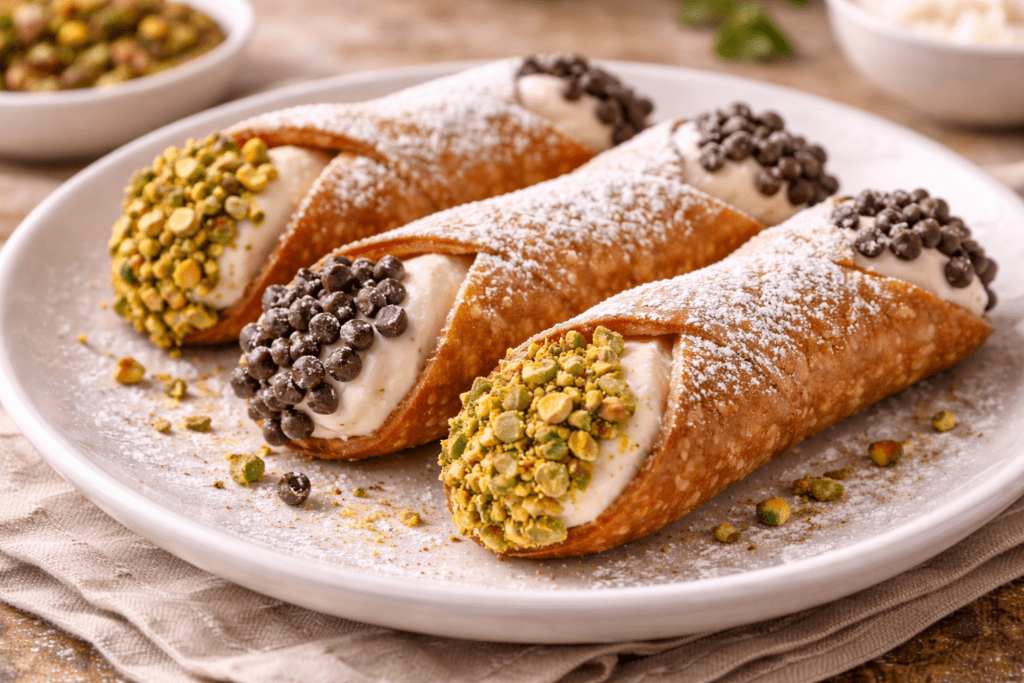
Add pistachios or chocolate chips to ends if desired.
Texture and Flavor Expectations
Proper Italian Cannoli with Sweet Ricotta Filling should have:
- Crisp shell
- Smooth, creamy filling
- Balanced sweetness
- Light vanilla flavor
Shell should not be soft.
Common Mistakes to Avoid
Filling Too Early
Shells will absorb moisture and become soft.
Not Draining Ricotta
Filling becomes watery.
Frying at Wrong Temperature
Too hot burns shells. Too cool makes them oily.
Rolling Dough Too Thick
Shells will not be crisp enough.
Storage Tips
Store shells and filling separately.
Shells:
- Airtight container
- Room temperature
- Up to 3 days
Filling:
- Refrigerate
- Use within 2–3 days
Fill only before serving.
Can You Bake Cannoli Shells?
Traditional shells are fried.
Baking is possible but texture will differ.
Fried shells are crispier and more authentic.
Variations of Italian Cannoli with Sweet Ricotta Filling
Some variations include:
- Adding cinnamon to filling
- Dipping shell ends in chocolate
- Adding candied fruit
- Using mascarpone mixed with ricotta
However, traditional Sicilian version remains simple.
Serving Suggestions
Serve cannoli:
- Freshly filled
- Lightly dusted with powdered sugar
- With espresso
- On dessert platters
They are best eaten the same day.
Nutritional Overview
Cannoli contain:
- Dairy from ricotta
- Carbohydrates from shell
- Sugar
They are rich desserts meant for special occasions.
Why Cannoli Remain Popular
Italian Cannoli with Sweet Ricotta Filling remain popular because:
- They are iconic
- They represent Sicilian pastry tradition
- They combine crisp and creamy textures
- They look impressive
- They taste balanced
They are widely recognized as a classic Italian dessert.
Frequently Asked Questions
1. Why are my cannoli shells soft?
They were filled too early or stored improperly.
2. Why is my ricotta filling runny?
Ricotta was not drained properly.
3. Can I freeze cannoli?
Shells can be frozen. Filling should not be frozen.
4. Can I use low-fat ricotta?
Whole milk ricotta gives better texture.
5. Why did my shells bubble unevenly?
Oil temperature may not have been steady.
6. How long can filled cannoli sit out?
Best consumed within a few hours.
Final Thoughts
Italian Cannoli with Sweet Ricotta Filling are one of Italy’s most famous desserts. They require careful preparation, especially draining ricotta and frying shells properly.
By following each step, using fresh ingredients, and filling just before serving, you can create authentic cannoli at home.
Take your time, focus on texture, and enjoy a dessert that represents true Sicilian tradition.